
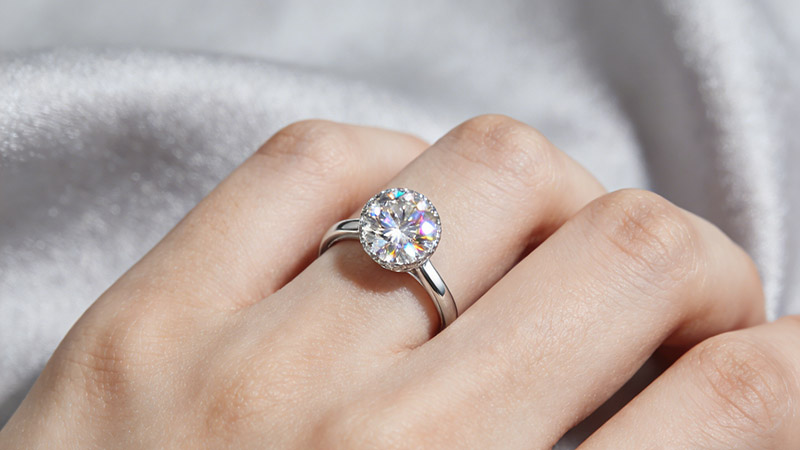
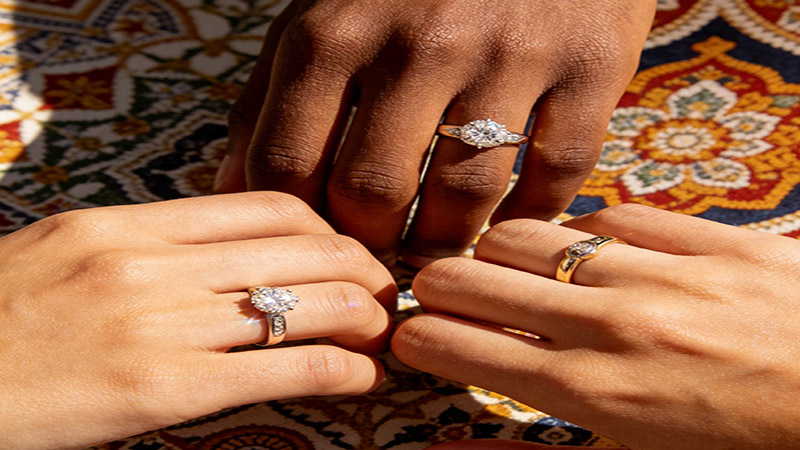
Hey! Are you also one of the people who has a special place for an engagement ring in life? You know what placement of this ring is always a question in everyone’s mind. The answer for this question lies in the tradition, culture, and personal choice of the wearer. That’s why, here we are going to discuss this most loved and desired ring and the tradition behind wearing it. We will also walk you through some of the basic differences in engagement rings, promise rings, and wedding bands. Let’s know the traditions behind this iconic piece. Which finger is preferred to wear it and why?
Introduction to Engagement Ring Traditions
Are you ready to learn about the customs surrounding the wearing of an engagement ring? The romantic traditions associated with engagement ring traditions vary worldwide. This is due to the diverse customs and cultural beliefs found across different nations. Wearing an engagement ring symbolizes commitment and love.
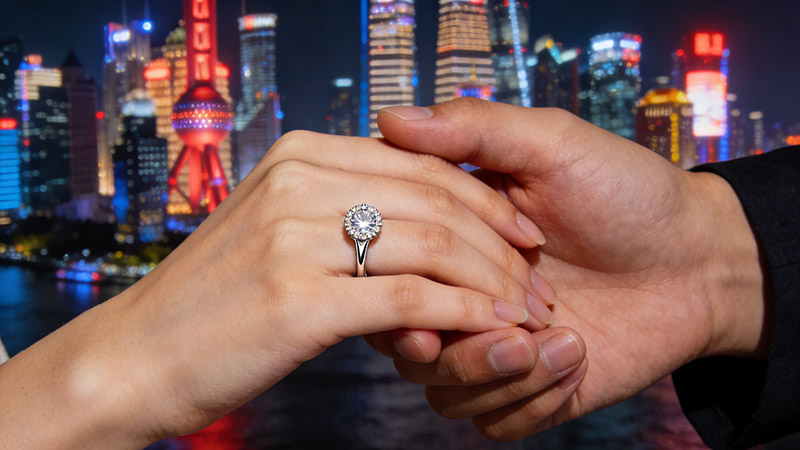
But in which finger this ring will go is often a personal choice. However, some prefer to wear it according to their customs. With a clear understanding of these customs, you will know the true meaning behind their placement. In most of the traditions promise ring is worn on the index finger of the left hand. Wearing it not only reflects love but also a promise to stay together in the future.
now we are going to discuss more in detail about the customs and history of the engagement ring finger. Knowing this, you will fall in love with your favorite ring even more deeply.
History and Customs of Engagement Rings
Ancient Origins and Early Materials
Initially, engagement bands originated in ancient Rome. These rings were introduced by being inspired by ancient Egyptian customs. The custom dates back to the 4th century. At that time, a plain iron ring was worn as an engagement ring.
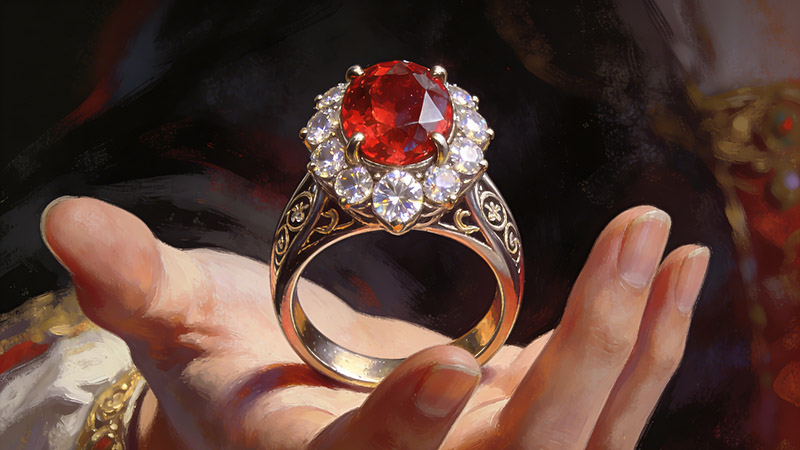
These rings were made using traditional materials such as flint, bone, iron, or copper. Later in the 14th century, rings got diamonds and rubies. These ornaments enhanced the charm of these rings even more. People of Western cultures wear the engagement band on their fourth finger of left hand.
The Vena Amoris and the Index Finger Tradition
Do you know about Vena Amoris Traditions? It’s a Roman belief and the origins of the customs of wearing rings. Romans believed this finger featured a vein that went directly. This is why they call it Vena Amoris. This term is believed to have a meaning as a vein of love. This ancient Roman belief led them to call this finger the “ring finger” and wear engagement bands on it.
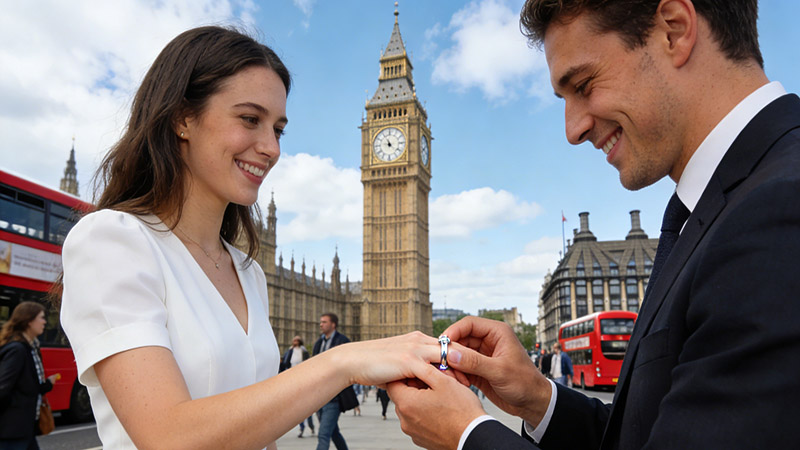
A symbolic representation of love and a relationship closer to the heart. This led them to call this finger the “ring finger,” and now you wear your engagement rings on it. Countries like the UK, Europe, and the US still follow this tradition. in these countries, wearing traditional style remained fairly consistent over time. Couples wear the ring on their wedding and throughout marriage.
Religious Influence on Engagement Ring Traditions
Have you imagined that placement of engagement ring can have any religious link or not? Yes, it does have a religious basis. In 850 BCE, Pope Nicholas I linked this ring to a man’s intent to marry a woman. This solidified the customs of wearing an engagement ring for wedding purposes, setting a ring tradition. After that, married couples always wore a ring like a braided wire on their index finger.

Not only in Christianity but in Judaism and Hinduism, the engagement band has great significance. It is considered a spiritual commitment between two persons.
Modern Meaning of Engagement Rings
So does modernism change the meaning behind an engagement ring? No, the ring still represents a connection between two souls or a relationship that has no ending, just like a circle, which doesn’t have any ending. Now, couples prefer to wear enganet band with the wedding ring in the same finger. The only thing that changes is its appearance.
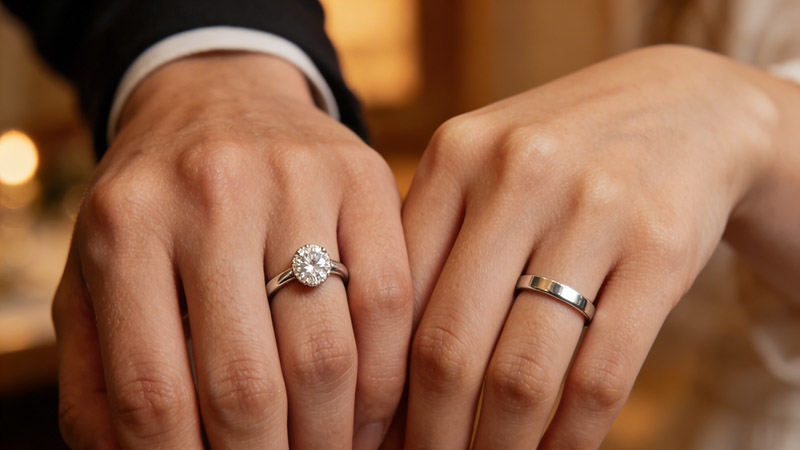
In modern traditions, these rings are adorned with pearls, diamonds, or gemstones. Diamonds engagement rings are now more in demand and stylish, as this adds to the material value of the ring along with spiritual value.
Now, an engagement band is often paired with a wedding band. There are various pairing methods. Let’s explore them so you can know your perfect one.
Engagement and Wedding Ring Combinations
you know what wearing engagement and wedding ring in combination is a personal choice. You can pair them up according to your choice. Here are some combinations that are followed across the world.
Traditional Ring Pairing on the Ring Finger
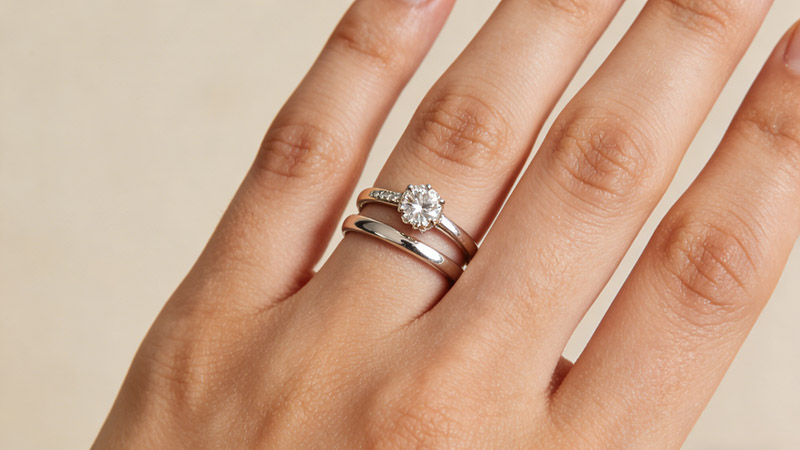
What is traditional pairing? It’s the Engagement rings paired with wedding bands, and both on same ring finger. For this combination, you will wear the wedding band first and then engagement ring. Couples prefer this combination, considering the wedding represents their Vows and more closer to their heart.
Diachronic Method
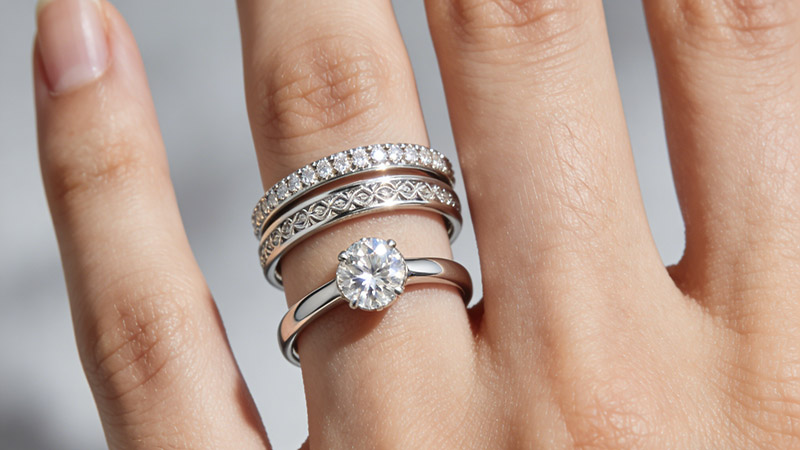
In this pairing, people prefer to wear wedding and engagement bands in the order in which they were received. The engagement ring goes first, followed by wedding band. This combination works best for people who consider it comfortable to wear an engagement ring first, as it is closer to the hand. It shows a journey from being purposed to being committed.
Alternate Methods to Wear Engagement and Wedding Rings
Other modes are also adopted according to comfort, such as:
- Wearing the wedding band alone on the left hand and engagement ring on the right hand ring finger.
- Couple also prefer to wear wedding and enegagement ring on different fingers of the left hand.
Ring Stacking as a Modern Trend
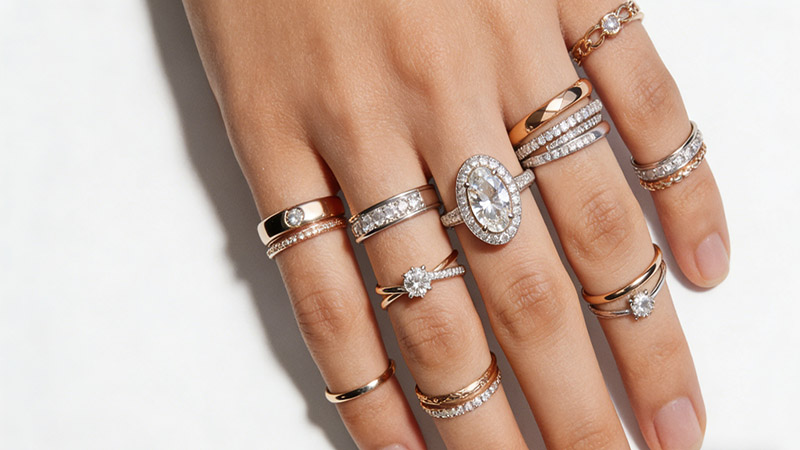
Many people consider ring stacking due to their tradition or their comfort. This method is becoming popular where an engagement band goes on the ring finger or other fingers. This can be a modern take on traditional engagement ring and wedding band combinations. Modern brides favor the stacked oval diamond engagement style for its unique appearance. But stacking can vary based on marriage tastes and style.
Soldering Engagement Rings and Wedding Bands
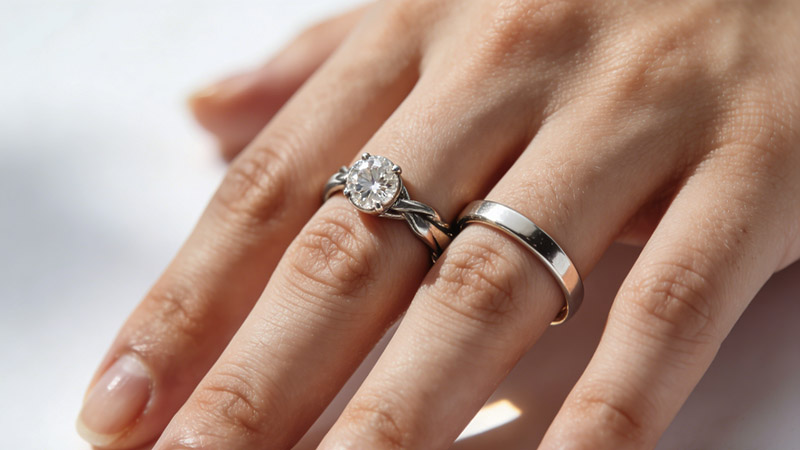
Soldering the engagement ring and wedding band is a symbol to show the strong marital bond between two people. However, our experts suggest we recommend wearing the engagement ring and wedding rings separately first. Be flexible in your choice of and wear the engagement band to ensure a comfortable fit.
Choosing the Right Finger for Your Engagement Ring
Are you curious about how to choose the right finger for your engagement band? Well, choosing the right finger can be decided based on various factors. Here we will discuss how to choose the right finger.
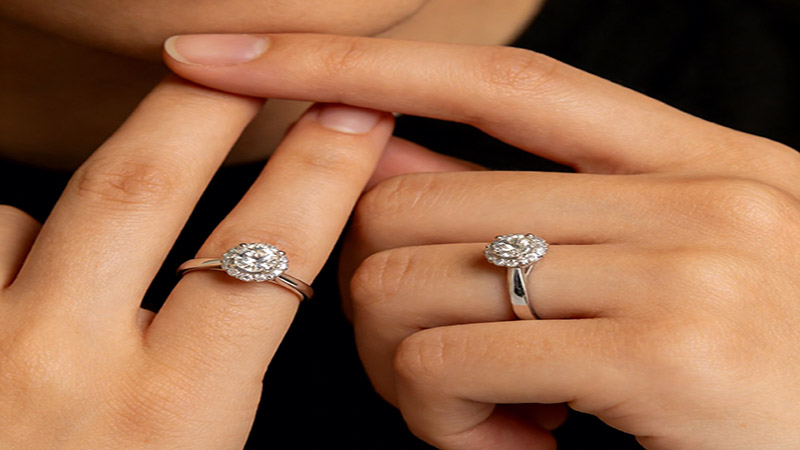
The Traditional Fourth Finger
As we discussed earlier, based on Greek and Egyptian traditions, most people prefer to wear their engagement ring or wedding band on the fourth finger of the left hand. It’s based on the ancient Roman belief about the vena amoris. This fourth finger is actually the index finger. When you count outward starting from thumb, you will get the index as fourth finger.
Customs of Wearing Engagement Ring Placement
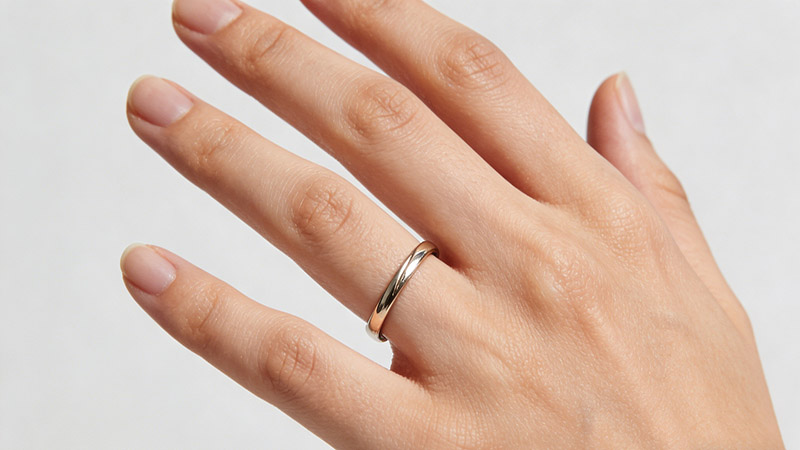
Hey, do you know that many cultures have different wearing rules for this ring? Let us tell you about these cultures. The following tables explain the cultural variations:
| Region / Culture | Engagement Ring Hand | Wedding Band Hand | Cultural Notes |
|---|---|---|---|
| Western Countries (US, UK, Canada) | Left | Left | Based on the vena amoris tradition, rings are typically worn on the ring finger. |
| Eastern Europe (Germany, Russia, Poland) | Left | Right | Engagement bands are worn on the left hand and moved after marriage. |
| Nordic Countries (Including Norway, Denmark) | Right hand | Right hand | Both engagement and marriage ring |
| Latin America | Left hand | Right | Engagement bands are shifted to right hand finger after the wedding ceremony. |
| India | Right hand | Right hand | The right hand is traditionally considered more auspicious. |
| Jewish Tradition | Right hand | After cermony in Left hand | Position of ring changes after the wedding ceremony. |
| Modern Global Practice | Either hand | Either hand | Personal preference increasingly outweighs traditional customs. |
Non-Traditional Finger Choices
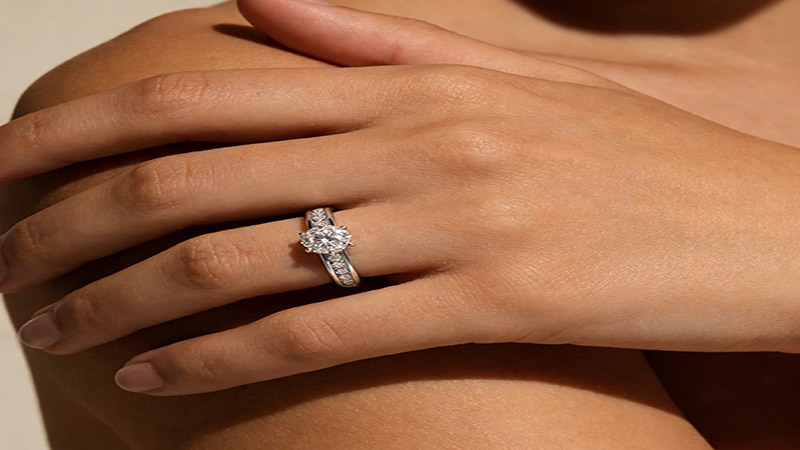
Besides traditional and cultural choices, some people often opt for comfort. They wear their ring wear the comfortable finger, either on the index finger, middle finger, or sometimes on the thumb as well. In short, we can say that the choice is determined by individual preferences, cultural background, or even ring type.
Type of Ring
The type of ring also influences the choice of finger, such as the ring embellished with a heavy stone will feel a bit heavy on the index finger. It will suit the middle finger. Moreover
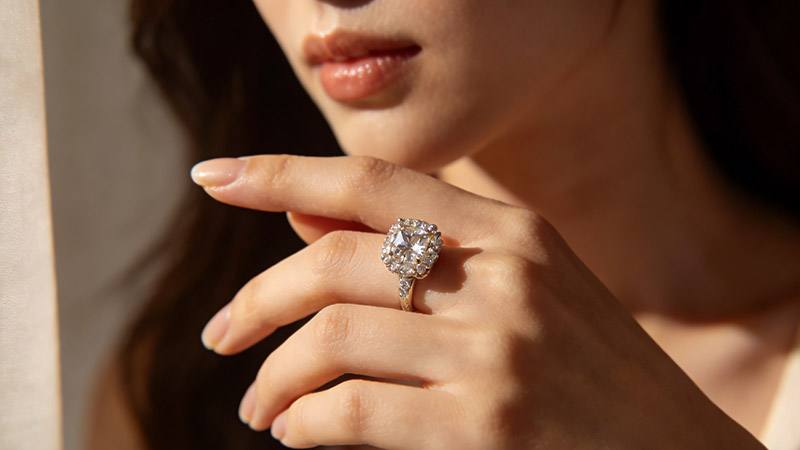
- Slim or delicate bands are well-suited to the ring finger
- Low-profile rings are ideal for the ring finger.
- Oval shape strong p suits the index finger.
Placement of the Engagement Ring
According to our experts, placement of the ring is completely a personal choice. It can vary with traditional style, culture, or comfort. In different regions, couples wear rings on the right hand, or they prefer wearing on the left hand, or they may go for stacking.
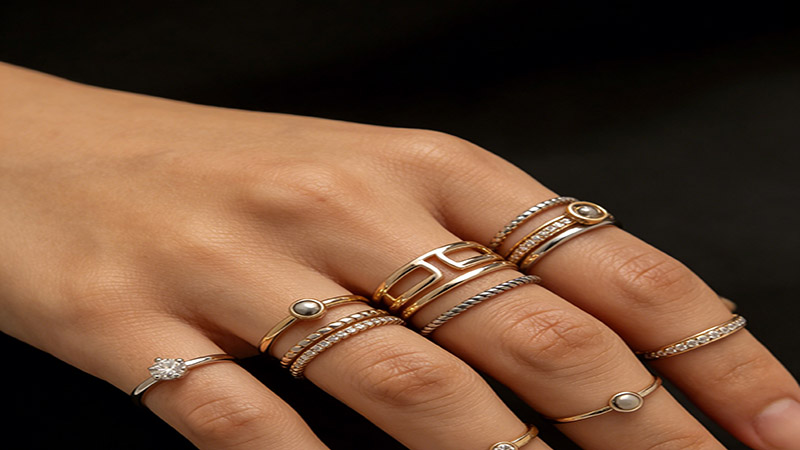
Comfort, Practicality, and Symbolism
When deciding the placement of the ring, one must consider comfort and practicality. You should know the real meaning or symbol of wearing the ring on a specific finger. For example, when choosing left hand, it means you are believing in concepts of the vein of love.
Placement According to Ring Type
| Ring Shape | Typical Placement | Placement Notes |
|---|---|---|
| Round shape strong p | Left-hand index finger | Balanced shape suits traditional placement. |
| P strong oval shape | index or middle finger | oval diamond engagement ring balance on longer fingers. |
| Princess Cut | Left ring finger | Pairs well with structured wedding bands. |
| Pear Shape strong p | Traditional | Worn with the point facing outward. |
| Marquise Cut | middle finger | Elongated form visually lengthens the finger. |
| Emerald Cut | Left-hand engagement position | For elegant settings. |
Style of the Wedding Band
Wedding ring style also influences the placement of the ring, such as:
- A straight ring or wedding band allows traditional engagement band placement.
- Curved or contoured bands may require precise positioning to align comfortably with the engagement band.
Engagement Rings and Wedding Ring Traditions
Engagement ring and wedding ring traditions vary across various cultures or regions. Some may prefer to place them combined on the same finger, either left or the right hand, while others may opt for wearing them in different hands.
Engagement Ring Hand in Different Cultures
Here is a table showing how these rings are worn in different countries:
| Region | Worn on the left hand | Worn on the Right Hand |
|---|---|---|
| United States / UK | Both rings | - |
| Western Europe | Engagement only | Wedding only (varies by country) |
| Eastern Europe | Engagement only | Wedding only |
| Nordic Countries | - | Both rings |
| Latin America | Engagement only | Wedding only |
| India | - | Both rings |
| Global Modern Practice | Either ring | Either ring |
Western Culture
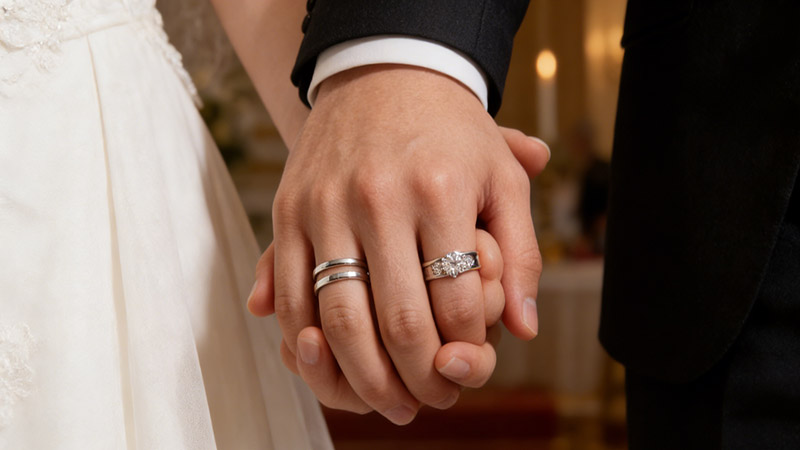
Wedding ring traditions vary in different cultures. Most Western cultures wear wedding rings on the left-hand ring finger. This tradition is being accepted due to the connection of the vein of love with this finger and also due to the personal choice. This tradition has remained strong and widely accepted over time. Not only this, but in most Western traditions, the engagement ring is often worn on the same finger as the wedding ring. Wearing these two rings together symbolizes the marital bond and the commitment to marriage.
Estern Europe
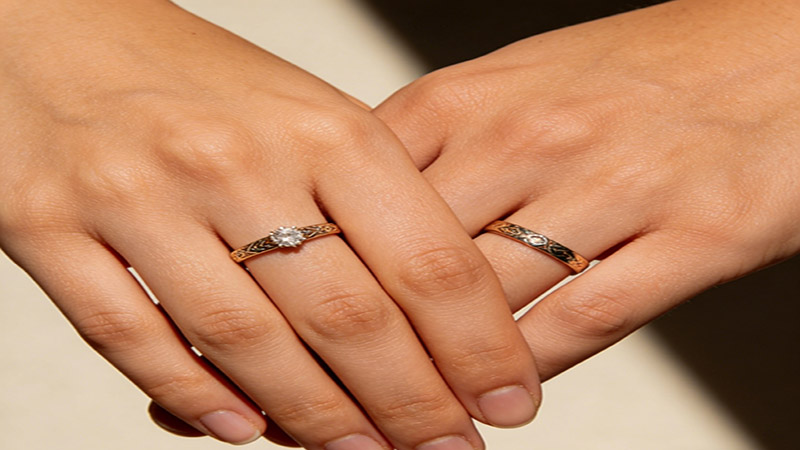
When we discuss the placement of the ring in Eastern Europe, it is worn on the right hand, and the wedding ring on the left side. However, in other cultures, the engagement ring is worn on the left hand, and the wedding ring is worn on the right hand.
Wearing Both Rings on the Same Finger
The tradition of wearing wedding and engagement rings on the same finger is fairly consistent. Some modern couples are increasingly choosing to wear their rings on different fingers or hands.
The Role of the Diamond Ring in Engagement Traditions
The diamond rings have made a remarkable place in engagement traditions. Diamond engagement rings come with various diamond shapes and cuts. These are popular among couples for a left-hand ring. Wearing your engagement band embalished with diamonds makes the ring stunning, precious, and elegant. 4Cs diamonds are known for offering value and significance to the rings.
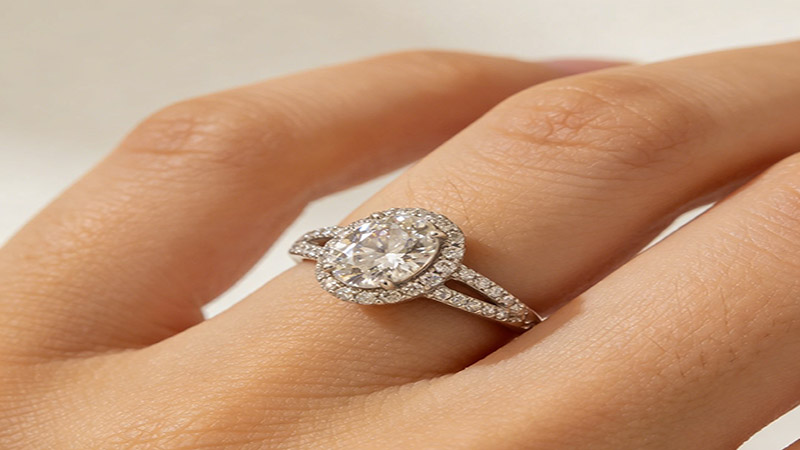
Different diamond cuts are specially used for the left ring finger, such as oval and pear. This choice also depends on their personal preferences for engagement ring and wedding band combination.
FAQs
What hand does the engagement ring go on?
It usually goes on the left hand, but it can vary depending on the culture and traditions.
On which finger to wear an engagement ring?
The ring is worn on the ring or finger of the left or right hand, based on the traditions and cultures.
Can we wear an engagement band in the right hand?
Yes, you can wear it on your right hand. Wearing your engagement band is completely a personal choice regarding comfort and the style you prefer.
What is the 3-month rule for a ring?
3-month rule suggests what the price of an engagement band should be. According to this rule, the ring should cost equivalent to the three-month salary of the purposer.
Which finger do you wear a proposal ring on?
You can wear your proposal ring on the index or the middle finger, depending on the tradition as well as the type of ring.
Conclusion
In short, we can say that the origin and custom of wearing engagement rings dates back to ancient times. The placement of the ring signifies how wedding ring traditions are becoming more common among people. Now you can make a perfect choice for which hand the engagement ring goes on.
Wanna grab your precious engagement ring finger?
Contact us at MissJeweler today and get the quote for your favourite engagement ring. Not only this, you can also contact us right away to get more guidance about the ring finger from our experts.