
Introduction
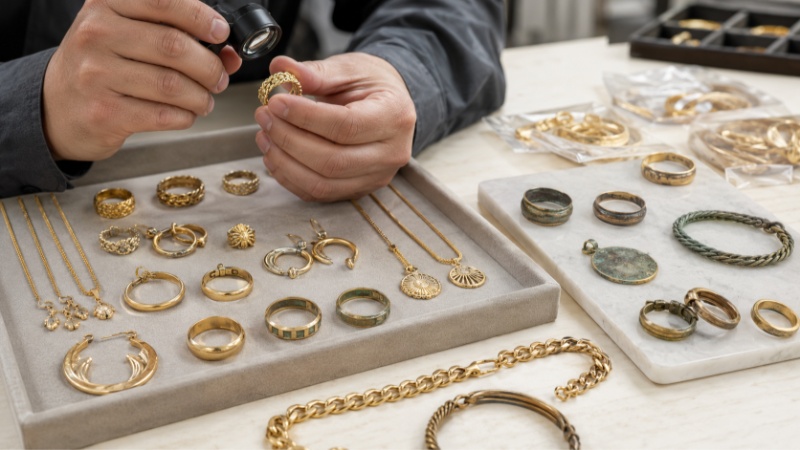
Brass jewelry is popular in fashion jewelry because it is affordable, easy to shape, and suitable for rings, earrings, pendants, chains, bracelets, and private label collections.
Yes, brass jewelry can tarnish because brass contains copper and zinc, and copper can react with air, moisture, sweat, and chemicals.
For consumers, tarnish may look like dullness, darkening, greenish marks, or surface discoloration.For B2B buyers, the bigger issue is not only whether brass tarnishes, but whether the supplier can control plating, coating, polishing, and bulk order consistency.
This guide explains why brass jewelry tarnishes and what jewelry brands should confirm before placing bulk orders.
Does Brass Jewelry Tarnish?
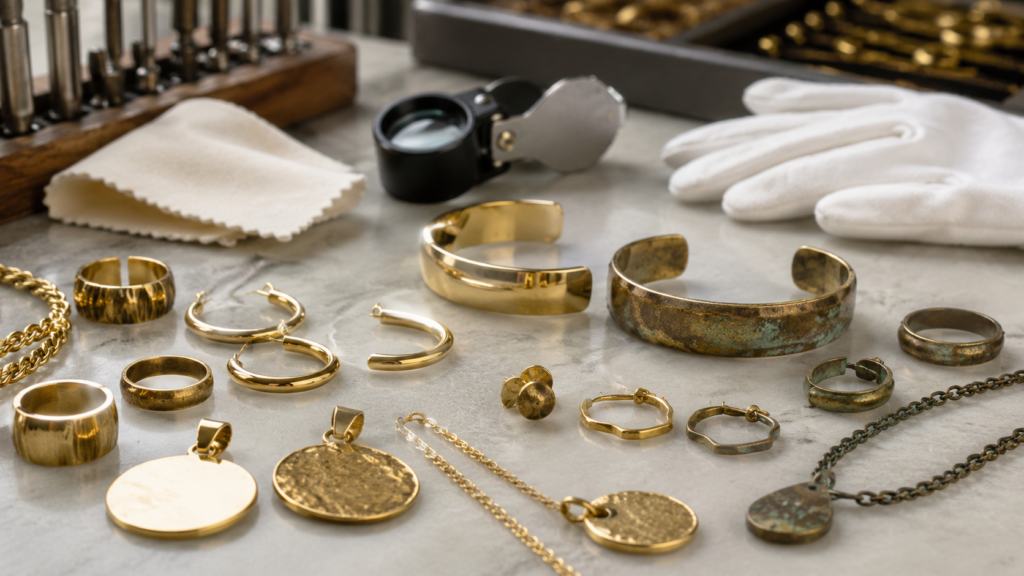
Yes, brass jewelry can tarnish over time, especially when it is exposed to moisture, sweat, perfume, lotion, sunscreen, or humid storage. Brass contains copper, and copper is one of the main reasons brass jewelry may darken or change color during wear. This is a natural material reaction, but the speed can be controlled by better production standards and proper care.
Tarnish does not always mean that the jewelry is badly made. Even good brass jewelry may change color if it is worn daily in high-sweat, high-friction, or chemical-heavy conditions. For jewelry brands, the real question is how long the product can keep a stable appearance under the customer’s expected wearing conditions.
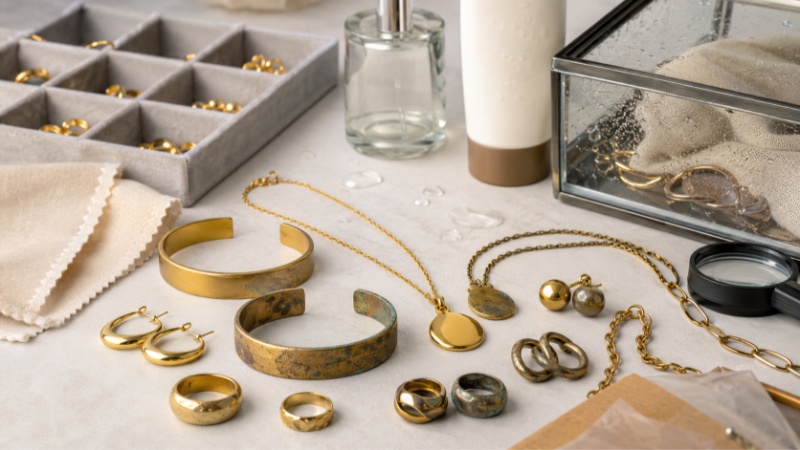
B2B buyers should look at brass jewelry as a product system, not only a base metal choice. The final performance depends on surface polishing, plating thickness, protective coating, packing method, storage condition, and customer care instructions. A low unit price may look attractive, but unclear production standards can create higher costs through complaints, returns, and unstable repeat orders.
Why Brass Jewelry Changes Color
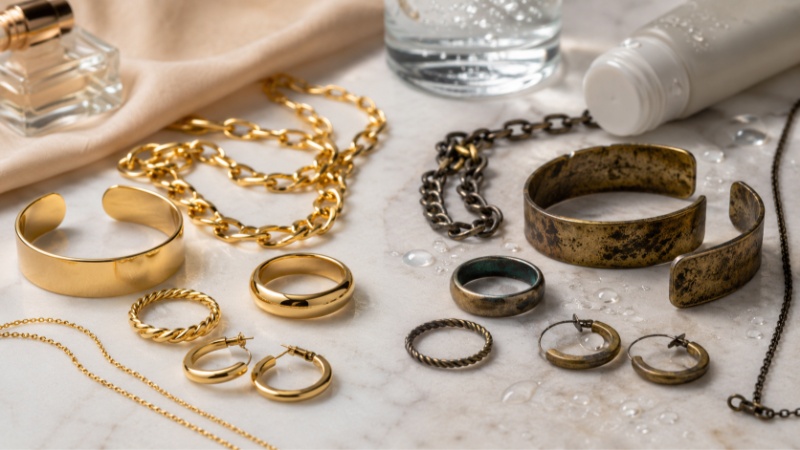
Brass is an alloy mainly made from copper and zinc. Copper can react with oxygen, moisture, salt, sulfur, and acidic skin conditions, which may cause brass jewelry to darken or lose shine. This is why unplated brass usually shows color change faster than plated or coated brass jewelry.
Daily use can make this process faster. Sweat, perfume, alcohol, sunscreen, lotion, cleaning chemicals, and swimming water may affect the surface of brass jewelry or damage the plating layer. For products sold in summer collections or daily-wear categories, brands should be especially careful with plating and care instructions.
For regulated markets, buyers should also pay attention to material descriptions and restricted substance expectations. The ECHA REACH framework is useful for understanding chemical safety requirements in the European market, while the FTC Jewelry Guides help brands understand honest jewelry descriptions in the United States. Clear product descriptions protect both customer trust and brand reputation.
Tarnish vs Rust: What Buyers Should Know
Tarnish and rust are not the same thing. Rust usually refers to iron corrosion, while brass does not rust like iron because it does not have the same iron-based structure. However, brass can oxidize, darken, and discolor, so buyers should not confuse “does not rust” with “does not tarnish.”
This distinction matters in product marketing. If a brand sells brass jewelry as “rust-proof,” customers may still complain when the product becomes dull or changes color. B2B buyers should describe brass jewelry accurately and avoid claims that may create unrealistic expectations.
For gold plated brass jewelry, visible problems may come from both tarnish and plating wear. When the gold layer becomes thin or damaged, the brass base color may appear and make the product look faded. That is why plating control is often more important than simply saying the jewelry is made from brass.
Does Gold Plated Brass Tarnish?
Gold plated brass can tarnish or fade when the plating layer wears down, the surface is damaged, or the brass base becomes exposed. Thicker plating, better polishing, cleaner pre-treatment, and stronger protective coating can improve appearance durability. For B2B orders, gold plated brass quality depends on process control, not only the gold color shown in photos.
Thin plating may look good when the product is new, but it may not perform well after daily customer wear. Rings, bracelets, Cuban chains, and body chains usually face more friction than earrings or occasional-wear pendants. High-contact products should use stronger plating standards and stricter inspection before shipment.
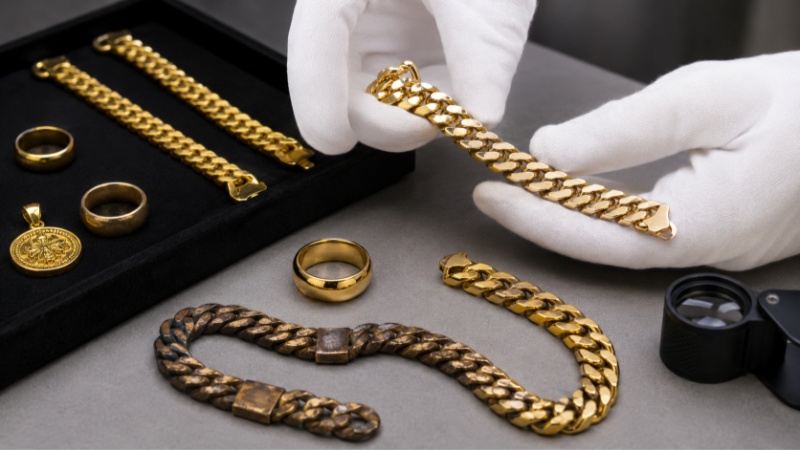
Buyers should ask suppliers to confirm plating thickness, gold color sample, base metal, anti-tarnish coating, and approved sample standard before bulk production. This is especially important for private label brands that need repeat order consistency. A good supplier should help buyers confirm these details before production starts, not after complaints appear.
Factory Experience: Color Difference Often Starts Before Plating
From Missjeweler’s factory experience, common problems with gold plated brass jewelry include gold color difference from the approved sample, fading after wear, exposed brass base color, dull surface appearance, and occasional green marks on the skin. These problems are often related to weak polishing, insufficient plating thickness, unclean pre-treatment, unstable protective oil sealing, or unclear sample-to-bulk standards. In many cases, the issue is not only the brass material itself, but the lack of clear process control before mass production.
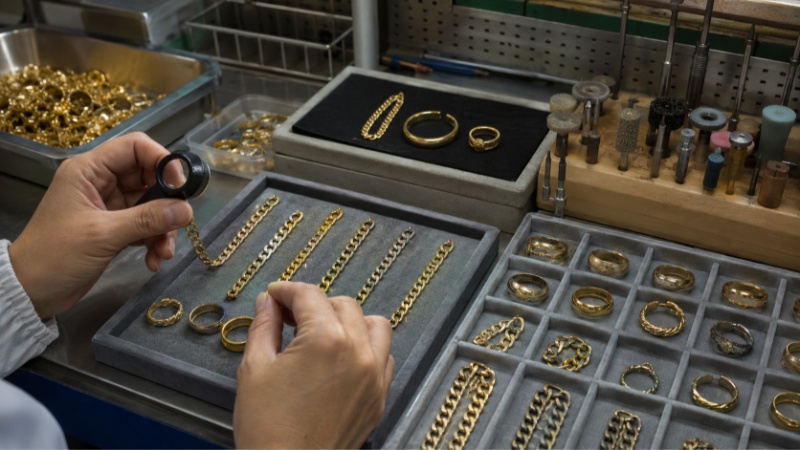
For bulk orders, Missjeweler usually suggests confirming the plating thickness standard, gold color sample, protective coating requirement, and approved sample reference before production starts. This helps buyers reduce color difference, fading complaints, and customer dissatisfaction after delivery. For growing jewelry brands, these confirmations are especially important when selling gold plated rings, bracelets, chains, and other daily-wear products.
How Long Does Brass Jewelry Last?
There is no fixed lifespan for brass jewelry because different products face different wearing conditions. Brass jewelry may keep its look for months or longer depending on plating, coating, frequency of wear, storage, climate, and customer care. A product worn occasionally may last much longer than a product worn daily with sweat, water, and perfume exposure.
Unplated brass usually darkens faster because the metal surface is directly exposed. Gold plated brass can keep a brighter appearance for longer, but only when the plating quality, polishing, and coating are controlled well. For brands, the better question is not only “how long does it last,” but “what standard is suitable for this product type and price range?”
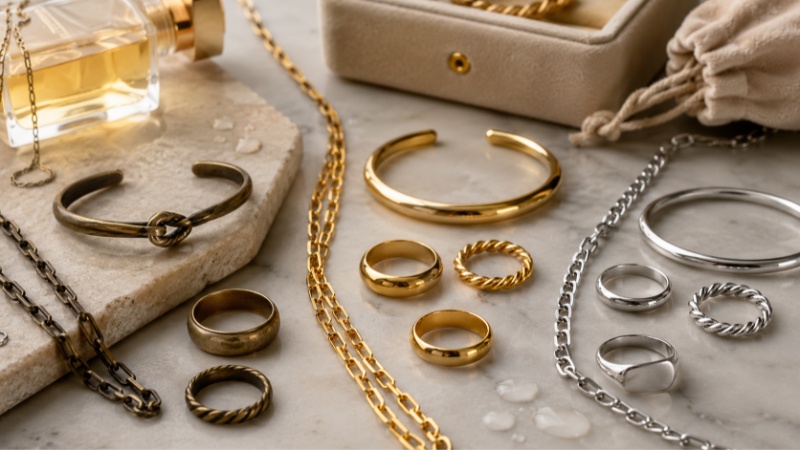
Different materials also have different market positioning. Stainless steel usually offers stronger anti-tarnish performance, while 925 silver has a higher perceived value but can also tarnish without proper care. Brass remains useful for affordable fashion jewelry, custom shapes, and gold plated collections when buyers manage expectations clearly.
7 Checks Before Bulk Brass Jewelry Orders
1. Confirm the Base Metal
Buyers should confirm whether the product uses brass, stainless steel, 925 silver, or another material. Product photos cannot show the full difference in durability, weight, price, plating performance, or customer expectations. Base metal confirmation is the first step in avoiding wrong pricing, wrong marketing claims, and wrong customer promises.
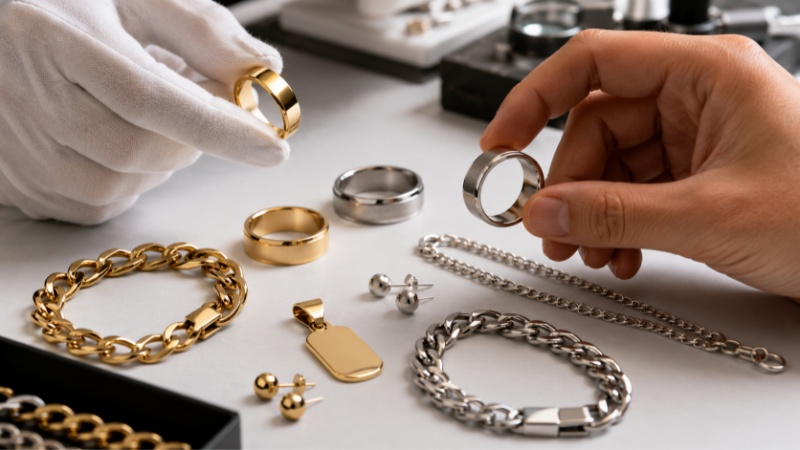
This is especially important when buyers compare brass with stainless steel or 925 silver. Brass may be more flexible for affordable fashion jewelry and custom designs, while stainless steel or silver may be better for durability or premium positioning. The right material depends on the target market, product category, and acceptable complaint risk.
2. Confirm Plating Thickness
Plating thickness can affect how long gold plated brass jewelry keeps its color. A thin layer may reduce cost, but it may also increase the risk of fading, dullness, and exposed base metal. Buyers should ask what plating thickness can be confirmed instead of only asking for the lowest price.
Different products may need different plating standards. Rings, bracelets, Cuban chains, and body chains usually need stronger protection than earrings or pendants because they face more friction and skin contact. A professional supplier should help match plating standards with the real wearing scenario.
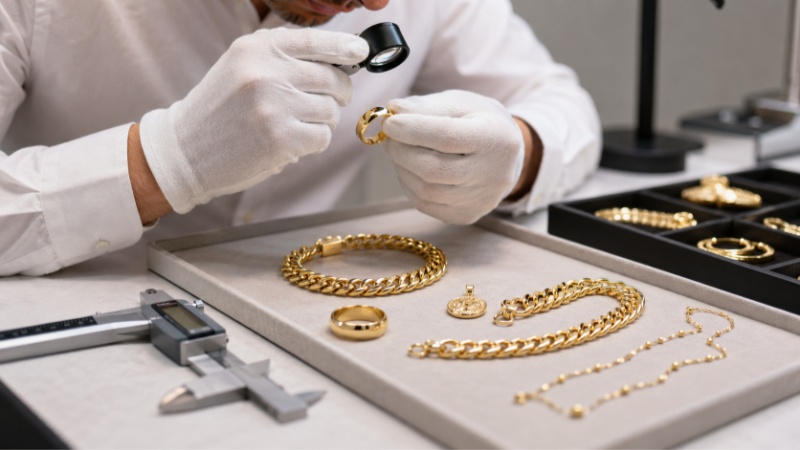
3. Check Surface Preparation
Surface preparation is one of the most important steps before plating. Good polishing and cleaning help the plating layer attach better and create a smoother final appearance. Poor surface preparation can cause uneven color, weak adhesion, dull finishing, or faster fading after wear.
Buyers should ask whether the supplier controls polishing, cleaning, and pre-treatment before plating. These steps may not be visible in product photos, but they strongly affect bulk order quality. For B2B buyers, hidden process details often decide whether the final product receives good reviews or complaints.
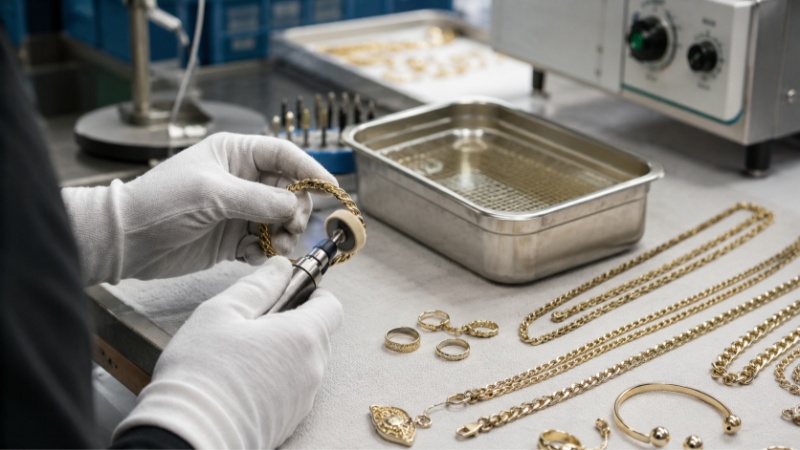
4. Ask About Protective Coating
Protective coating or oil sealing can help slow oxidation and protect the surface of brass or gold plated brass jewelry. It is not a magic solution, but it can improve durability when combined with proper plating and polishing. Buyers should confirm whether the coating is available, suitable for the design, and stable for bulk production.
Some designs may need more careful coating decisions because of stones, moving parts, chain gaps, or textured surfaces. If the coating is uneven or unstable, the product may still show dullness or color change. A clear coating requirement helps reduce uncertainty between sample approval and bulk production.
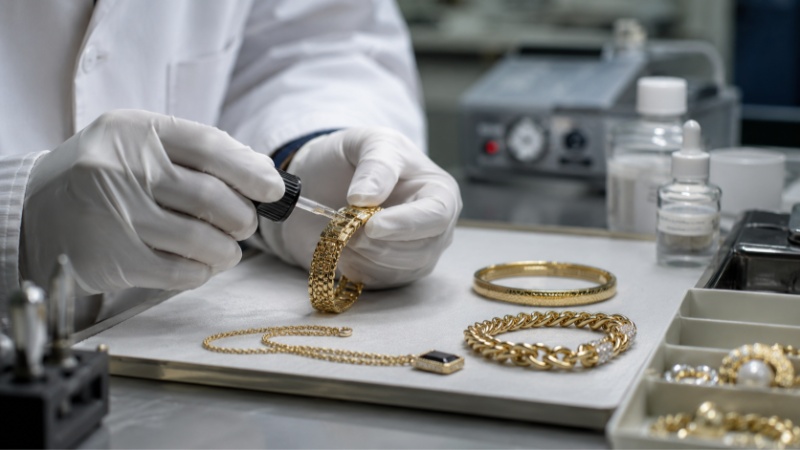
5. Review Sample and Bulk Consistency
The approved sample should become the reference standard for bulk production. Buyers should keep records for gold color, surface finish, plating effect, stone setting, clasp quality, size, and packaging. Many B2B problems happen when the sample looks good, but the bulk order has color difference or weaker finishing.
Repeat orders also need clear records. A style may sell well once, but the second order may look different if the supplier does not follow the same specifications. For private label jewelry brands, sample-to-bulk consistency is directly connected with customer trust and repeat purchase stability.
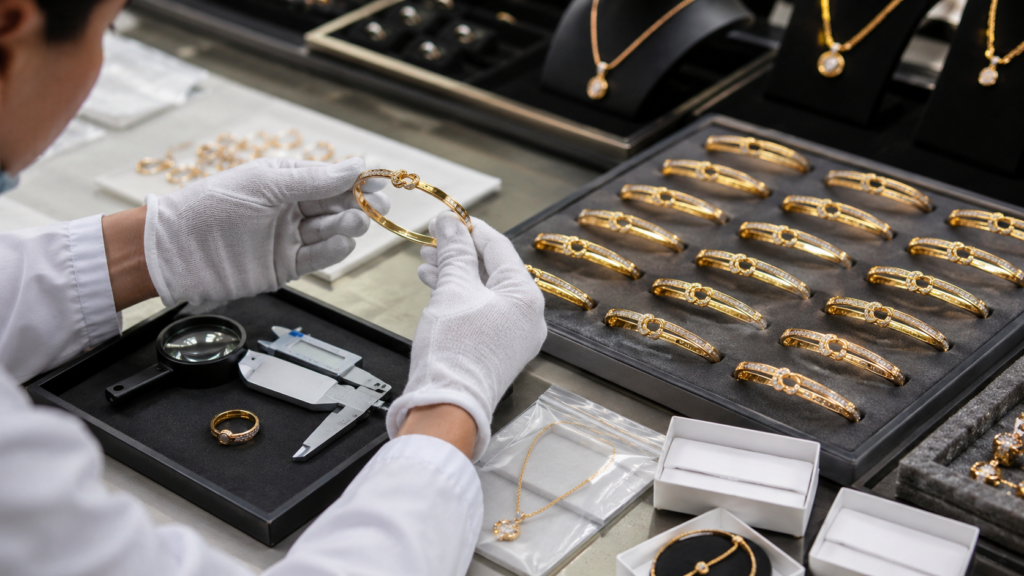
6. Test High-Friction Products Carefully
High-friction products need stricter inspection because they touch the skin more often and move during wear. Rings, bracelets, Cuban chains, tennis bracelets, and body chains are more likely to face sweat, rubbing, pulling, and chemical exposure. These products should not be judged only by appearance at the sample stage.
Buyers should confirm plating adhesion, clasp strength, soldering points, stone setting, surface smoothness, and coating quality before shipment. For jewelry with stones, plating and setting quality should be checked together because rough edges or loose stones can increase complaints. A stronger QC process helps brands reduce after-sales problems before products reach customers.
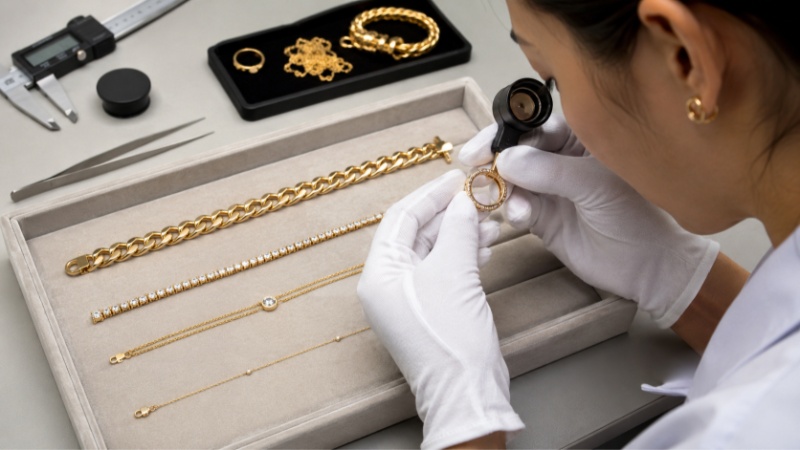
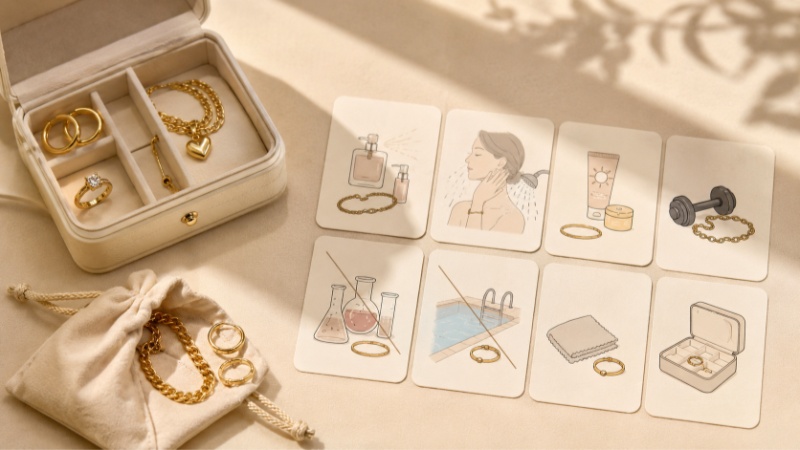
7. Prepare Care Instructions
Care instructions are important because many tarnish and fading problems are related to how customers wear and store jewelry. Customers should know that brass and gold plated brass jewelry should avoid water, sweat, perfume, sunscreen, chemicals, and long-term humid storage. A simple care card can reduce complaints by setting clear expectations before problems happen.
Care instructions are also useful for Shopify sellers, boutique retailers, and private label brands. They help customer service teams explain material behavior more professionally and reduce misunderstandings after purchase. For B2B buyers, care cards are a low-cost way to protect reviews, reduce returns, and improve customer experience.
Brass vs Stainless Steel vs 925 Silver
Different jewelry materials suit different brand positions. Brass is practical for affordable fashion jewelry and custom plated designs, while stainless steel can be stronger for durability-focused products and 925 silver can support a more premium image. The best choice depends on product price, target customers, design complexity, and expected wearing conditions.
| Material | Tarnish Risk | Price Level | Best Use | B2B Buyer Notes |
|---|---|---|---|---|
| Brass | Medium to high | Affordable | Fashion jewelry, custom pendants, plated styles | Needs clear plating and coating standards |
| Gold Plated Brass | Medium | Affordable to medium | Gold-tone fashion collections | Depends on plating thickness and surface preparation |
| Stainless Steel | Low | Affordable to medium | Chains, bracelets, waterproof-style jewelry | Good for durability-focused brands |
| 925 Silver | Medium | Higher | Premium rings, earrings, pendants | Higher perceived value but still needs care |
| Gold Vermeil | Medium | Higher | Premium gold-plated collections | Must meet market description standards |
Buyers should also understand that material names may have legal and marketing expectations in different markets. For example, precious metal descriptions may require careful wording, and the UK hallmarking guidance can help buyers understand when hallmarking rules may apply. Accurate material descriptions help brands avoid customer confusion and compliance risks.
Common B2B Problems with Brass Jewelry
Common B2B problems with brass jewelry include gold color difference, faster-than-expected fading, exposed brass base color, dullness after storage, green marks on skin, and customer complaints after summer wear. These issues often happen when buyers choose products only by photos or low prices. Clear specifications are more important than attractive sample pictures alone.
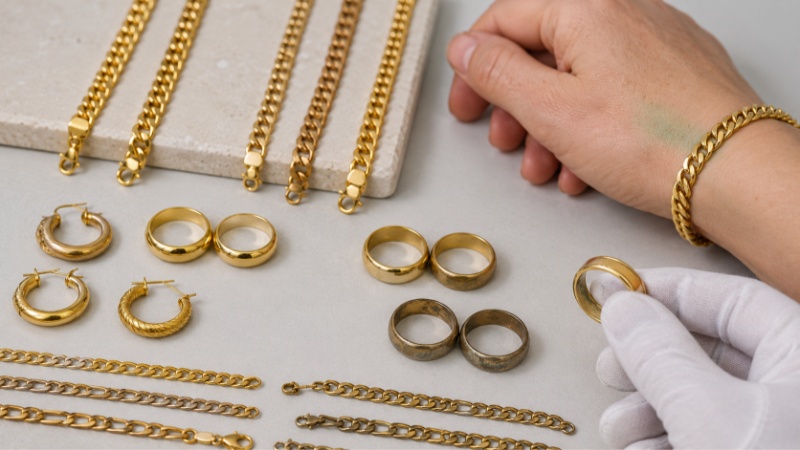
Another common problem is repeat order inconsistency. The first order may match the approved sample, but the second order may have a different gold tone, weaker plating, or different surface finish if records are not controlled well. For growing brands, unstable repeat orders can damage reviews, customer trust, and restock planning.
Some complaints also come from unclear product descriptions. If customers expect waterproof, sweat-proof, or permanent color performance from brass jewelry, they may feel disappointed after normal material reaction appears. B2B buyers should align product claims with real material performance and confirmed production standards.
Factory Experience: High-Friction Styles Need Earlier Confirmation
From Missjeweler’s production and customer feedback experience, complaints are more common with rings, bracelets, Cuban chains, and body chains because these products face more friction, sweat, and skin contact. Summer jewelry also has higher risk because customers may wear products during hot weather, travel, outdoor activities, or with sunscreen and perfume. High-friction brass jewelry should not be checked only by appearance; it needs stronger confirmation for plating, sealing, and real-use conditions.
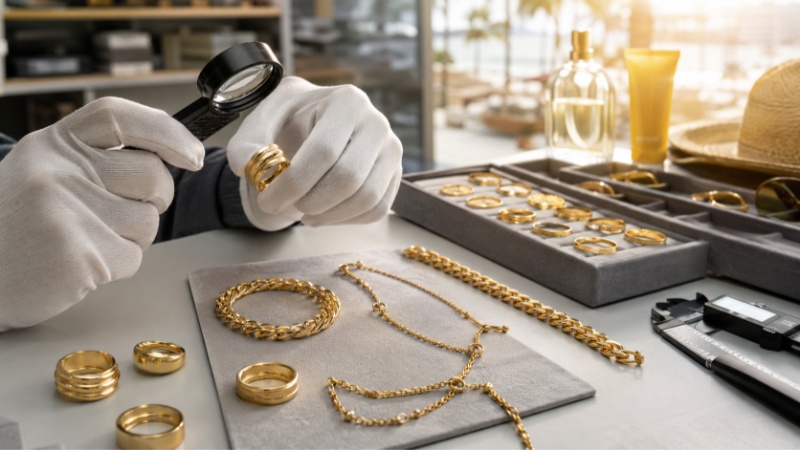
To reduce after-sales problems, buyers should confirm plating thickness, plating color sample, protective oil sealing, wearing scenarios, and sample-to-bulk consistency before placing a bulk order. These details help reduce fading, color difference, durability complaints, and unstable repeat orders. For B2B jewelry buyers, the safest sourcing decision is to confirm risk points before production, not after customer complaints appear.
How Missjeweler Supports Brass Jewelry Buyers
Missjeweler supports jewelry brands with OEM/ODM brass jewelry and gold plated jewelry production. The process can include design discussion, CAD confirmation, sample development, material selection, polishing, plating discussion, protective coating confirmation, stone setting, quality inspection, packaging support, and bulk production. This helps buyers confirm important details before production, not only after problems appear.
Missjeweler can support categories such as gold plated jewelry, custom pendants, name jewelry, logo pendants, Cuban chains, tennis bracelets, earrings, rings, bracelets, necklaces, and private label jewelry packaging. Different product categories need different production focus because friction, stones, chains, clasps, and surface areas all affect durability. A reliable supplier should help buyers match process standards with the actual product type.
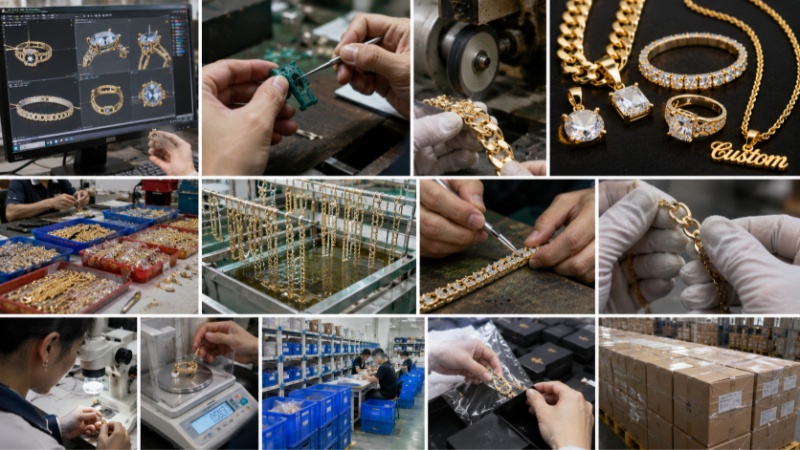
For growing brands, the value is not only manufacturing the product. Buyers also need stable communication, clear sample references, realistic production standards, and final inspection before shipment. Missjeweler helps jewelry brands reduce sourcing risk by focusing on practical details that affect reviews, repeat orders, and long-term cooperation.
Quality management also matters when brands choose suppliers. Buyers can refer to ISO 9001 quality management principles when evaluating whether a supplier has a process-driven approach to consistency and improvement. For B2B jewelry sourcing, stable process control is often more valuable than a very low first-order price.
Questions Buyers Should Ask Suppliers
Before placing a brass jewelry or gold plated brass jewelry order, buyers should ask practical production questions instead of only comparing price and photos. These questions help confirm whether the supplier can control material, plating, finishing, packaging, and repeat order consistency. Clear questions before production can prevent many common B2B jewelry complaints.
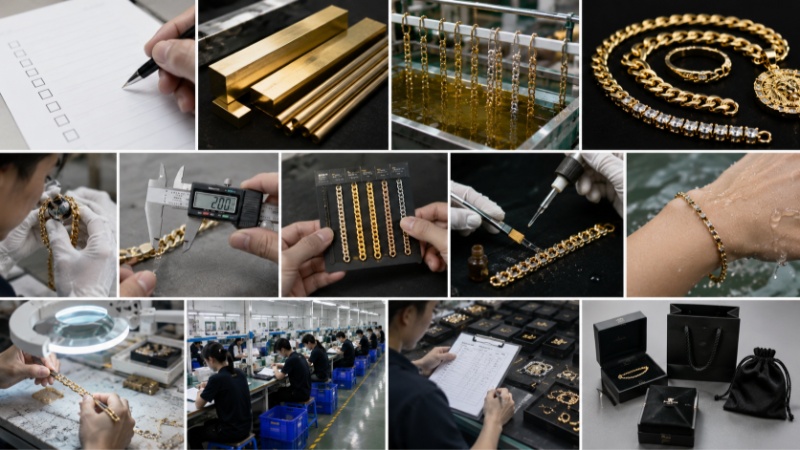
- What base metal is used for this jewelry?
- What plating thickness can be confirmed?
- Can you provide a gold color sample before bulk production?
- Is there anti-tarnish coating or protective oil sealing?
- Is the coating suitable for rings, bracelets, or Cuban chains?
- Can the approved sample be used as the bulk standard?
- How do you control gold color consistency?
- What QC steps are done before shipment?
- Can you support repeat orders with the same specifications?
- What packaging and care card options are available?
Conclusion
Brass jewelry can tarnish, but the final customer experience depends on base metal choice, plating thickness, polishing, surface preparation, protective coating, care instructions, and supplier control.
For B2B jewelry buyers, the safest approach is to confirm specifications clearly before bulk orders and work with a supplier that understands both production quality and customer complaint risks.
CTA
Looking for stable brass or gold plated jewelry production? Contact Missjeweler to confirm samples, plating details, QC standards, and private label options before your next bulk order.
FAQ
1. Does brass jewelry tarnish easily?
Yes, brass jewelry can tarnish because it contains copper, which reacts with air, moisture, sweat, and chemicals. The speed depends on plating, coating, care, storage, and production quality.
2. Is brass jewelry good for wholesale brands?
Yes, brass can be practical for fashion jewelry, custom pendants, rings, earrings, chains, and affordable plated collections. B2B buyers should confirm plating, coating, and QC standards before bulk orders.
3. Does gold plated brass jewelry last longer?
Gold plated brass can last longer than unplated brass when plating, polishing, and coating are controlled well. Daily-wear products still need stronger plating and clear care instructions.
4. Why does brass jewelry turn skin green?
Green marks usually come from copper reacting with sweat, moisture, or chemicals. It does not always mean the product is unsafe, but it can affect customer satisfaction and reviews.
5. How can brands reduce brass jewelry complaints?
Brands can reduce complaints by confirming base metal, plating thickness, gold color sample, protective coating, sample standards, QC process, and care instructions. Clear standards before production help protect repeat orders.