
Introduction
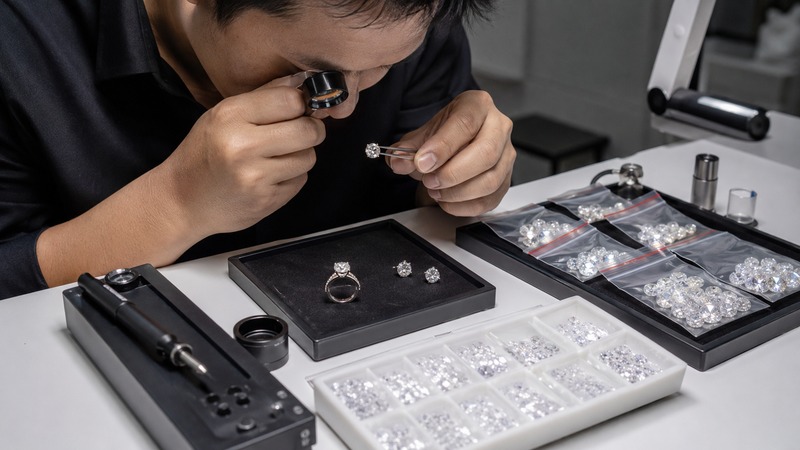
Moissanite is loved for its strong brilliance, high durability, and accessible price, but many buyers still want to know how to tell if moissanite is real before they buy or resell it. A real moissanite stone should not be confused with diamond, cubic zirconia, glass, or vague “diamond-like” simulants. Simple home checks can help you notice obvious problems, but no single test can confirm every detail with complete confidence. For jewelry sellers, the bigger risk is not only one fake stone, but inconsistent stone quality across rings, earrings, pendants, tennis bracelets, or bulk orders. This guide explains seven practical checks buyers can use, plus the B2B quality standards that help reduce risk before production.
How to Tell If Moissanite Is Real
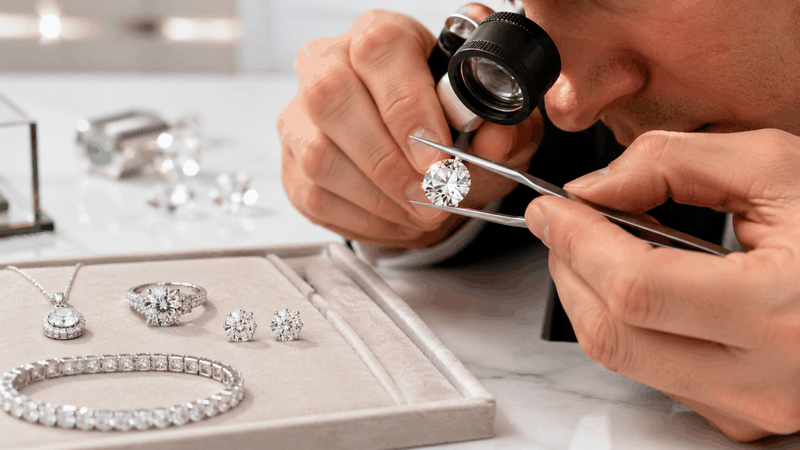
To tell if moissanite is real, check its rainbow fire, double refraction, tester result, certificate details, and seller documentation. Real moissanite usually shows strong brilliance and colorful flashes, especially under direct light. A 10x loupe may reveal slight double refraction near the facet lines, while a moissanite tester or multi-tester can provide better confirmation than a basic diamond tester. For B2B buyers, authenticity should also be supported by stone type, millimeter size, color grade, clarity grade, sample approval, and final QC records.
What Does Real Moissanite Mean?
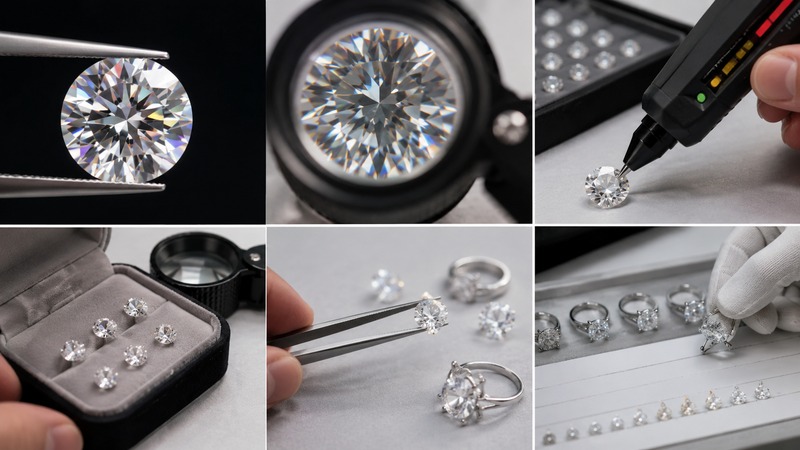
Real moissanite is a real gemstone material, but it is not diamond. Most commercial moissanite used in jewelry today is lab-created silicon carbide, known for strong fire, hardness, and durability. It should be described clearly as moissanite, not as natural diamond or lab-grown diamond. Clear wording matters because buyers need to understand exactly what they are purchasing.
Fake moissanite usually means another stone is being sold or described as moissanite. This may include cubic zirconia, glass, low-cost simulants, or unclear “diamond alternative” stones. Low-quality moissanite can still be real moissanite, but it may have weak cutting, poor color, cloudiness, or inconsistent grading. For professional buyers, the key is not only authenticity, but also stable quality.
| Term | Meaning |
|---|---|
| Real Moissanite | Lab-created silicon carbide gemstone |
| Diamond | Natural or lab-grown carbon gemstone |
| Cubic Zirconia | Lower-cost diamond simulant |
| Fake Moissanite | Non-moissanite stone sold as moissanite |
| Low-Quality Moissanite | Real moissanite with weak cut, color, or clarity |
Why Fake Moissanite Is Easy to Miss
Moissanite, cubic zirconia, and lab diamond can look similar in online photos. Strong lighting, retouching, and product filters can make many stones appear bright and clean. This is why judging only by a seller’s photo is risky, especially when buying loose stones or finished jewelry online. A stone may look attractive but still have unclear material information.
Mounted jewelry is harder to inspect than loose stones. A loose stone can be checked from more angles, but a ring, earring, pendant, tennis bracelet, or Cuban chain may hide the pavilion and side details. Small stones are also harder to test one by one. For B2B orders, the major risk is not only fake moissanite, but mixed stone quality across the full batch.
Check 1: Look for Strong Fire and Brilliance
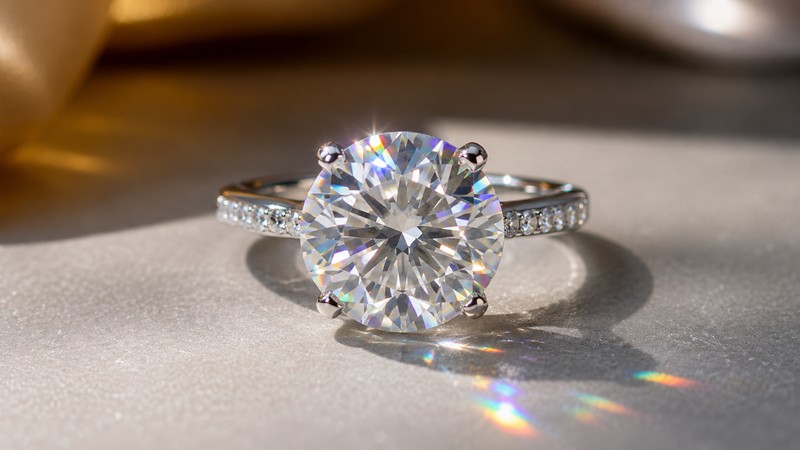
Real moissanite is known for strong brilliance and rainbow fire. Under direct light, it often shows colorful flashes that can be stronger than diamond. This fire is one reason moissanite rings, earrings, pendants, and tennis bracelets are popular with buyers who want high visual impact. A clean real moissanite stone should look lively, bright, and sharp.
However, sparkle alone is not final proof. Cubic zirconia can also sparkle, and dirty moissanite may look dull even when it is real. If a stone looks cloudy, milky, lifeless, or glassy after cleaning, it may be low quality or not moissanite. Buyers should treat fire as the first check, not the only check.
Check 2: Use a 10x Loupe for Double Refraction
A 10x loupe can help buyers look for double refraction. Moissanite has optical properties that may create a slight doubling effect near facet junctions. This effect is often easier to see in larger stones or loose stones. If you are checking a small accent stone, pavé setting, or tennis bracelet, it may be much harder to observe clearly.
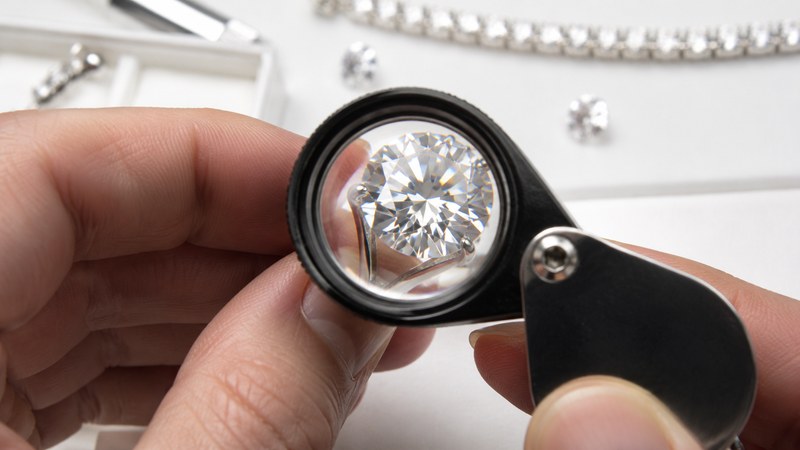
Loupe inspection is useful, but it requires experience. A beginner may not know what facet doubling should look like, and poor lighting can cause confusion. This is why professional jewelers often combine loupe inspection with other tools. For B2B buyers, loupe checks should support a quality process, not replace it.
Check 3: Use a Moissanite Tester or Multi-Tester
A basic diamond tester is not always enough to identify moissanite. Many diamond testers measure thermal conductivity, and moissanite can sometimes react in a way that creates confusion. This means a basic tester may not clearly separate diamond from moissanite. A moissanite tester or multi-tester is a better option for more accurate screening.
Tester results also depend on correct operation. The stone should be clean, the device should be calibrated, and the probe should touch the stone properly. For expensive jewelry or wholesale orders, professional testing is safer than relying on one quick result. B2B suppliers should use clear inspection steps before shipment.
| Testing Tool | Usefulness | Limitation |
|---|---|---|
| Basic Diamond Tester | Fast first screening | May misread moissanite |
| Moissanite Tester | Better for moissanite | Needs correct operation |
| Multi-Tester | More complete screening | Higher cost |
| Lab Testing | Strongest confirmation | Takes more time and cost |
Check 4: Compare It with Cubic Zirconia
Cubic zirconia is one of the most common stones confused with moissanite. CZ is usually cheaper and softer, and it may become cloudy or scratched faster with regular wear. Moissanite is more durable and better suited for daily-wear rings, bracelets, and pendants. This matters especially for sellers who want fewer after-sales complaints.
Moissanite usually has sharper brilliance and stronger fire than CZ. CZ may look bright at first, but its sparkle can feel softer or more glass-like. Real moissanite normally holds its appearance better over time when properly set and cared for. For buyers comparing products, price that seems too low should raise questions about the stone type.
| Feature | Real Moissanite | Cubic Zirconia |
|---|---|---|
| Fire | Strong rainbow fire | Softer sparkle |
| Durability | Higher | Lower |
| Long-Term Wear | Better for daily jewelry | May dull faster |
| Price | Higher than CZ | Lower |
| B2B Risk | Grade inconsistency | Mislabeling as moissanite |
Check 5: Review the Certificate or Stone Report
A certificate or stone report can support moissanite authenticity. Larger stones and higher-value jewelry often include details such as stone shape, millimeter size, color grade, clarity grade, and certificate number. Buyers should check whether the report matches the actual stone and product description. A certificate is most useful when the seller is also transparent and reliable.
For B2B orders, a certificate alone is not enough. Buyers should also ask for stone specifications, sample confirmation, production standards, and QC details. The GIA Gem Encyclopedia is useful for gemstone education, while the FTC Jewelry Guides help sellers understand responsible jewelry descriptions. Clear documentation protects both the seller and the customer.
Check 6: Inspect the Finished Jewelry Details
Real moissanite quality should be checked inside the finished jewelry, not only as a loose stone. A moissanite ring should have a centered stone, secure prongs, and clean setting work. Earrings should have matched stones, while pendants should show consistent brightness across the design. A real stone can still create complaints if the setting is weak.
Multi-stone jewelry needs extra attention. Tennis bracelets, tennis chains, Cuban chains, custom logo jewelry, and photo pendants may use many small stones. If the stones are mixed by color, size, or brilliance, the piece may look uneven even if some stones are real moissanite. B2B buyers should confirm stone matching before bulk production.

Check 7: Watch for Seller and Price Red Flags
Unclear product descriptions are a major warning sign. If a listing only says “diamond-like stone,” “simulated diamond,” or “premium stone” without clearly naming moissanite, buyers should be careful. A proper product page should mention the stone type, shape, millimeter size, color grade, clarity, metal material, and setting details. Vague wording can lead to disputes after purchase.
Extremely low prices can also signal risk. Low pricing does not always mean fake moissanite, but it may indicate lower grade stones, weak cutting, poor setting, or missing quality control. For B2B orders, no sample approval before bulk production is a serious problem. A reliable supplier should explain what is being produced, tested, packed, and shipped.
Common red flags include:
- No clear stone type
- No millimeter size
- No color or clarity grade
- No certificate option
- No sample approval
- No QC standard
- No clear supplier background
- Price far below normal market level
Real Moissanite vs Fake Moissanite Comparison Table
A quick comparison table helps buyers screen risk before purchase. This does not replace professional testing, but it gives buyers a practical framework. For jewelry sellers, it can also help train product teams and customer service staff. Clear standards reduce confusion when customers ask about authenticity.
| Check Point | Real Moissanite | Fake or Misrepresented Stone |
|---|---|---|
| Sparkle | Strong brilliance and fire | Dull, glassy, or inconsistent |
| Loupe View | May show double refraction | No clear moissanite feature |
| Tester Result | Works with moissanite or multi-tester | Inconsistent or unclear result |
| Certificate | Stone details available | No clear report |
| Durability | Suitable for daily wear | May scratch or dull faster |
| Description | Clearly says moissanite | Vague ¡°diamond-like¡± wording |
| B2B Order | Specs and QC confirmed | No batch control |
Can You Test Moissanite at Home?
Yes, buyers can do basic moissanite checks at home. They can clean the stone, observe its fire, use a 10x loupe, and try a moissanite tester if available. These steps can help identify obvious problems before buying or reselling jewelry. They are especially helpful for checking small personal purchases.
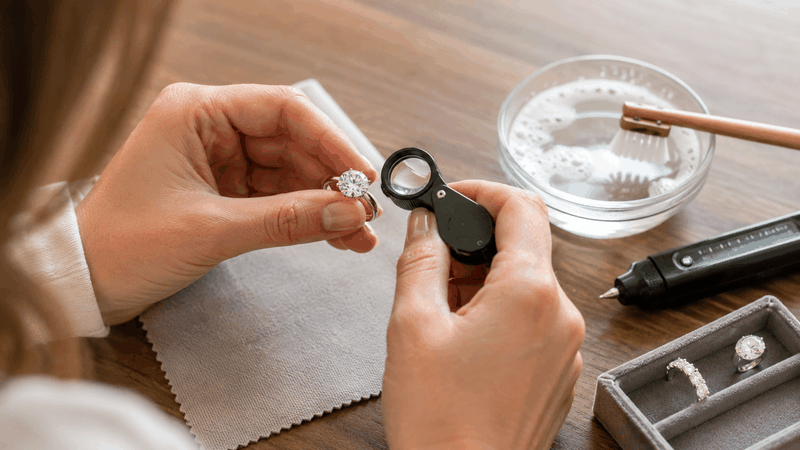
Home testing still has limits. It cannot always confirm stone origin, full quality grade, or batch consistency. Buyers should avoid destructive tests such as scratching, heating, or chemical exposure because these can damage the jewelry. For high-value pieces or bulk orders, professional jeweler inspection or lab testing is the safer choice.
How B2B Buyers Should Confirm Moissanite Quality
B2B buyers need a stronger process than personal shoppers. A single beautiful sample does not guarantee that every piece in a bulk order will match. Jewelry brands should confirm stone type, stone shape, millimeter size, carat equivalent, color grade, clarity grade, and cut quality before production. These details reduce misunderstandings between buyer and supplier.
Bulk moissanite jewelry also requires consistency checks. Tennis bracelets need matched stones across the full bracelet, earrings need paired stones, and Cuban chains need stable stone setting across many small positions. Rings and pendants require secure prongs, clean polishing, and proper center stone placement. Without QC, even real moissanite jewelry can create customer complaints.
| B2B Check | Why It Matters |
|---|---|
| Stone Type | Prevents CZ or glass substitution |
| Millimeter Size | Avoids carat-equivalent confusion |
| Color Grade | Keeps bulk orders visually consistent |
| Clarity Grade | Reduces cloudy stones |
| Sample Approval | Prevents sample-to-bulk mismatch |
| Stone Matching | Important for bracelets, chains, and earrings |
| Final QC | Reduces complaints and returns |
| Packaging Label | Improves buyer trust and resale presentation |
Common Mistakes When Checking Moissanite
One common mistake is expecting moissanite to look exactly like diamond. Moissanite is its own gemstone material and often shows stronger rainbow fire than diamond. This does not make it fake; it simply means it has a different optical appearance. Clear education helps customers understand the product better.
Another mistake is trusting only one test. A basic diamond tester, a quick sparkle check, or a seller’s photo should not be treated as complete proof. Buyers should combine visual inspection, loupe observation, tester results, certificate review, and seller verification. For B2B buyers, sample approval and final QC are just as important.
Many buyers also ignore millimeter size. Moissanite is often described by carat equivalent, but actual face-up size depends on shape and cut. A 1-carat-equivalent round stone and a 1-carat-equivalent oval stone may not look the same. Professional suppliers should list size clearly to avoid confusion.
When Should You Ask a Jeweler or Lab?
Professional inspection is recommended for expensive or resale jewelry. Engagement rings, loose stones, secondhand pieces, and high-value custom jewelry should be checked carefully. If the stone has no certificate or the seller description is unclear, expert review can prevent mistakes. This is especially important when the jewelry will be sold under your own brand.

B2B buyers should use professional confirmation before large orders. A jeweler, gem lab, or experienced supplier can help confirm stone identity and quality. The International Gemological Institute provides gemological grading and certification services, while ISO 9001 explains quality management principles used by many professional manufacturers. Clear inspection systems make bulk purchasing safer.
Why Work with a Reliable Moissanite Jewelry Supplier?
A reliable supplier should do more than sell sparkling stones. The supplier should confirm stone type, size, grade, metal material, plating color, setting method, packaging, and final QC. For jewelry sellers, this reduces unclear product claims and after-sales disputes. It also helps build customer trust over time.
For growing brands, consistency is more valuable than one attractive sample. Rings, earrings, pendants, tennis bracelets, tennis chains, Cuban chains, and custom logo jewelry all require stable stone matching and secure setting. If the first order looks different from the reorder, the brand experience becomes unstable. This is why supplier process matters.
Missjeweler supports B2B buyers with practical moissanite jewelry manufacturing steps. These include CAD support, sample approval, stone selection, stone matching, setting inspection, polishing checks, packaging confirmation, and final QC before shipment. For sellers who want to build repeatable moissanite collections, this process helps reduce fake stone risk, mixed quality, loose stone issues, and customer complaints.
Conclusion
Real moissanite can be identified through a combination of fire, loupe inspection, proper tester results, certificate review, seller transparency, and finished jewelry quality checks. For B2B buyers, the safest approach is to verify stone specifications, approve samples, and confirm final QC before bulk moissanite jewelry production.
Build Your Moissanite Collection with Verified Stone Quality
Want to source real moissanite jewelry without quality doubts? Partner with Missjeweler to create custom rings, earrings, pendants, tennis bracelets, tennis chains, and Cuban chains with verified stone specs, sample approval, secure setting inspection, and final QC before every bulk shipment.
FAQ
How can you tell if moissanite is real?
You can check fire, double refraction, tester results, certificate details, and seller documentation. For B2B orders, also confirm stone size, grade, sample approval, and QC standards.
Does real moissanite pass a diamond tester?
Some real moissanite may react on a basic diamond tester because of its thermal conductivity. A moissanite tester or multi-tester is more reliable for separating moissanite from diamond.
How can you tell moissanite from cubic zirconia?
Moissanite usually has stronger rainbow fire, higher durability, and better long-term wear than cubic zirconia. CZ is usually cheaper and may become dull or scratched faster.
Should real moissanite come with a certificate?
Larger or higher-value moissanite stones often come with a certificate or stone report. For wholesale orders, buyers should also request stone specifications, sample confirmation, and final QC details.
How does Missjeweler help verify moissanite quality?
Missjeweler helps B2B buyers confirm stone type, size, grade, sample quality, stone matching, setting strength, and final QC. This supports more stable custom moissanite jewelry production for growing brands.