
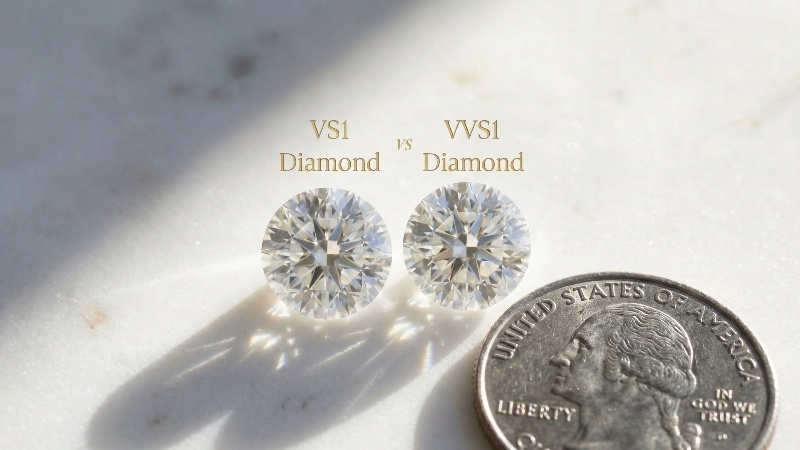
Have you ever shopped for a diamond engagement ring and came across clarity grades like VS1 or VVS1? You must have wondered what they actually mean in real life. When you see these grades on paper, they may sound very superior. But does this superiority translate into a noticeably better ring on your beau’s finger? The short answer is no; this difference is kind of a technicality, and VS1 clarity is enough for most buyers. Upgrading to VVS1 means you now have to pay a premium for a distinction invisible to the naked eye. But let’s discuss it.
Understanding VS1 and VVS1 Diamond Clarity
These grades come from organizations like the GIA (Gemological Institute of America) and AGS (American Gem Society). They examine these stones under 10x magnification, so they assign a grade based on the size, number, position, and visibility of inclusions. A diamond is often classified as internally flawless, VVS1/2, and VS1/2. The “V” here means very, the “S” stands for slightly, and the final “1” refers to imperfect.
- VS1: Inclusions are minor and somewhat difficult to see under 10x magnification.
- VVS1: Inclusions are extremely difficult to detect even under 10x magnification.
| VS1 | VVS1 | |
|---|---|---|
| Clarity Grade (GIA) | Very Slightly Included 1 | Very Very Slightly Included 1 |
| Inclusion Visibility | Invisible to the naked eye (eye-clean) | Only under 10x magnification |
| Avg. Price per Carat | $5,800 to $6,500 | $6,500 to $7,500 |
| Price Difference | Baseline | 12% to 20% premium over VS1 |
| Market Share (Retail) | 35% to 40% of sales | 15% to 20% of sales |
| Wholesale Volume | High (bulk inventory standard) | Moderate (luxury/selective) |
| Average Inventory Turnover | 45 to 60 days | 75 to 90 days |
VS1 or VVS1: Which Clarity Scale You Should Choose
Clarity & Visibility
When gemologists view your diamond ring under 10x magnification, they will spot more or slightly larger inclusions in the VS1 compared to a VVS1. That’s what all of this is about! You may think of these inclusions as minor and well spots within the high-quality range. But they are there… even if you try to ignore them and act like they don’t exist. Your VVS1 has smaller, fewer, or more discreet inclusions. So, it’s technically “cleaner” for gemologists.
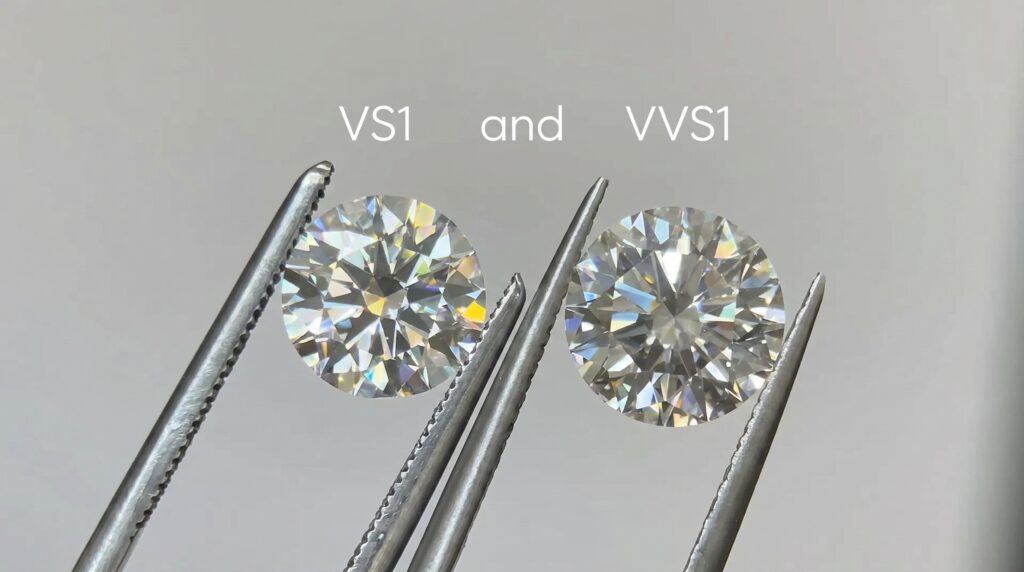
But everything changes once you take the loupe away and store it in a locker room. When it comes to everyday conversations, both VS1 and VVS1 diamonds look basically the same; it is next to impossible for your friend Jennie or your colleague Paul to glance at your diamond and say: This one has a few inclusions. The human eye is drawn to the overall brightness & fire of the stone, not to microscopic flaws. So, nobody will care about these tiny “flaws.”
Price & Value

The difference between these two diamonds becomes more tangible when you ask for the price. Your VVS1 diamond ring will be 10% to 30% costlier than a VS1 diamond (of the same carat, cut, color, and origin). If you care about diamond clarity, this clarity scale delivers a higher value in terms of a flawless diamond. The battle of clarity grades is meaningless if you are not a collector of fine jewelry or gems bearing an exceptional quality.
Rarity & Perception
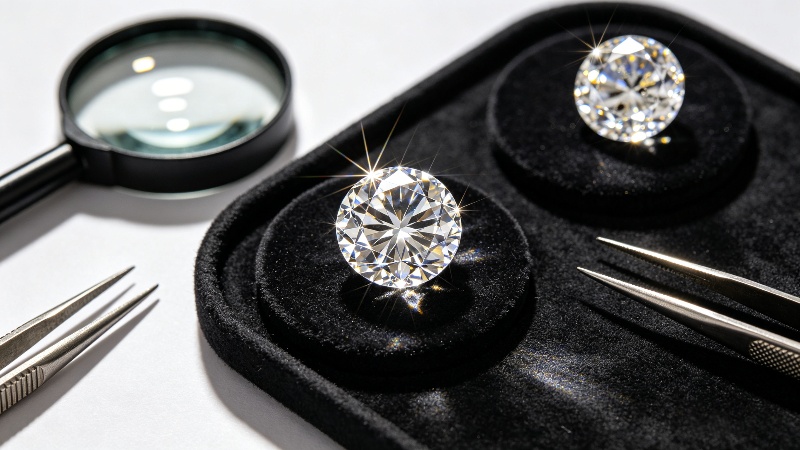
When it comes to loose diamonds versus lab grown diamonds, VVS1 diamonds are rarer than VS1 diamonds (which is something to be expected). Rarity is important for people who care about technical perfection and the resale value of their gemstones. You should invest in higher clarity grades if you treat your engagement rings as an heirloom or investment.
Are These Clarity Grades Recognizable to the Naked Eye?
Will your VS1 diamond be outed as a lesser-grade gemstone by your family or colleagues? Not a fat chance! Nobody can tell the difference between these two diamonds without a fair magnifying loupe; VS1 clarity is enough for the laypeople. After all, nobody is inspecting an engagement ring worn by a friend with a microscope. Your friends also see you in different lighting conditions and at various distances. You’re also moving when your ring shows up.
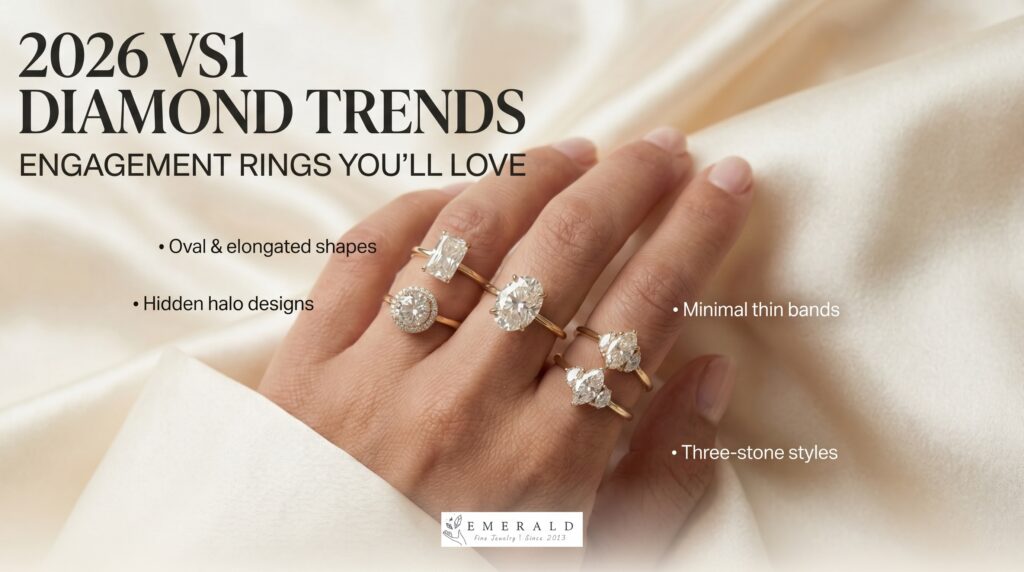
That’s why the inclusions of your VS1 ring will remain invisible to everyone. The sparkle of your stone will make it clandestine. The ring setting and the way light reflects off the facets will make sure nobody realizes what your fiancée has on their hands isn’t VVS1. There is no risk of inclusions visible to your pals. Unless they happen to be a gemologist!
VS1 vs VVS1: Which Sells Better for Retailers & Wholesalers?
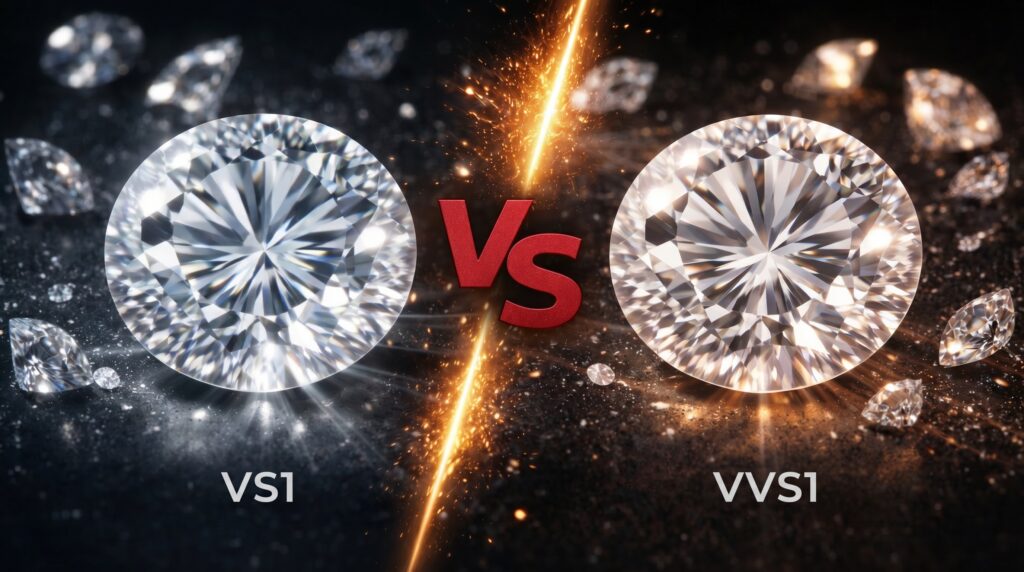
- Retailers prefer VS1 diamonds for their fast turnover in engagement rings and jewelry. Customers cannot see inclusions with the naked eye, so VS1 offers premium appeal without VVS1’s high cost. Retailers also stock more VS1 diamonds because they allow competitive pricing on larger stones or better cuts.
- Wholesalers prefer VS1 diamonds for bulk deals because of steady demand and cost efficiency. They reallocate savings to improve carat weight or color, which boosts overall value. VVS1 diamonds serve luxury buyers with higher resale value, but VS1 diamonds dominate as the profitable standard.
Is VS1 Clarity Good Enough for Your Engagement Ring?
Yes, the clarity of VS1 diamond rings is more than good enough for most buyers. This ring sits in that sweet spot where the diamond’s cut quality is impeccable. It’s usually eye-clean in popular sizes and shapes… and it doesn’t cost an arm and a leg… like VVS1 does. You must have heard of an eye clean diamond. This eye clean appearance comes from the fact that VS1 rings have no visible inclusions that can be viewed with the naked eye.
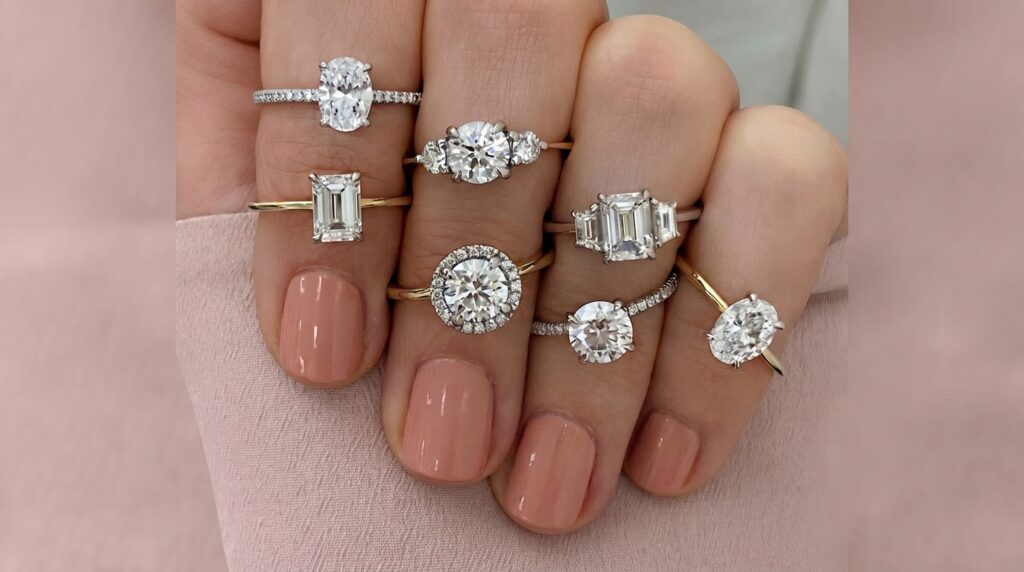
Many round, princess, and cushion cut VS1 diamonds fall into this category, especially under 1.5 carats. So, they are slightly included… but still gorgeous and elegant. There have been cases of VS1 diamonds fetching a million pounds in auctions! VVS1 diamonds are for folks who want to go beyond simply wearing diamond engagement rings, i.e., something that will be tested by a skilled grader. That’s when it makes sense to invest in VVS1 rings.
When VVS1 Clarity Diamonds Make Sense (and When They Don’t)
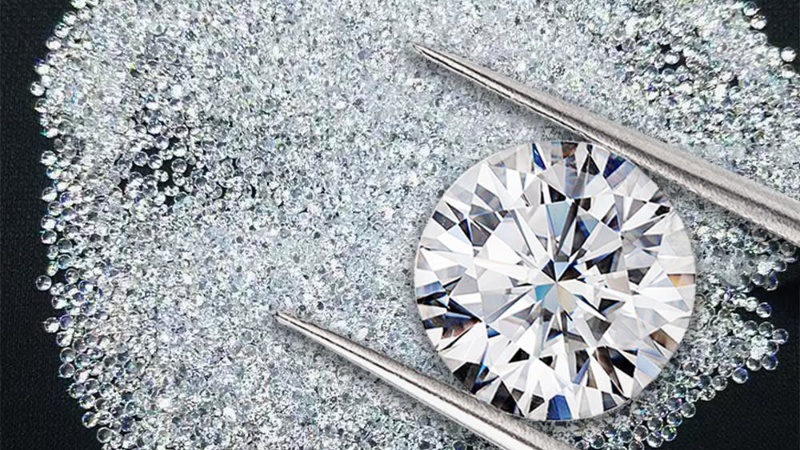
There have been cases of fake diamonds being sold as genuine artifacts. These fakes become a real problem for collectors, so you should not invest in them if you can’t bear the loss from buying fakes. Larger diamonds make inclusions easier to spot. If you want a large stone, you should go with VVS1. If reselling the diamond is your plan all along, VVS1 is the right choice. If you care about technical perfection, VVS1 is once again an ideal stone.
Ring Settings: How They Affect Diamond Clarity
The way you set your diamond can influence how much clarity matters for you. Some ring settings will draw attention to the flaws in your diamond. You have to find the optimal balance between diamond quality and ring settings. We suggest these three settings:
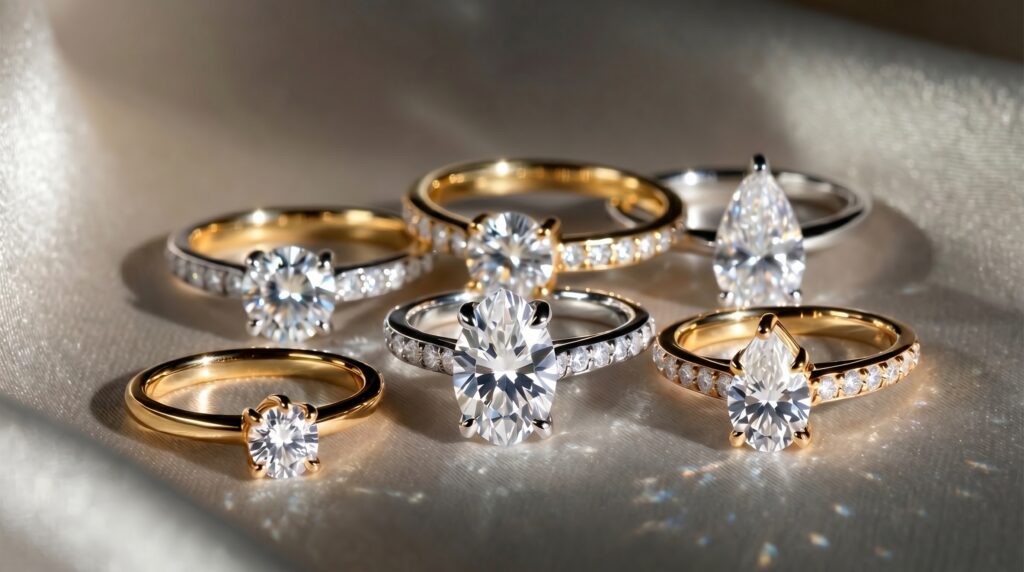
- Halo Settings: This setting is perfect for your VS1 stones. You get extra sparkle from surrounding diamonds. Tiny inclusions won’t remain visible.
- Bezel and Half-Bezel Settings: These settings will wrap metal around parts of your stone. It will reduce how much of the table and girdle is visible to the naked eye.
- Solitaire and Minimalist Settings: These settings put the diamond front and center to make clarity more visible to onlookers. If you have VVS1 clarity diamonds, you should choose these settings for them.
VS1 vs VVS1 vs Lab‑Grown Diamonds
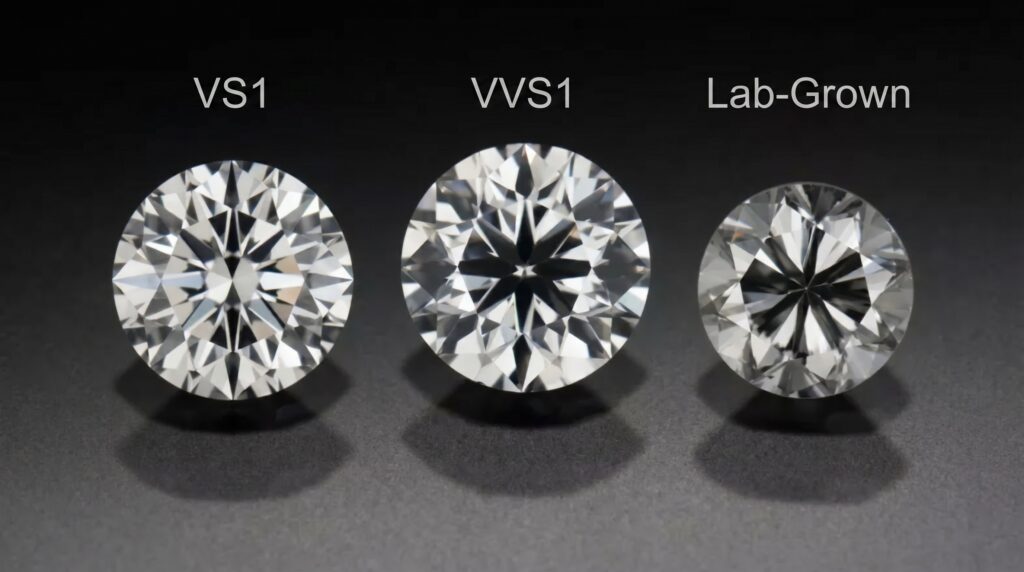
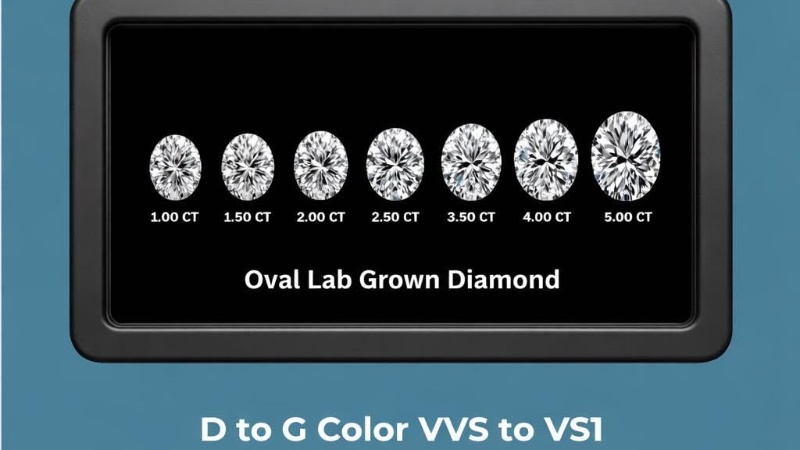
You can also look into lab-grown diamonds. They have become quite popular among Gen Z and Millennial couples these days. The quality, brilliance, and beauty of these rings are amazing! A lab-grown VVS1 follows the same clarity grading system as a natural VVS1, but it is 30% to 50% cheaper. If you value the size and brilliance of your engagement rings more than the naturality of the diamond itself, a lab-grown gemstone is your cup of tea.
Eye Clean and Slightly Included: When to Prioritize Clarity
You should also understand the difference between terms like “eye clean” and “slightly included” to help an unaided eye make sense of the quality of your diamonds.
- Eye-clean diamonds are clean to your eyes; it means there are no visible inclusions. Most VS1 diamonds belong to this category because of their brilliant cut.
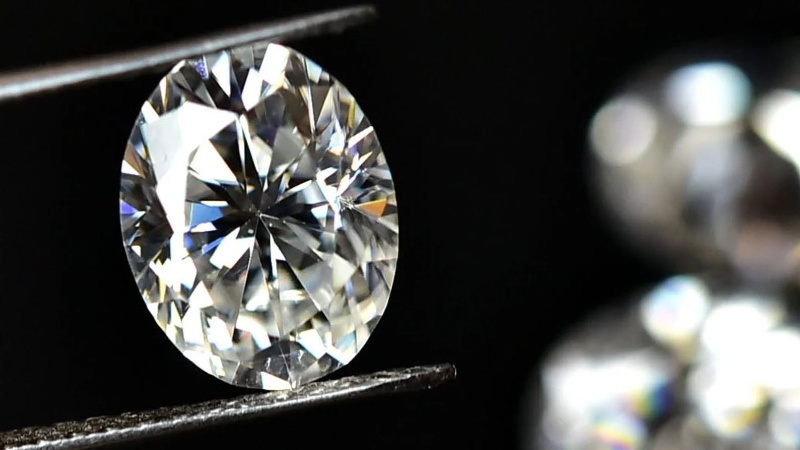
- If your engagement ring is just slightly included, it means a person inspecting it very closely is able to see minor inclusions.
But the rule of thumb is that VS1 is a safe choice for you! If you want to be confident that the diamond ring you have bought looks clean in everyday life, no need to spend extra money on VVS1 stones. There won’t be any transparency issues with VS1 gemstones.
How to Verify VS1 or VVS1 Quality in Your Diamond Ring
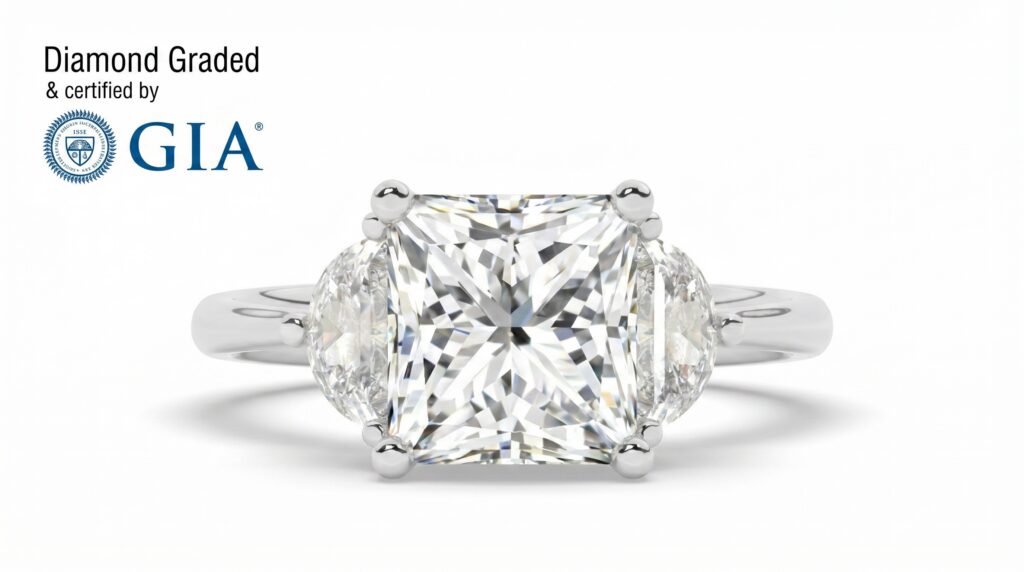
The optical properties of both grades are the same, so it can be a little difficult to look into and verify the category of your diamond engagement ring. You should always look into a GIA or AGS lab report to verify the grade of your diamond; you’ll learn all about its clarity grade. You should also request 10x magnified photos and videos of the diamond from the seller, so you can see its inclusions and confirm if this stone offers you showcase clarity or not.
Conclusion
In the end, if you value perfection, rarity, prestige, and a superior quality that remains unblemished even when a trained grader checks your diamond, choose the VVS1 grade. But if you just need great quality at a fair price without sacrificing sparkle or size, VS1 is the way to go! You can get a good cut in the shape of a flawless diamond that doesn’t show any visible deformities. That’s how you get the best of both worlds…
Contact Trusted Jewelry Manufacturers Now
At Missjeweler, we excel in helping you find the best match for your jewelry needs. If you’d like help narrowing down the right diamond for your ring style, setting, and budget, feel free to reach out to us or browse our curated selection of VS1 & VVS1 diamonds, each chosen for its eye‑clean beauty, excellent cut, and transparent grading information.
FAQs
Can you tell the difference between VS1 and VVS1?
Yes, you can tell the under magnification, but it isn’t possible under normal circumstances.
Is VVS1 worth the extra money?
Yes, it’s worth the extra money for collectors and perfectionists. However, VS1 offers better value for most engagement‑ring buyers.
Do VVS1 diamonds sparkle more?
No, this sparkle comes from cut and proportions, not clarity.
Is VS1 eye‑clean?
In most cases, yes… especially in round, princess, and cushion cuts under 1.5 carats.
Which is better for engagement rings?
VS1 for most buyers: eye‑clean, great sparkle, more affordable. VVS1 for those who value rarity and technical perfection. For the vast majority of people, VS1 is the smarter, more practical, and better‑value choice.