Introduction
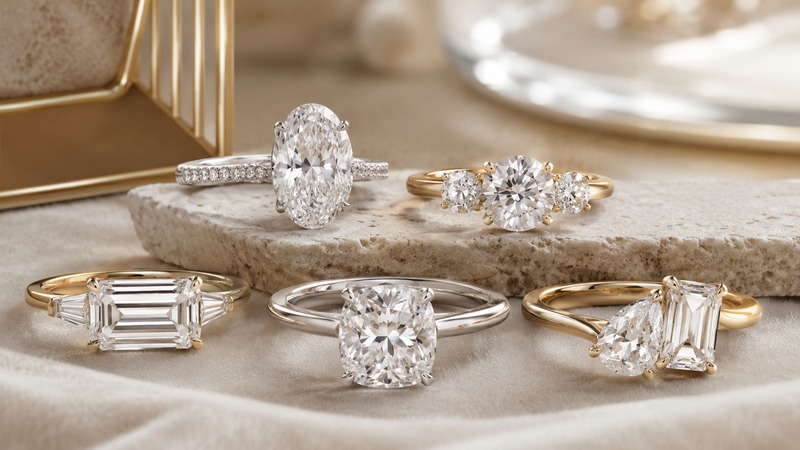
The strongest 2026 engagement ring trends combine personal expression, modern proportions, and practical everyday wear. Elongated center stones, bezel settings, east-west designs, colored gemstones, mixed metals, and sculptural side profiles are expected to influence new bridal collections. Buyers are also paying closer attention to comfort, ring height, stone security, and whether an engagement ring can pair naturally with a wedding band. For jewelry brands, the goal is not to copy every visible trend but to identify styles that match customer demand, price positioning, and production capability. This guide explains the leading trends and the purchasing checks brands should complete before approving samples or placing bulk orders.
What Engagement Ring Styles Are Trending in 2026?
The leading 2026 engagement ring trends include elongated fancy cuts, low-profile settings, east-west rings, vintage details, colored center stones, mixed metals, hidden halos, wider bands, and coordinated bridal sets. These designs balance visual individuality with comfort, durability, and stronger customization potential.
The most commercially useful trends are those that can be adapted across several stone sizes, metals, and price levels. A flexible design allows a brand to sell the same visual concept in natural diamond, lab-grown diamond, or moissanite without rebuilding the entire collection.
Why Engagement Ring Preferences Are Changing
Buyers Want More Personal Designs
Modern buyers increasingly want an engagement ring that reflects a personal story rather than a standard catalog style. Hidden engravings, birthstones, mixed cuts, two-stone layouts, and custom galleries can make a familiar silhouette feel more individual without making production unnecessarily complicated.
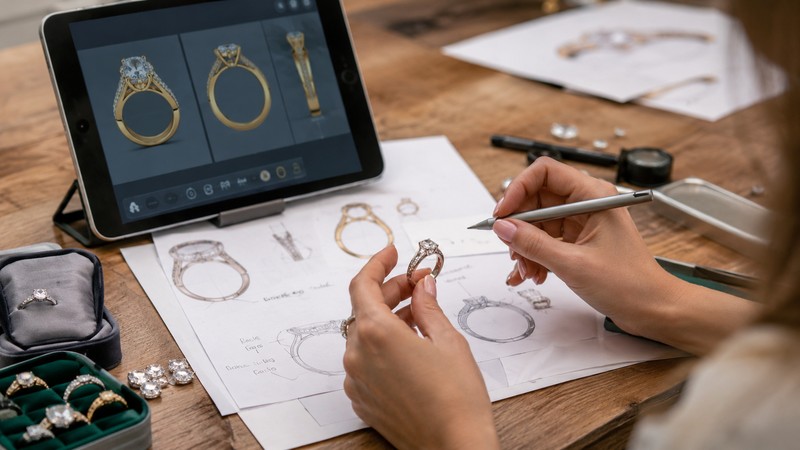
Personalization also gives brands a stronger reason to compete on design instead of price alone. A clearly defined CAD process, sample approval stage, and choice of stone or metal can help retailers offer customization while maintaining predictable production standards.
Everyday Comfort Matters More
An attractive engagement ring must also work for daily wear. Very high settings, exposed pointed stones, rough prongs, or poorly balanced heads may look impressive in photos but can cause snagging, rotation, discomfort, or repeated after-sales repairs.
Low-profile settings and carefully engineered bezels are becoming more relevant because they combine security with clean modern styling. Brands should review ring height, band thickness, inside comfort, and stone protection before treating any design as suitable for regular wear.
Lab-Grown Diamonds Expand Design Options
Lab-grown diamonds allow buyers to consider larger center stones or more detailed settings within a controlled budget. They can support bold ovals, elongated cushions, three-stone layouts, and hidden halos that may be more expensive when produced with comparable natural diamonds.
Accurate disclosure remains essential in every sales channel. The FTC Jewelry Guides provide guidance on jewelry descriptions, while grading documents should clearly identify whether a diamond is natural or laboratory grown.
Social Media Highlights Every Ring Angle

Consumers now examine the top, side, underside, and stacking profile of an engagement ring. Hidden halos, diamond bridges, cathedral shoulders, engraved galleries, and two-tone prongs can increase perceived value because they create detail from several viewing angles.
These details must still be practical for production and maintenance. Small stones placed in narrow galleries require consistent drilling, setting, polishing, and inspection, especially when the design is scaled across different ring sizes.
How We Evaluated the 2026 Trends
Each trend in this guide is evaluated by customer appeal, production difficulty, daily wearability, customization potential, and suitability for bulk manufacturing. This approach helps brands separate visually interesting concepts from styles that can be reproduced consistently.
Trend forecasts should guide product testing rather than justify oversized inventory commitments. A reliable purchasing plan combines market interest with CAD review, sample inspection, defined tolerances, and controlled low-MOQ production.
Elongated Fancy-Cut Center Stones
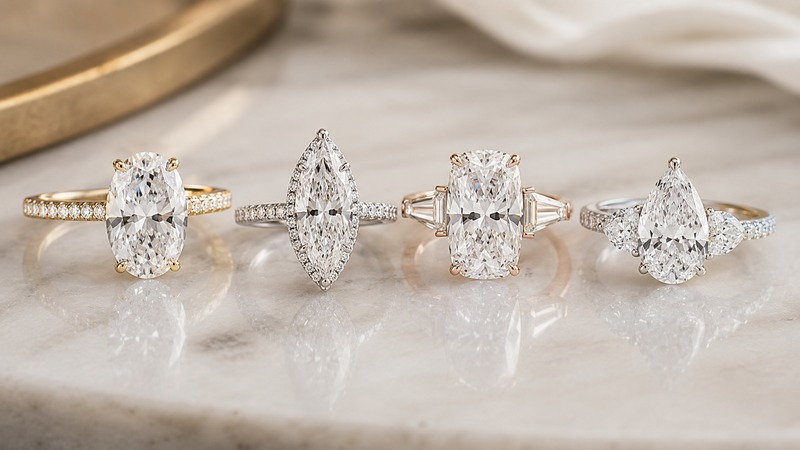
Oval, marquise, pear, and elongated cushion stones remain strong because they create a larger face-up appearance and visually lengthen the finger. These shapes work well in solitaires, hidden halos, three-stone rings, bezel settings, and slim pavé bands.
Popular product directions include oval solitaires, marquise hidden halos, elongated cushions with tapered baguettes, and pear-shaped three-stone rings. Brands can also use the same setting concept across several stone sizes to create clear entry, middle, and premium price levels.
B2B buyers should compare millimeter measurements rather than relying only on carat weight. Length-to-width ratio, symmetry, depth, bow-tie appearance, and point protection can all affect how the finished ring looks and whether the stone fits the approved setting.
Bezel and Low-Profile Settings
Bezel settings are expected to remain important because they offer a modern appearance and protect more of the stone’s edge. They are especially suitable for buyers who work with their hands, wear gloves, or prefer a ring that is less likely to catch on clothing.
Full bezels create a strong minimalist look, while semi-bezels can expose more of the stone and allow additional light to enter. Low-profile oval, emerald-cut, and east-west bezel rings can support both contemporary bridal brands and practical everyday collections.
Production quality depends on a clean, even metal border that does not cover too much of the center stone. Buyers should inspect centering, bezel thickness, edge smoothness, polishing, stone security, and cleaning access before approving bulk production.
East-West Engagement Rings
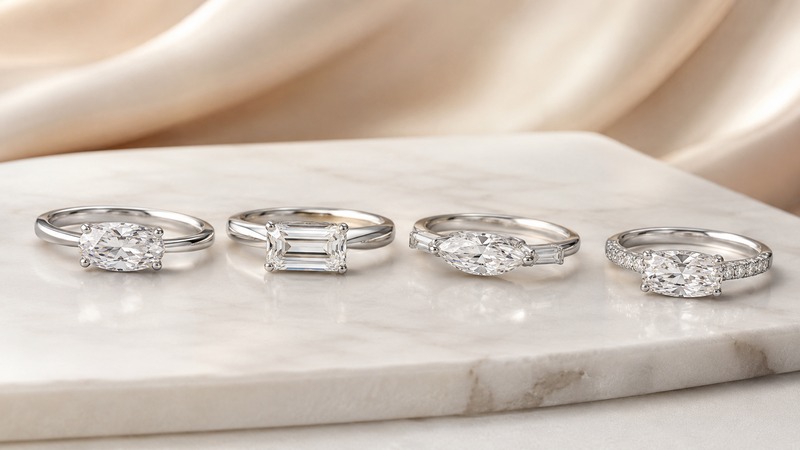
East-west settings place an elongated stone horizontally rather than vertically, creating a distinctive look without requiring a rare stone shape. Oval, emerald-cut, marquise, and elongated cushion stones can all be adapted to this direction.
This trend works well for design-focused brands and limited collections because the difference is immediately visible in product photography. It also provides a practical way to refresh an existing solitaire program without changing every component.
Brands should check whether the horizontal stone interferes with adjacent fingers or makes the ring rotate. The CAD should define stone width, head position, center of gravity, point protection, and how the design changes across smaller and larger ring sizes.
Vintage Details with Modern Proportions
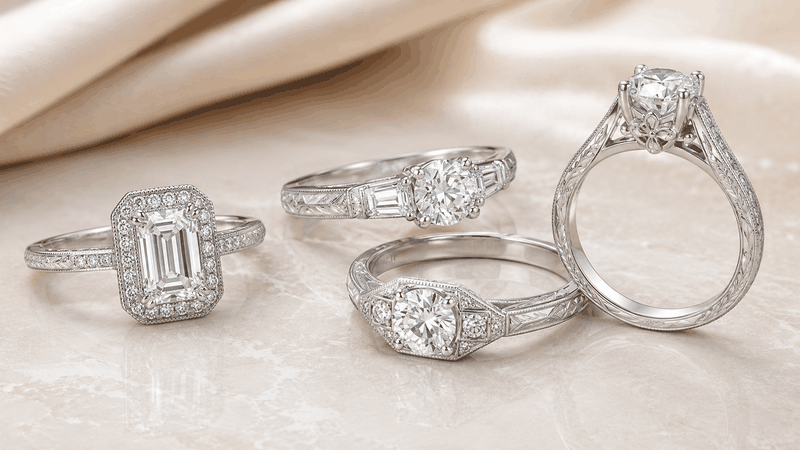
Vintage-inspired rings are evolving through simplified Art Deco geometry, milgrain edges, engraved bands, floral galleries, and tapered baguette side stones. The strongest designs use selected historic details rather than making the entire ring look heavy or overly decorative.
Emerald-cut centers, old-cut-inspired shapes, milgrain halos, and engraved three-stone rings can support premium storytelling. These styles are particularly useful for boutique brands that want craftsmanship and design heritage to be part of the purchasing decision.
Complex details require closer sample-to-bulk control. Buyers should inspect milgrain consistency, engraving depth, small-stone security, polishing around fine patterns, and whether the CAD details remain visible after casting and finishing.
Colored Gemstone Center Rings
Colored center stones give engagement rings stronger personality and help brands move beyond collections built entirely around colorless stones. Blue, green, pink, and champagne-toned centers can be combined with white side stones, halos, or mixed-metal settings.
Sapphire solitaires, colored oval three-stone rings, and gemstone Toi et Moi designs can serve several price levels. Brands should choose colors that fit their existing identity instead of introducing too many unrelated shades at once.

Natural colored stones may vary significantly between production batches. Purchase specifications should define acceptable color range, dimensions, treatment disclosure, matching standards, inclusions, and replacement procedures before a bulk order begins.
Toi et Moi and Multi-Stone Rings
Toi et Moi rings use two center stones to represent two people, two stories, or two stages of a relationship. Their symbolic meaning and asymmetrical appearance make them highly suitable for personalized bridal and anniversary collections.
Commercial designs often pair oval with pear, emerald with round, or a colorless stone with a colored gemstone. Three-stone and mixed-cut cluster versions can offer a similar storytelling effect with a more traditional overall structure.
Stone pairing is the main production challenge. Buyers should confirm the height, size, orientation, color balance, spacing, and weight distribution of every center stone so that the finished ring does not feel visually uneven or rotate excessively.
Mixed-Metal and Two-Tone Rings
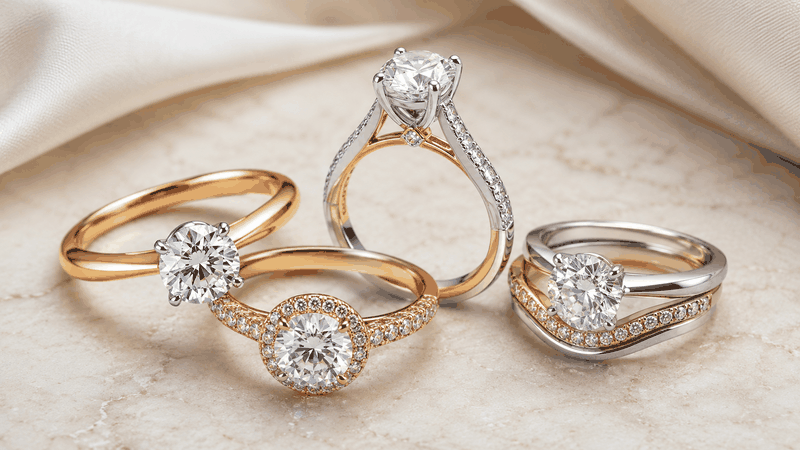
Mixed-metal engagement rings make it easier for consumers to coordinate yellow, white, and rose-colored jewelry. A yellow gold band with white metal prongs is especially practical because the setting can visually blend with a colorless center stone.
Two-tone cathedral rings, rose gold hidden halos, and mixed-metal bridal sets can add depth without making the design difficult to understand. They also give retailers more styling options for customers who already wear several metal colors.
Manufacturers must control joining points, solder quality, plating, polishing, and metal hardness. Brands should also consider future resizing and repair because an incorrect process may create visible color differences at the connection points.
Hidden Halos and Sculptural Galleries
Hidden halos add small stones below the center stone, creating extra detail without changing the primary face-up appearance. Sculptural galleries, crown-inspired baskets, and diamond bridges can provide a similar premium effect from the side.
These features work well in social media content because they reward close-up photography and video. They can also help a classic oval or round solitaire feel proprietary when the gallery structure is developed specifically for the brand.
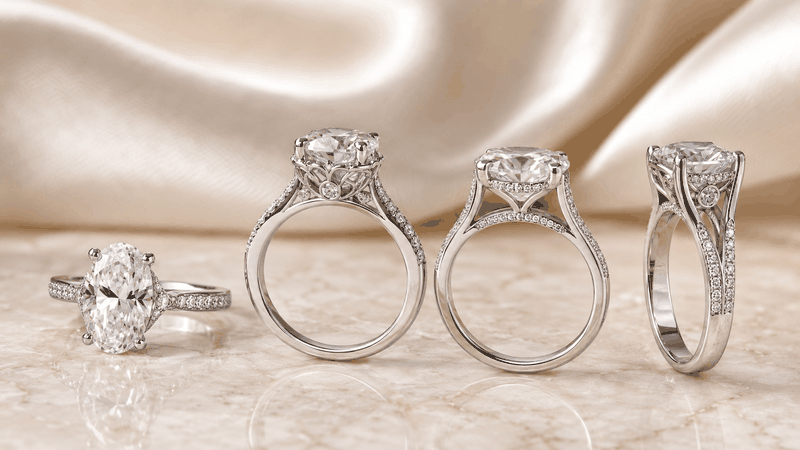
Small gallery stones require precise setting and thorough inspection. Buyers should examine stone security, ring height, snagging points, internal polishing, gallery symmetry, and whether the side profile matches the approved CAD and physical sample.
Wider Bands and Bold Solitaires
Wider bands are becoming a useful alternative to extremely thin engagement ring shanks. They create stronger metal presence, support larger center stones, and can improve structural stability when the dimensions are properly balanced.
Wide yellow gold solitaires, tapered bands, flush-set accents, and heavy bezel rings fit minimalist luxury collections. These products can also appeal to consumers who prefer a more gender-neutral or architectural bridal style.
Metal weight must be included in every quotation and production specification. Buyers should check band width, thickness, inside comfort, taper, resizing limits, and how the cost changes across different ring sizes and precious metals.
Stackable Bridal Sets
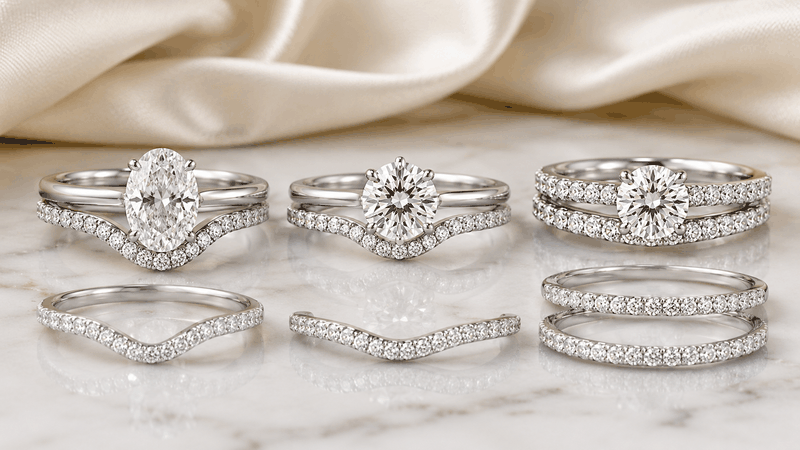
Coordinated bridal sets help customers see how an engagement ring will work with a wedding band before purchasing. Curved bands, open contour bands, pavé stacks, and detachable enhancers can increase order value and create future repeat sales.
A matching wedding band should be designed at the same time as the engagement ring whenever possible. This allows the CAD team to control contact points, gaps, overall width, and the visual alignment of stones or decorative details.
Poorly matched rings can rub against each other and damage prongs, plating, or surface finishes. Brands should inspect fit, movement, friction, comfort, separate wearability, and whether replacement bands can be reproduced consistently later.
Comparing the Leading 2026 Engagement Ring Trends
| Trend | Main Customer Appeal | Production Difficulty | Suitable Price Position | B2B Potential |
|---|---|---|---|---|
| Elongated Cuts | Larger visual appearance | Medium | Mid to High | High |
| Bezel Settings | Protection and comfort | Medium | Mid | High |
| East-West Rings | Distinctive modern look | Medium | Mid | Medium to High |
| Vintage Details | Craftsmanship and romance | High | Mid to High | Medium |
| Colored Stones | Personal expression | Medium | Entry to High | Medium to High |
| Toi et Moi | Symbolic storytelling | High | Mid to High | Medium |
| Mixed Metals | Styling flexibility | Medium | Mid | High |
| Hidden Halos | Premium side details | Medium to High | Mid to High | High |
| Wider Bands | Strong modern proportions | Medium | Mid to High | Medium to High |
| Bridal Sets | Upselling and repeat sales | Medium | Mid | High |
The best commercial choices are not always the most complicated designs. Elongated solitaires, bezels, mixed metals, and coordinated bridal sets generally offer a practical balance between market appeal, customization, and production repeatability.
Which Trends Should Jewelry Brands Stock?
Bridal retailers should build the core of their range around adaptable styles such as oval solitaires, hidden halos, three-stone rings, and matching wedding bands. These products can be offered across several stone grades, metals, and price points without losing their main visual identity.
Online sellers should prioritize rings that communicate their value clearly in photos and short videos. East-west settings, hidden galleries, mixed metals, and elongated stones perform well visually, but product pages must also show dimensions, side profiles, and material details.
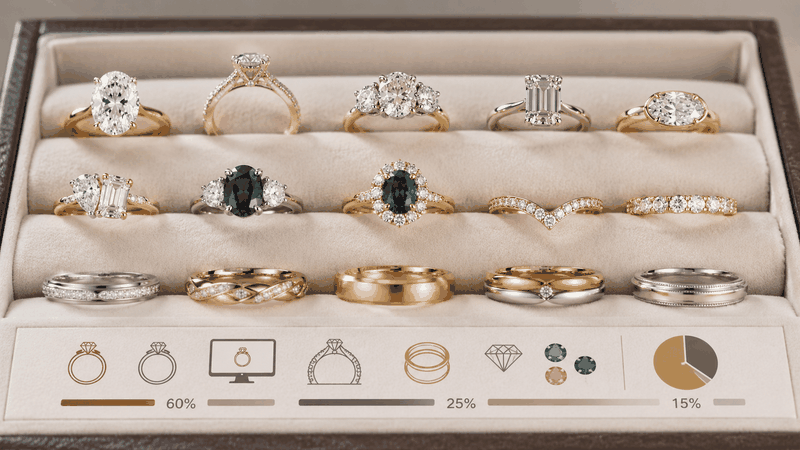
Design-focused brands can reserve part of their range for Toi et Moi rings, sculptural galleries, colored centers, and bold bands. These products create differentiation but should usually begin as controlled sample programs or small production runs.
New brands can use a 60-25-15 product structure. Approximately 60 percent can remain reliable core designs, 25 percent can follow stable trends, and 15 percent can test more experimental shapes or settings.
Natural Diamond, Lab-Grown Diamond, or Moissanite?
Natural diamonds remain suitable for traditional fine-jewelry collections and buyers who prioritize natural origin. Brands should evaluate the stone using measurements, cut, color, clarity, and documentation rather than relying on a grading label alone; the GIA 4Cs provide a useful educational framework.
Lab-grown diamonds are useful for brands that want larger sizes, defined specifications, and multiple design options at controlled price levels. Reports from recognized laboratories such as the International Gemological Institute can support identification, but incoming stones still require physical verification.
Moissanite suits entry-level bridal collections, large visual designs, fashion-led products, and low-MOQ market testing. Product listings, invoices, certificates, and packaging should use the word “moissanite” clearly rather than descriptions that could cause customers to mistake it for diamond.
No stone type is automatically right for every brand. The selection should reflect customer budget, brand positioning, expected retail price, documentation requirements, replacement availability, and after-sales policy.
What Makes an Engagement Ring Cost More?
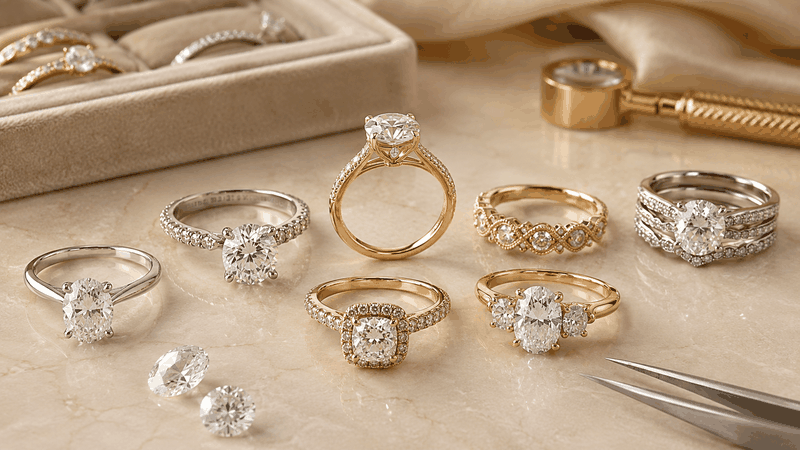
The center stone is only one part of the total price. Stone dimensions, shape, matching requirements, metal type, metal weight, setting complexity, ring size, CAD development, sample production, and inspection standards all affect the final quotation.
Complex designs usually require more manufacturing time and quality control. Hidden halos, pavé bands, milgrain, multi-stone layouts, sculptural galleries, and fitted bridal sets involve more setting points and more opportunities for inconsistency.
A lower quotation may reflect different specifications rather than better value. Buyers should compare stone measurements, metal weight, prong thickness, side-stone size, plating, polishing, packaging, documentation, and quality checks line by line.
Common Mistakes When Following Ring Trends
Ordering a style only because it is popular can create slow-moving inventory. Brands should first define the target customer, sales channel, expected retail price, stone preference, metal preference, and acceptable after-sales risk.
Comparing carat weight without millimeter dimensions can lead to inaccurate visual comparisons and incorrect settings. Every purchase specification should record stone length, width, depth, ratio, shape tolerance, and the dimensions of the approved sample.
Ignoring the side profile can create comfort and durability problems. Ring height, head position, gallery structure, prong angle, and wedding-band clearance should be reviewed before the CAD is released for sampling.
Approving only a photograph is not enough for bulk production. The approved standard should include the physical sample, CAD files, metal weight, stone dimensions, ring size, logo, surface finish, packaging, and acceptable tolerances.
Buying too many units of a single trend increases inventory exposure. Low-MOQ testing allows brands to review clicks, inquiries, sample feedback, sell-through speed, returns, and repair requests before scaling production.
How to Develop a Profitable 2026 Ring Collection
Start by defining the customer rather than the product. A brand should know whether its buyer prioritizes natural diamonds, lab-grown diamonds, moissanite, large visual size, daily comfort, customization, or traditional fine-jewelry value.
Build the collection in three levels: core, trend, and statement. Core products can include round and oval solitaires, trend products can include bezels and east-west settings, and statement products can include colored stones or asymmetrical multi-stone designs.
Confirm every important dimension in the CAD. Review the top view, side view, ring height, band width, stone measurements, prong thickness, gallery structure, metal weight, and relationship with a matching wedding band.
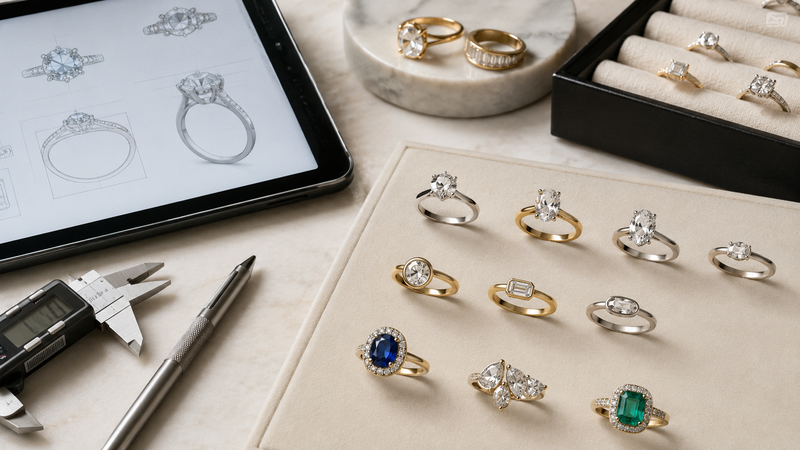
Approve a physical sample before bulk production. The sample should be checked for comfort, balance, stone security, prong smoothness, polishing, engraving, plating, ring size, and consistency with the approved CAD.
Begin with a controlled product mix and low MOQ. Limiting the first order to selected stone sizes, metal colors, ring sizes, and packaging options makes sales data easier to interpret and reduces unnecessary inventory risk.
Questions to Ask an Engagement Ring Manufacturer
A reliable supplier should be able to explain both design capabilities and production controls. Ask about CAD development, sample approval, MOQ, available stones, metal options, ring-size tolerances, matching wedding bands, and custom packaging.
Quality questions should be specific rather than general. Ask how stone dimensions are verified, how prongs are inspected, how sample-to-bulk consistency is recorded, and which checks are completed before packing.
Production consistency is easier to manage when the factory follows documented processes. The principles described in ISO 9001 quality management can help buyers understand why defined specifications, records, corrective actions, and final checks matter.
How Missjeweler Supports 2026 Engagement Ring Collections
Missjeweler supports jewelry brands, wholesalers, retailers, and online sellers with OEM/ODM engagement ring development. Services can include custom CAD design, physical sample confirmation, low-MOQ testing, matching wedding bands, logo engraving, packaging, and bulk quality checking.
Brands can develop oval, marquise, pear, emerald-cut, bezel, hidden halo, east-west, vintage-inspired, Toi et Moi, and bridal-set designs. Natural diamond, lab-grown diamond, moissanite, and different metal options can be discussed according to the target customer and price position.
Before production, Missjeweler helps confirm stone dimensions, setting structure, metal weight, ring size, surface finish, logo, packaging, and sample standards. This practical process supports clearer communication and reduces the risk of the final order differing from the approved sample.
The focus is not simply on offering the lowest quotation. Missjeweler aims to provide reliable specifications, clear sampling, careful production checks, and realistic low-MOQ support for brands building repeatable product collections.
Conclusion
The most valuable 2026 engagement ring trends combine distinctive design with daily comfort, secure construction, and flexible product positioning. Jewelry brands should test elongated cuts, bezels, mixed metals, personalized details, and bridal sets through CAD approval, physical samples, and controlled low-MOQ orders before expanding.
Develop Your 2026 Engagement Ring Collection
Contact Missjeweler to develop custom CAD designs, confirm samples, and test your 2026 engagement ring collection with practical low-MOQ OEM/ODM support.
Frequently Asked Questions
What engagement rings are trending in 2026?
Elongated stones, bezel settings, east-west rings, colored centers, mixed metals, hidden halos, wider bands, and bridal sets are expected to remain important directions.
Are oval engagement rings still popular in 2026?
Yes, oval rings remain commercially useful because they create a larger visual appearance and work with solitaire, bezel, halo, and three-stone settings.
Are bezel engagement rings suitable for daily wear?
Bezel settings can offer stronger edge protection and fewer snagging points when the metal border is smooth, balanced, and correctly produced.
Should brands choose lab-grown diamonds or moissanite?
The choice depends on customer expectations, retail price, documentation, and brand positioning. Both materials must be accurately identified in listings, invoices, and packaging.
How should brands test new engagement ring trends?
Begin with CAD development, a physical sample, and a controlled low-MOQ order. Review sales and after-sales feedback before increasing styles, sizes, or inventory.