
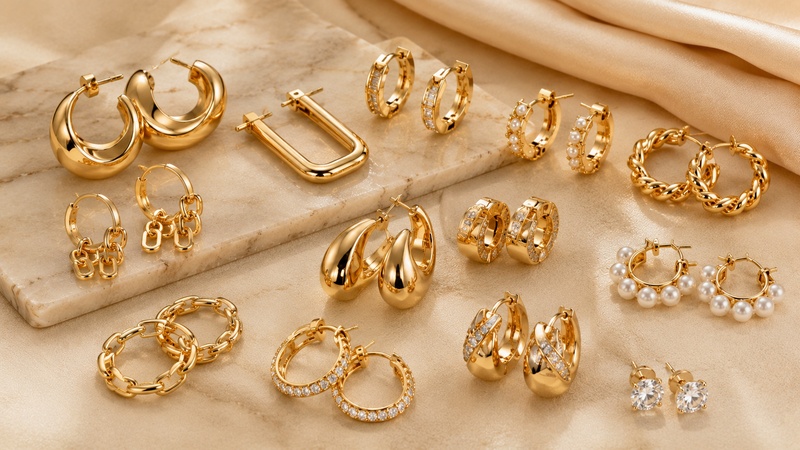
Gold earring trends in 2026 favor sculptural hoops, chunky huggies, ear stacks, mixed metals, personalized details, and lightweight statement designs. Consumers want distinctive earrings that photograph well but remain comfortable for daily wear. However, gold earrings may use solid gold, plated sterling silver, stainless steel, or brass, with each material serving a different market. Buyers must also evaluate weight, plating, post strength, clasp performance, stone setting, and repeat-order consistency. This guide highlights the key trends and explains how brands can test, source, and scale them responsibly.
What Will Define Gold Earring Trends in 2026?
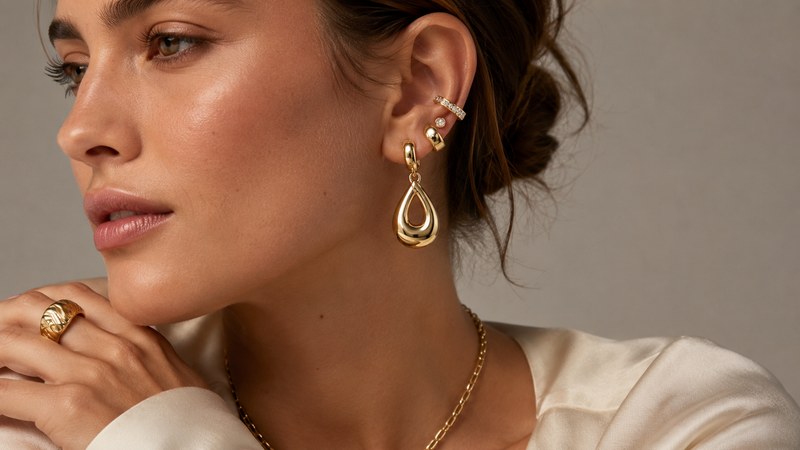
The strongest direction is recognizable design without unnecessary wearing weight. Earrings need to appear distinctive in product photography and short-form video while remaining comfortable, easy to combine, and practical for repeat wear. This supports bold contours, compact huggies, low-profile settings, mixed finishes, modular sets, and larger designs made with hollow or lightweight construction.
Another defining factor is collection flexibility. A commercially useful earring should work alone, inside an ear stack, or as part of a coordinated series with matching rings, necklaces, and bracelets. Brands can also reduce development costs by extending one approved shape into several sizes, gold colors, textures, or stone options.
The focus is therefore not simply on making earrings larger. Successful 2026 designs balance visual recognition, everyday comfort, styling flexibility, and repeatable production.
How We Evaluated These Gold Earring Trends
Trend evaluation should combine search behavior, visual discovery, retail launches, wholesale inquiries, sample development, replenishment, and after-sales feedback. Useful sources include Google Trends, Pinterest searches, social media content, retailer new-arrival pages, industry reporting, buyer requests, and internal sales records.
Only sources that can be verified should be included in a published methodology. Social media exposure alone does not prove that a product deserves bulk inventory, because highly visible designs may still have poor comfort, difficult production, short demand cycles, or high return rates.
Each trend should be assessed by the same questions: Who is the best buyer? Which products fit the trend? What materials are realistic? How difficult is production? A strong trend should be photographable, wearable, scalable, and suitable for stable replenishment.
Gold Earring Trends 2026 at a Glance
| Trend | Best For | Staying Power | Production Risk | Inventory Strategy |
|---|---|---|---|---|
| Sculptural Hoops | Design-led brands | High | Medium | Small batch, then replenish |
| Chunky Huggies | Everyday collections | High | Low to medium | Core inventory |
| Mixed-Metal Earrings | Modern lifestyle brands | High | Medium to high | Trend extension |
| Curated Ear Stacks | Gen Z and gifting | High | Medium | Test as sets |
| Personalized Earrings | DTC and gift brands | High | High | Made to order or low MOQ |
| Bezel-Set Earrings | Daily and bridal lines | High | Medium | Core or trend inventory |
| Pearl and Gold Earrings | Bridal and feminine brands | Medium to high | Medium to high | Seasonal replenishment |
| Lightweight Statement Earrings | Fashion and social-first brands | Medium | Medium | Small-batch test |
The practical takeaway is that high visibility does not always justify high inventory. Chunky huggies, small hoops, bezel studs, and simple stacks have broad daily-wear potential, while oversized, asymmetrical, or heavily personalized designs should normally be tested before a larger commitment.
Sculptural Gold Hoops
Sculptural hoops replace the basic circle with twisted, irregular, wave-shaped, oval, melted-metal, hollow, or textured profiles. They retain the versatility of classic gold hoops while giving a collection a stronger visual identity and a more recognizable advertising image.
These earrings work particularly well for design-focused brands and modern capsule collections. One successful silhouette can be extended into several diameters, textures, finishes, or gold colors, making the development cost easier to spread across a coordinated product family.
Gold-plated sterling silver suits many mid-market collections, plated brass supports larger fashion silhouettes, and 10K or 14K gold fits premium lines. Buyers should check single-ear weight, left-right symmetry, internal polishing, seam placement, post angle, plating coverage, and wearing balance.
Chunky Huggies and Small Gold Hoops
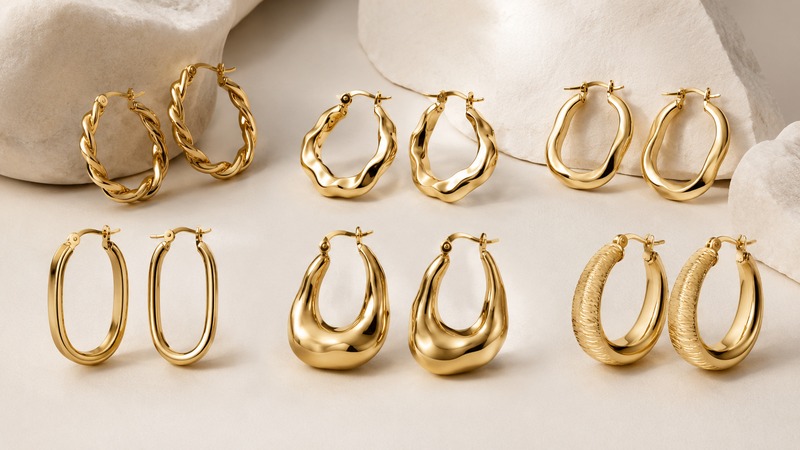
Chunky huggies provide visible thickness in a compact everyday format. Rounded, square-edged, ribbed, pavé, two-tone, and graduated-size versions can be sold individually or combined with studs, cuffs, and mini hoops.
Their broad age appeal and repeat-wear potential make them one of the safer choices for core inventory. They can support repeat purchases because customers often buy several sizes, finishes, or stone options for different piercings and styling combinations.
The main risks are mechanical rather than visual. Buyers should test hinge life, closure force, post length, internal diameter, inner plating coverage, left-right consistency, and high-friction contact points before bulk approval.
Mixed-Metal Gold and Silver Earrings
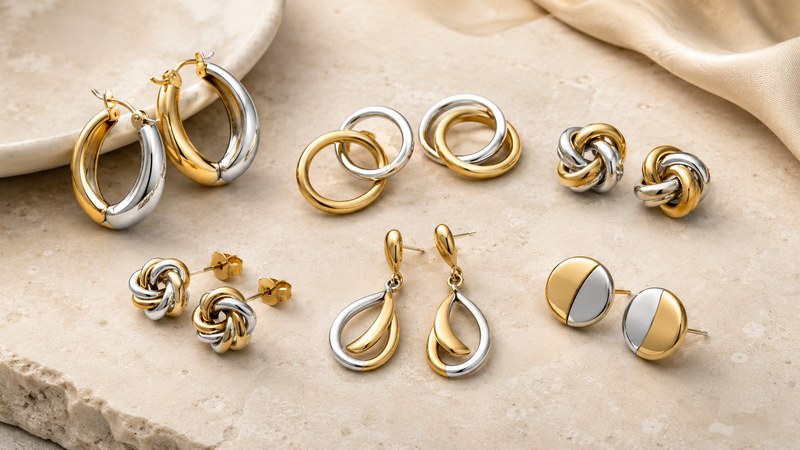
Mixed-metal earrings help customers combine gold and silver without rebuilding their jewelry wardrobe. Two-tone hoops, interlocking rings, knots, reversible earrings, mixed-metal studs, and two-tone drops can connect existing collections and appeal to customers who already mix watches, rings, necklaces, and bracelets.
The commercial advantage is a wider styling range, but production control is important. Unclear color boundaries, unstable masking, mixed color near solder joints, and inconsistent surface gloss can make an otherwise modern product appear poorly finished.
Buyers should approve a physical gold-and-silver color standard, define masking positions, and inspect post-solder finishing. Batch color records should be retained so repeat orders do not arrive with noticeably different gold tones.
Curated Gold Ear Stacks
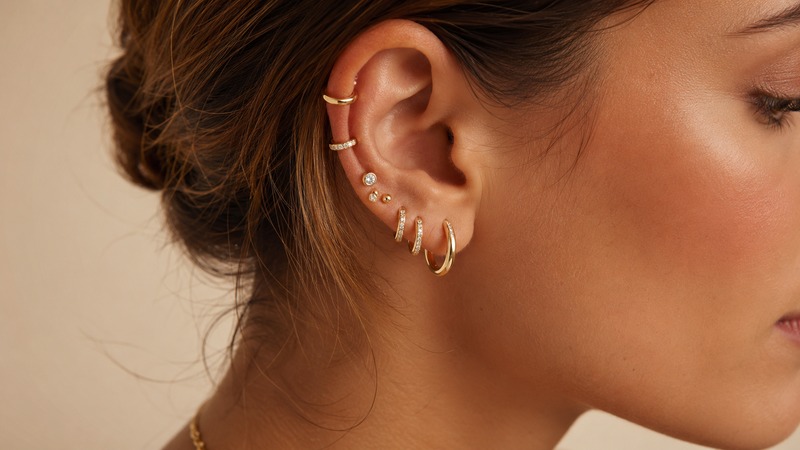
Curated ear stacks combine huggies, studs, cuffs, and mini hoops into one coordinated look. They support gifting, social media content, and higher basket values because the pieces can be sold as a complete set or separated into individual products.
Practical directions include three-piece stacks, graduated hoop sets, celestial themes, pavé-and-plain combinations, and birthstone sets. A well-planned set can create several product-page images and styling combinations from one development project.
The main challenge is organization. Every component should have its own item number, size record, finish specification, and packaging position to prevent color mismatch, incorrect size progression, packing errors, and difficult single-piece replenishment.
Personalized Gold Earrings
Personalized earrings add initials, names, zodiac signs, birthstones, symbols, engraving, or custom logos to familiar earring formats. They increase gift value, reduce direct price comparison, and can support higher retail prices during birthdays, anniversaries, holidays, and graduation seasons.
However, personalized products are usually better suited to made-to-order production or controlled low-MOQ testing. Large speculative inventories are risky because incorrect names, letters, colors, or orientations may be impossible to resell.
Buyers should confirm CAD drawings, spelling, minimum font thickness, left-right direction, engraving depth, order records, and remake rules. Thin letters may bend, while mirrored designs can face the wrong direction when worn.
Bezel-Set Stones and Moissanite Studs
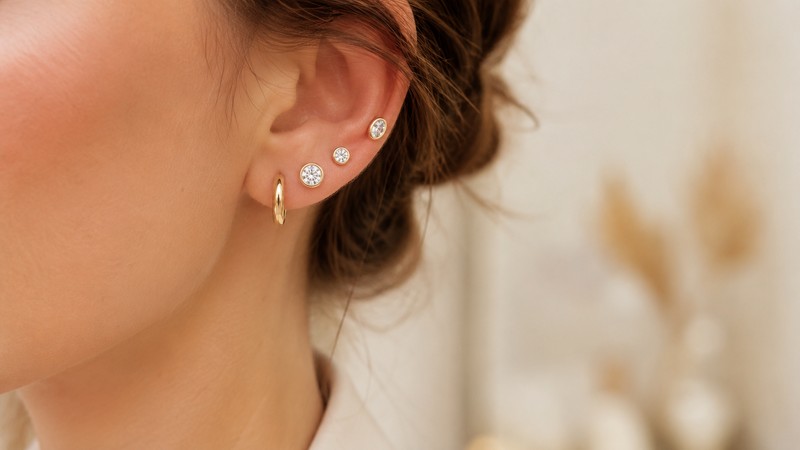
Bezel settings offer a cleaner and lower-profile alternative to high prongs. They can reduce snagging on hair or clothing while creating a smooth outline that works well for daily wear, bridal collections, and coordinated ear stacks.
Round, oval, east-west, colored-stone, double-bezel, and bezel-huggie designs can cover several price levels. Moissanite studs provide visible sparkle and can be developed across multiple stone diameters without changing the basic product concept.
Buyers should specify stones by millimeter size and check stone matching, bezel thickness, centering, post alignment, fire, color, and setting security. Product descriptions should accurately identify the stone and metal according to the FTC Jewelry Guides.
Pearl and Gold Combination Earrings
Pearl-and-gold earrings are moving beyond traditional formal studs toward pearl huggies, detachable drops, baroque pairs, asymmetrical studs, ear jackets, and pearl-chain earrings. These products fit bridal, gifting, and spring-summer collections while providing a softer contrast to polished gold.
Detachable structures can create several wearing options from one SKU and increase perceived value. Brands can also extend a successful pearl-and-gold concept into matching necklaces, bracelets, or bridal gift sets.
Pearls require dedicated controls for matching, color, surface quality, drilling, adhesive structure, pull resistance, and packaging. The GIA pearl quality factors provide a useful reference for evaluating luster, surface, shape, color, size, and matching.
Lightweight Statement Gold Earrings
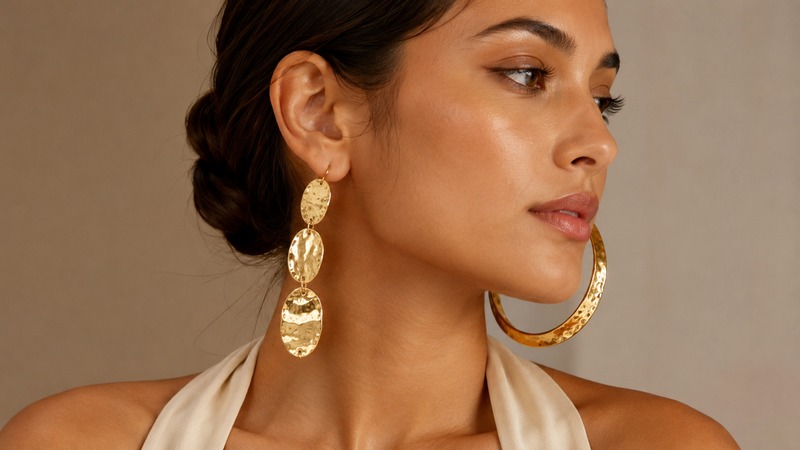
Statement earrings remain valuable for campaigns and social content, but the commercial direction is bold appearance with controlled actual weight. Oversized hollow hoops, hammered drops, geometric shapes, layered discs, long sculptural pieces, and asymmetrical pairs can deliver visual impact without using thick metal throughout.
Large earrings require special comfort and transport testing. Excessive weight, unstable balance, sharp sheet-metal edges, weak posts, and shipping deformation can create returns even when customers like the design.
Buyers should record single-ear weight, balance point, edge finishing, swing behavior, post strength, packaging support, and transit performance. Hollow construction should have clean seams and enough strength to resist denting during handling.
Which Gold Earring Trends Should Brands Stock?
A practical inventory model is 60% core products, 25% trend extensions, and 15% experimental products. This prevents the full budget from being placed into short-term designs while still giving the collection enough novelty for marketing.
The 60% core category can include chunky huggies, small hoops, bezel studs, plain gold studs, basic ear-stack sets, and small moissanite studs. These products support consistent sales, gifting, replenishment, and a broad customer base.
The 25% trend category can include sculptural hoops, mixed-metal earrings, pearl huggies, textured finishes, and two-tone studs. The final 15% can test oversized statements, asymmetrical pairs, unusual gemstone colors, personalized products, and modular earrings.
Which Gold Material Should Buyers Choose?
| Material | Best For | Price Level | Main Advantage | Main Risk |
|---|---|---|---|---|
| 10K/14K Solid Gold | Premium daily collections | High | Durable with lasting value | High material cost |
| 18K Solid Gold | Fine and bridal collections | Very high | Rich gold color | Softer and more expensive |
| Gold-Plated Sterling Silver | Mid-market fashion brands | Medium | Balanced feel and cost | Plating wear |
| Gold-Plated Stainless Steel | Entry and daily lines | Low to medium | Strength and PVD compatibility | Complex forms may be limited |
| Gold-Plated Brass | Large fashion earrings | Low to medium | Easy shaping and scaling | Exposed brass and green marks |
The best material depends on the target customer, retail price, design scale, and expected wearing conditions. Solid gold is not automatically necessary for every market, while a low-cost base metal is not automatically suitable for every product structure.
“Gold earrings” is not a complete specification. Buyers should confirm body metal, post metal, back material, gold color, target plating thickness, tolerance, measurement point, underlayer, protective coating, and surface finish.
What Makes Trending Gold Earrings Cost More?
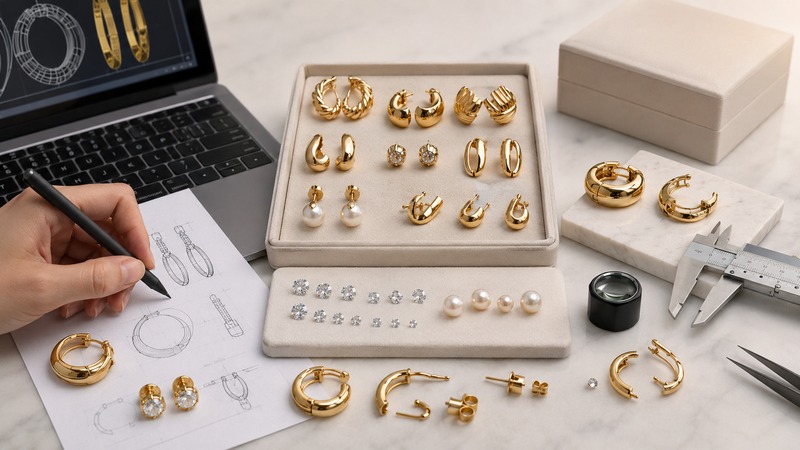
Direct costs include gold weight, base-metal prices, CAD work, molds, hollow construction, polishing, plating thickness, stone size, stone matching, pearl grade, hinge mechanisms, personalization, and packaging. Two earrings with a similar appearance may therefore have very different production costs.
Hidden costs can be more important than the initial quotation. Heavy earrings, weak posts, loose stones, failed clasps, color variation, pearl detachment, and sample-to-bulk inconsistency can lead to returns, replacements, negative reviews, and lost repeat customers.
The lowest quotation does not always produce the lowest total cost. Thinner metal, reduced polishing, thinner plating, weaker components, or fewer inspections may simply transfer production savings into after-sales expenses.
How to Test Gold Earring Trends with Low MOQ
Begin with three to five trend directions and one or two lead designs for each direction. Complete CAD or structural drawings, make physical samples, and confirm dimensions, single-ear weight, gold color, stone size, post angle, and closure performance.
Use a controlled low-MOQ order to test market response before scaling. The approved sample, color reference, plating requirements, component materials, and production measurements should be retained for comparison with the trial order and future replenishment.
After launch, review product-page click-through rate, add-to-cart rate, conversion rate, returns, repeat purchases, customer questions, and complaint locations. Missjeweler supports CAD development, physical samples, and low-MOQ trials so brands can evaluate new earrings before committing to larger quantities.
Gold Earring Quality Checks Before Bulk Orders
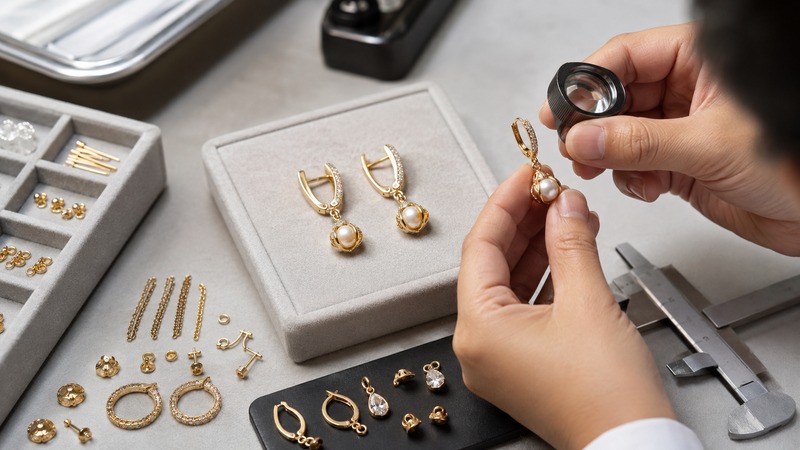
Begin with the complete material structure rather than only the visible earring body. Posts, backs, hinges, jump rings, solder, chains, drops, and decorative components may use different metals and can wear or react at different rates.
For plated earrings, confirm the gold karat, gold color, target thickness, tolerance, measurement point, underlayer, and protective coating. Terms such as “premium plating” or “thick plating” should be converted into measurable specifications before sample approval.
Record single-ear weight and check balance, edge smoothness, post angle, back tension, hinge gap, closure force, stone matching, pearl attachment, plating gaps, scratches, residue, sharp points, and packaging contact. Left and right earrings should be inspected as a matched pair.
A documented quality system helps connect samples, production, inspection, and repeat orders. An ISO 9001 quality management approach supports process control and recordkeeping, although certification alone does not guarantee the performance of a particular earring.
Questions to Ask a Gold Earring Manufacturer
Use these questions to compare quotations against the same requirements:
- What is the exact base metal and component material?
- What materials are used for the ear posts and backs?
- What gold karat and color standard will be used?
- What target plating thickness and tolerance are included?
- Where will the plating thickness be measured?
- Is an underlayer or protective coating included?
- What is the weight of each earring?
- How will left and right earrings be matched?
- Which clasp, hinge, pull, or wear tests are available?
- Can the supplier support a low-MOQ trial order?
- How will the approved physical sample be recorded?
- Can packaging and care cards be customized?
- How will repeat-order color consistency be controlled?
- Which inspections are completed before shipment?
These questions help buyers compare the same product standard rather than comparing incomplete prices. A quotation should clearly connect materials, dimensions, finishes, testing, packaging, quantity, and delivery requirements.
Common Mistakes When Buying Trending Gold Earrings
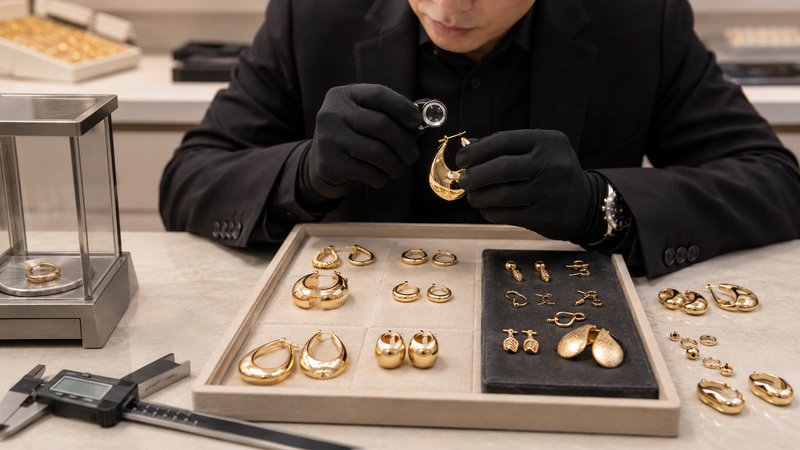
The first mistake is following appearance without checking weight. A large earring can perform well in images but feel uncomfortable after extended wear, especially when its post position creates an unstable balance point.
The second mistake is treating all gold earrings as equivalent. Solid gold, plated sterling silver, plated stainless steel, and plated brass serve different price levels and carry different wear, care, and after-sales risks.
Another mistake is accepting descriptions such as “premium gold plating.” Vague descriptions cannot be consistently measured during sample inspection, bulk production, or repeat orders.
Brands also create risk by ordering too many trend products during the first launch. The most unusual or visually exaggerated designs are often better suited to small-batch testing than immediate core inventory.
Posts, backs, hinges, and clasps should not be treated as minor components. These are the parts customers operate most frequently and some of the most common locations for bending, loosening, and breakage.
Photographs alone are not enough for approval because they cannot confirm weight, closure force, edge feel, post strength, true gold color, pair consistency, or long-wear comfort. A physical sample provides a more reliable approval reference.
Finally, buyers should retain the approved sample and complete production record. Without a documented reference, repeat orders may change in color, weight, dimensions, clasp tension, or construction without a clear basis for correction.
How Missjeweler Supports Gold Earring Development
Missjeweler supports 925 sterling silver, gold-plated stainless steel, gold-plated brass, solid-gold earrings, moissanite studs, and personalized OEM/ODM designs. Development can begin with the target retail price, material, CAD drawing, dimensions, weight, stone specifications, finish, and packaging requirements.
A physical sample allows buyers to check appearance, wearing balance, post position, closure performance, stone setting, gold color, and overall comfort. Approved measurements, colors, plating requirements, and component materials can then be recorded before bulk production.
During production, process inspections can focus on plating, stone setting, post alignment, clasp performance, pair matching, and surface condition. Final inspection, custom packaging, low-MOQ trials, and retained specifications support more reliable launches and repeat orders.
Conclusion
The most commercially useful gold earring trends for 2026 combine recognizable shapes with everyday comfort, including sculptural hoops, chunky huggies, curated ear stacks, mixed metals, personalized studs, bezel settings, pearl details, and lightweight statement designs. Jewelry brands can reduce inventory and quality risks by testing selected designs through CAD, physical samples, and low-MOQ production, while Missjeweler can support material selection, measurable plating specifications, stone setting, post and clasp checks, final inspection, custom packaging, documented production records, and more consistent repeat orders.
Develop Your 2026 Gold Earring Collection
Share your designs, material, gold color, stone specifications, and target quantity with Missjeweler to start a low-MOQ sample and receive a production-ready quotation.
FAQ
What gold earrings will be popular in 2026?
The main directions include sculptural hoops, chunky huggies, mixed metals, curated ear stacks, personalized studs, bezel settings, pearl-and-gold combinations, and lightweight statement earrings. Styles that support daily wear and several size extensions generally offer better long-term value than highly seasonal designs.
Are gold hoop earrings still trending in 2026?
Yes. The category is shifting toward thicker huggies, twisted profiles, irregular ovals, textured surfaces, and hollow sculptural forms. Brands should check single-ear weight, post welding, clasp life, plating coverage, and left-right symmetry before bulk production.
Which material is best for trending gold earrings?
The best material depends on price positioning. 10K or 14K gold fits premium lines, plated sterling silver suits mid-market brands, plated stainless steel supports entry-level daily wear, and plated brass works well for larger fashion earrings.
Which trends are safest for bulk inventory?
Chunky huggies, small hoops, bezel studs, plain studs, and basic ear-stack sets normally carry lower inventory risk because they support daily wear and replenishment. Oversized statements, complex personalization, and asymmetrical designs should be tested through low-MOQ orders first.
How can brands test trends before bulk buying?
Develop CAD drawings and physical samples for three to five trend directions, then use small trial orders to track clicks, add-to-cart rate, conversion, returns, repeat purchases, and complaints. Stable products can enter core inventory, while quality or comfort issues should be corrected before scaling.