
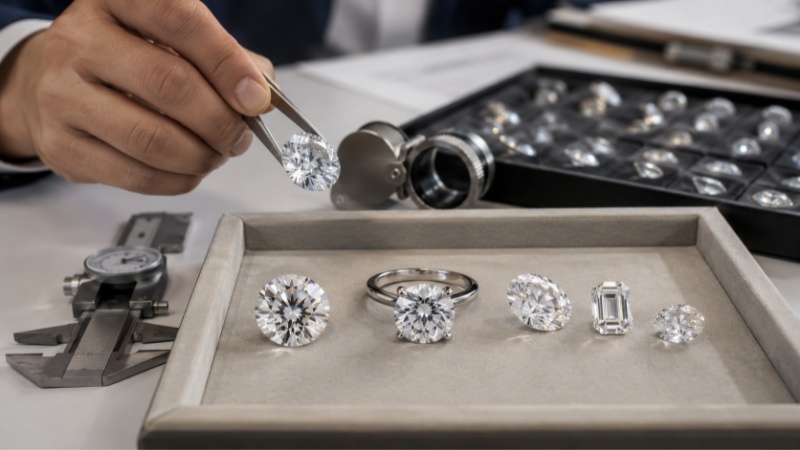
A 4 carat moissanite does not have one fixed value for bulk orders. Its worth can change widely depending on stone shape, millimeter size, color grade, clarity, cut quality, certificate, metal material, setting structure, craftsmanship, MOQ, and final QC standard. For B2B buyers, the real question is not only “how much is a 4 carat moissanite worth,” but whether the stone and finished jewelry can meet your brand’s quality standard after sampling and bulk production. Because a 4 carat stone is visually strong, color tone, fire, cutting symmetry, and setting precision are easier for customers to notice. This guide explains the key price factors, low-price risks, and practical checks jewelry brands should make before ordering 4 carat moissanite jewelry in bulk.
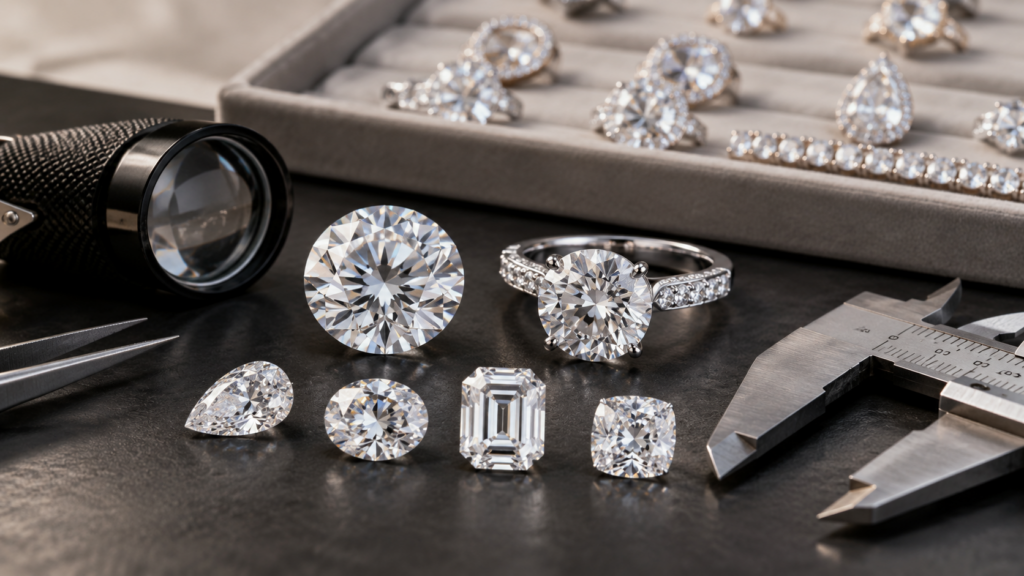
How Much Is a 4 Carat Moissanite Worth?
A 4 carat moissanite can be worth very different amounts depending on whether buyers are comparing a loose stone, a finished ring, or a custom bulk order. A loose stone quote usually focuses on shape, color, clarity, cut, and certificate, while a finished jewelry quote also includes metal cost, CAD design, setting labor, polishing, plating, packaging, and final inspection. This is why two suppliers may give very different prices for what appears to be the same 4 carat moissanite product.
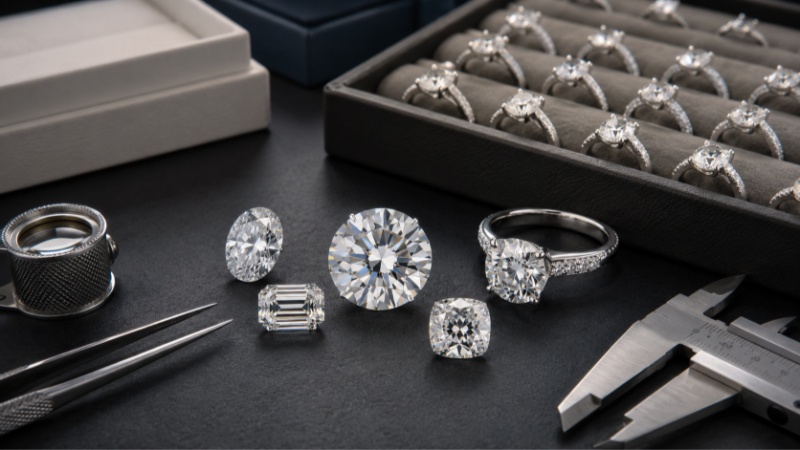
For wholesale buyers, the safest approach is to compare full specifications instead of only asking for the lowest stone price. A low quote may only reflect a lower-grade stone, weaker cutting, no certificate, loose QC standards, or unstable sample-to-bulk consistency. A reliable B2B quote should clearly confirm stone shape, millimeter size, color grade, clarity grade, cut quality, metal material, setting style, MOQ, sample approval, packaging, and QC standard.
| Price Level | What It Usually Means | B2B Risk or Use Case |
|---|---|---|
| Low quote | Lower color grade, weaker cut, basic sorting, limited QC | Higher risk of weak fire, color tone issues, or bulk inconsistency |
| Standard wholesale quote | Clear stone specs, stable cut, sample approval, normal QC | Suitable for trial orders and repeatable best-selling styles |
| Premium custom quote | Better color, stronger brilliance, certificate option, stricter setting and QC | Better for brand positioning, high-ticket listings, and custom jewelry |
For B2B sourcing, the “worth” of a 4 carat moissanite is not only the loose stone value. It should include the finished product value, customer-facing appearance, wear durability, return risk, and whether repeat production can match the approved sample. A cheaper quote is not always cheaper if it leads to loose stones, customer complaints, repairs, or unstable repeat orders.
What Does 4 Carat Moissanite Really Mean?
A 4 carat moissanite means the stone weighs around 4 carats, but the visible size can change by shape and cut. Round, oval, emerald, cushion, pear, and marquise stones can look different even when they share the same carat weight. Some shapes look longer, some look wider, and some show a larger face-up appearance after setting.
B2B buyers should confirm both carat weight and millimeter size before sample approval. A 4 carat round stone may not fit the same setting seat as a 4 carat oval or emerald cut stone. The product page, CAD file, invoice, sample record, and QC checklist should all use the same stone size specification to avoid confusion during bulk production.
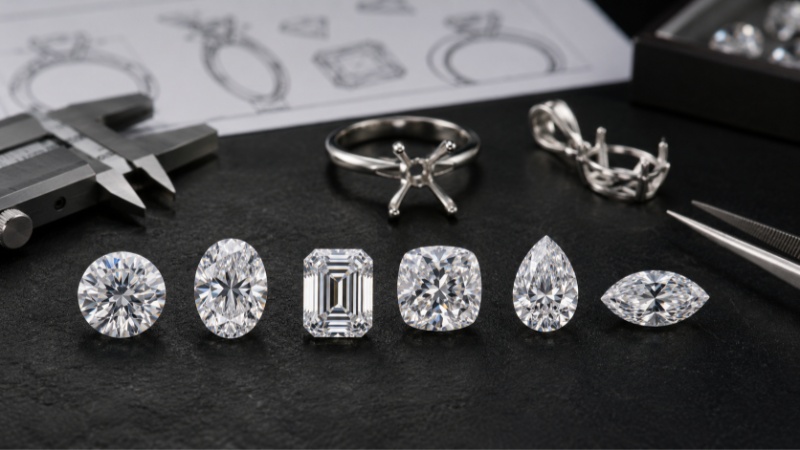
This is especially important for rings, pendants, earrings, and custom hip hop jewelry with tight setting structures. If the stone size is not confirmed clearly, the CAD design, prong position, basket structure, and final product photo may not match customer expectations. For bulk orders, millimeter size is often as important as carat weight.
Why 4 Carat Moissanite Prices Are Different
The price of a 4 carat moissanite changes because buyers are not always comparing the same quality standard. Stone shape, color grade, clarity, cutting precision, certificate requirement, order quantity, and finished jewelry design can all change the final quote. This is why a simple “4 carat moissanite price” question often leads to very different supplier answers.
Stone shape is one major price factor because different shapes have different cutting difficulty and visual standards. Round stones are usually easier to source, while fancy shapes such as oval, emerald, pear, cushion, and marquise may need more careful cutting and matching. For earrings, bracelets, and custom sets, pair matching and shape consistency can also increase production control requirements.
Color grade also affects value because yellow or gray tone is easier to see on a large 4 carat stone. A smaller stone may hide slight color differences, but a 4 carat stone has stronger visual presence in product photos, videos, and customer reviews. Colorless or near-colorless stones usually support a more premium-looking finished product.
Clarity matters because a 4 carat stone has a larger table and more visible surface area. If cloudiness, internal marks, or obvious inclusions appear, customers may question the value of the finished jewelry after receiving it. For online brands, close-up photos and videos make clarity problems easier to notice.
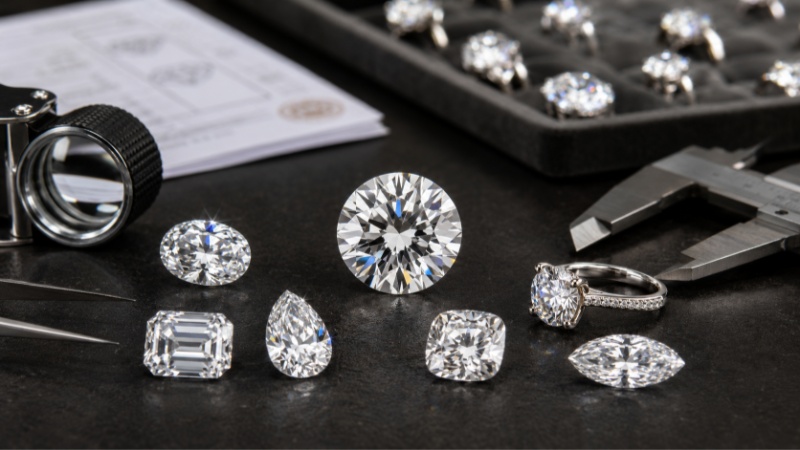
Cut quality is one of the most important factors because it affects fire, brilliance, and symmetry. The Gemological Institute of America explains diamond value through the traditional 4Cs system, and although moissanite is priced differently from diamond, B2B buyers can still use cut, color, clarity, and size as useful quality checks. For 4 carat moissanite, poor cut can make a large stone look flat, dull, or uneven.
Certificate requirements can also affect the final quote. Some buyers may need GRA, IGI, or other documentation depending on their sales market, customer trust needs, and product positioning. Before ordering, brands should confirm whether a certificate is included, optional, charged separately, or only available for selected stones.
Order quantity changes the quote because low MOQ trial orders, bulk production, and repeat orders may follow different pricing logic. MOQ, stone sorting, packaging, plating control, inspection level, and customization all affect cost. For B2B buyers, the best quote is the one that matches the actual production standard, not just the lowest number.
Loose Stone vs Finished Jewelry Price
A finished 4 carat moissanite jewelry quote is not only a stone quote. It may include CAD design, wax or mold work, metal weight, setting labor, polishing, plating, packaging, logo work, inspection, and sometimes product photos or branding support. This is why a 4 carat loose stone and a 4 carat moissanite ring should not be compared as the same product.
| Product Type | What Changes the Price |
|---|---|
| Loose 4 carat moissanite | Shape, color, clarity, cut, certificate |
| 925 silver moissanite ring | Silver weight, plating, setting labor, stone grade |
| 10K / 14K / 18K gold ring | Gold weight, labor, stone grade, design complexity |
| Moissanite pendant | Bail structure, logo design, chain option, metal weight |
| Moissanite earrings | Pair matching, setting accuracy, backing type |
| Moissanite bracelet or chain | Total stone quantity, setting labor, clasp quality |
A ring with the same 4 carat center stone can have a very different value depending on the metal material. 925 silver, brass, stainless steel, 10K gold, 14K gold, and 18K gold all create different cost levels and customer expectations. The metal choice affects not only price, but also durability, product positioning, care instructions, and after-sales risk.
For B2B buyers, the quote should separate stone specification, metal material, labor, plating, packaging, and QC standard when possible. This makes supplier comparison more accurate and helps prevent hidden cost problems after sampling. A clear quote also helps brands calculate margin, retail pricing, and repeat order strategy more safely.
Why Bulk Buyers Should Not Compare Stone Price Alone
Many online articles only compare the price of a 4 carat loose moissanite, but B2B buyers need to calculate the full production cost. A finished jewelry order may include CAD design, sample development, metal casting, stone setting, polishing, plating, packaging, quality inspection, and logistics preparation. If these details are not included in the quote, the lower stone price may not represent the real order cost.
The bigger risk is that a low stone price may hide unstable quality. A 4 carat moissanite with yellow tone, weak fire, poor symmetry, or larger size tolerance may reduce the perceived value of the finished jewelry. For online sellers, this can lead to lower product trust, more customer questions, higher return risk, and weaker repeat sales.
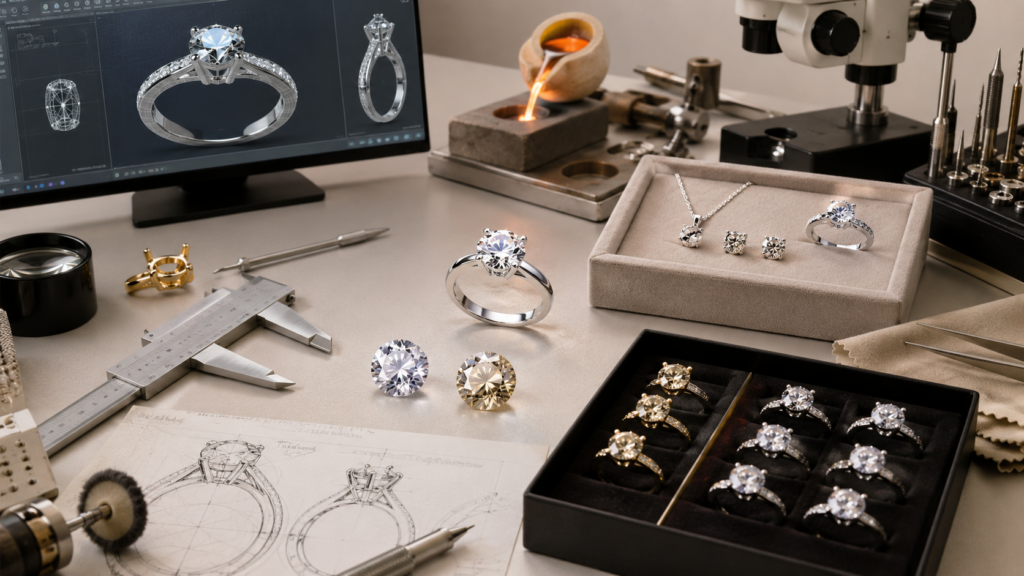
Bulk buyers should also consider sample-to-bulk consistency. A sample may look attractive, but the bulk order may show different color tone, weaker brilliance, looser setting, or different plating color if production standards are not controlled. For a jewelry brand, consistency is often more valuable than a one-time low price.
7 Checks Before Buying 4 Carat Moissanite
1. Confirm Stone Shape and Millimeter Size
Different shapes create different visual results, so buyers should confirm both 4 carat weight and exact millimeter size. A vague stone description may create problems when the CAD design, setting seat, and final product listing do not match. This is especially risky for rings, pendants, earrings, and custom jewelry with tight mounting structures.
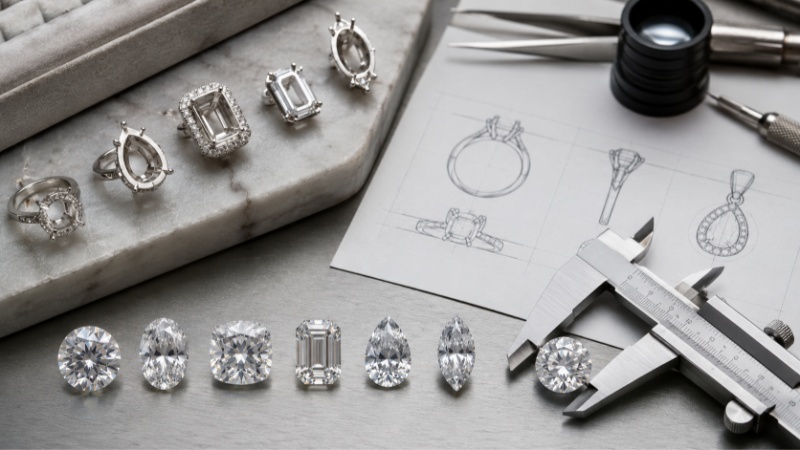
Before bulk production, ask the supplier to confirm round, oval, cushion, emerald, pear, or marquise measurements clearly. The approved CAD should match the approved stone size, and the production record should use the same specification. This simple check can reduce setting errors and product description disputes.
2. Check Color Tone Under Real Light
A 4 carat stone is large, so yellow or gray tone becomes more visible than it would on smaller stones. This is one of the most common reasons a low-price 4 carat moissanite looks less premium in real customer photos. Color tone should be checked before sample approval, not after bulk goods arrive.
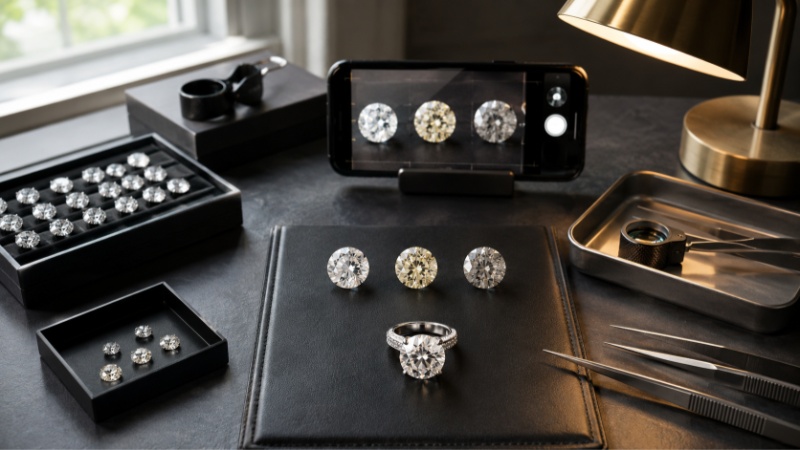
B2B buyers should check the stone under daylight, indoor light, and video conditions. For bulk orders, the supplier should also control color consistency so that production stones do not look different from the approved sample. Stable color control helps protect product photos, customer trust, and repeat order quality.
3. Review Fire, Brilliance, and Cut Symmetry
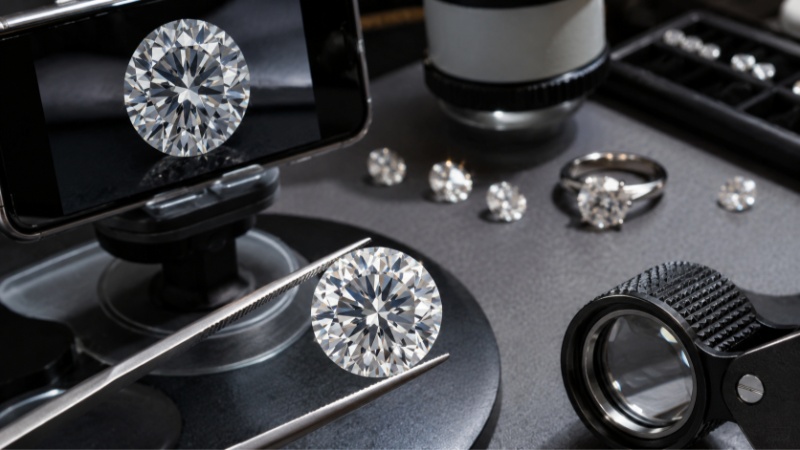
Low-price stones often have problems beyond carat weight, such as weak fire, flat brilliance, or asymmetrical cutting. A 4 carat moissanite may look large, but it may not look premium if the cut does not return light well. For customer-facing products, brilliance is part of the product value.
Buyers should review the table, facet symmetry, light return, and overall brilliance before sample approval. Close-up photos and videos can help online brands reduce the risk of receiving stones that look cloudy, dull, or uneven. Cut quality should be treated as a core purchasing standard, not a small detail.
4. Confirm Clarity and Visible Inclusions
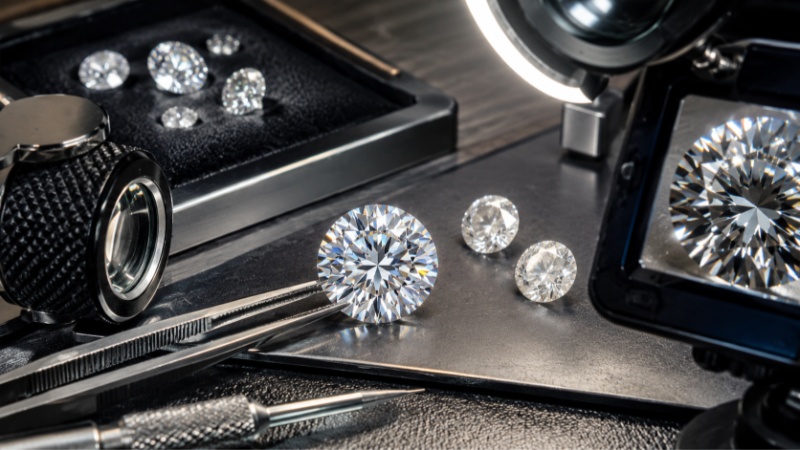
A 4 carat moissanite has a larger face-up area, so visible inclusions are easier for customers to notice. This is especially important for Shopify sellers and online jewelry brands because customers often check close-up photos and videos before buying. Clearer stones usually create stronger customer confidence.
Buyers should confirm the clarity standard with the supplier before production. If needed, ask for magnified images, sample videos, or a clear inspection standard for repeat orders. The goal is not only to approve one sample, but to keep bulk quality consistent.
5. Choose the Right Metal Material
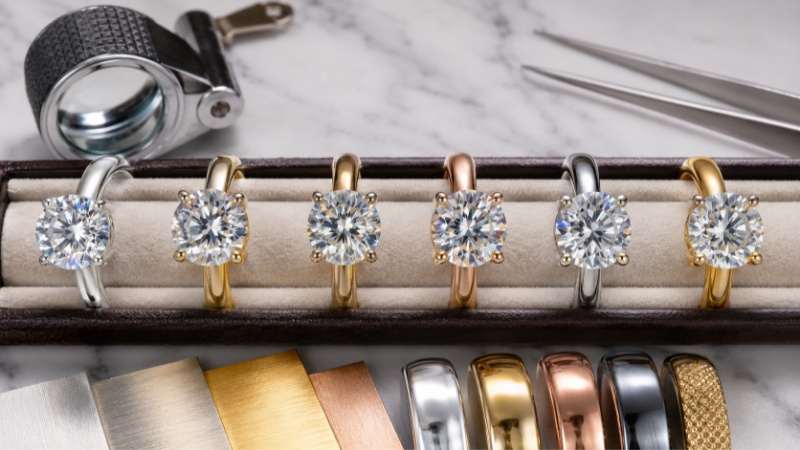
The same 4 carat stone can create very different finished jewelry value depending on the metal material. 925 silver, brass, stainless steel, 10K gold, 14K gold, and 18K gold all create different cost levels and customer expectations. The right metal choice should match your selling price, target customer, and after-sales promise.
For affordable moissanite collections, 925 silver is often a practical choice. For higher-end collections, 10K or 14K gold may support stronger positioning, while plated brass or stainless steel may need clearer care instructions and more careful expectation management. B2B buyers should choose material based on brand strategy, not price alone.
6. Check Setting Strength for Large Stones
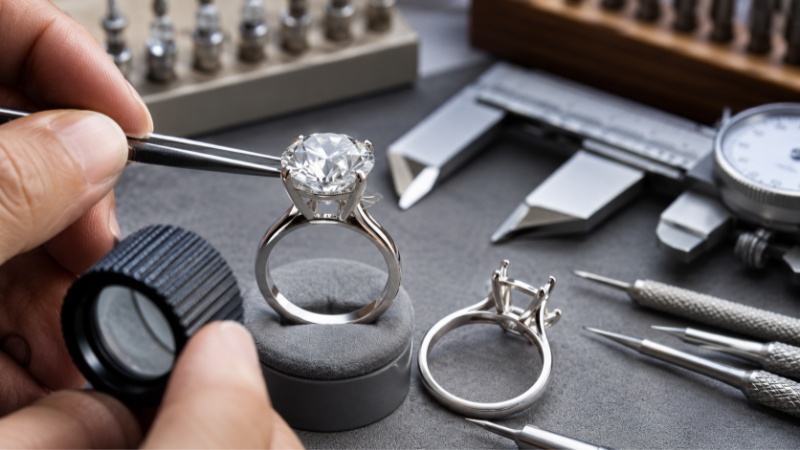
A 4 carat moissanite is large, so setting strength is critical. If the prong design is too weak, the basket structure is not suitable, or the stone seat is not accurate, the stone may become loose after customers wear the jewelry. Loose stones can create repairs, complaints, returns, and negative reviews.
For B2B orders, setting quality is often more important than finding the lowest stone price. Buyers should ask about prong thickness, basket structure, first-piece inspection, stone seat accuracy, and final setting checks before shipment. A strong setting protects both the stone and the brand reputation.
7. Compare Sample Quality with Bulk Production
Many sourcing risks happen when the sample looks good but bulk production is inconsistent. This can include different stone color, weaker fire, size tolerance issues, plating color difference, or unstable setting quality. For repeat orders, the approved sample should become the production standard.
A reliable supplier should keep an approved sample and production record. Buyers should confirm stone sorting standards, plating control, packaging requirements, and final QC before the order leaves the factory. This helps reduce sample-to-bulk differences and protects long-term cooperation.
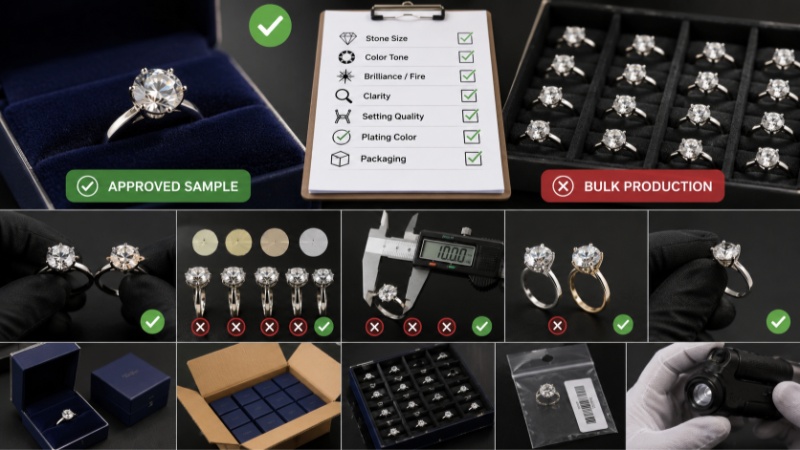
Low-Price 4 Carat Moissanite Risks
Low-price 4 carat moissanite may look attractive at first, but the common risk is not only carat weight. Buyers may face yellow or gray tone, weak fire, asymmetrical cutting, larger size tolerance, and inconsistent quality between sample and bulk production. These problems are easier to notice because a 4 carat stone has strong visual presence.
From Missjeweler’s factory experience, another common risk is setting stability. Because a 4 carat stone is large, poor prong design, weak setting precision, or an unsuitable mounting structure can lead to loose stones after customers wear the jewelry. For B2B brands, the final after-sales cost may be higher than the initial price saving.
| Low-Price Risk | What Buyers May Notice |
|---|---|
| Yellow or gray tone | Stone looks less premium in photos and videos |
| Weak fire | Lower brilliance and weaker customer appeal |
| Poor cut symmetry | Uneven visual appearance |
| Large size tolerance | CAD and setting may not fit well |
| Sample-bulk difference | Higher complaint risk after delivery |
| Weak setting | Loose stone risk after customer wear |
For jewelry brands, a cheap quote can become expensive if it creates returns, repairs, negative reviews, or repeat order instability. This is why buyers should compare stone quality, setting strength, sample records, and QC standards before choosing a supplier. The lowest quote is not always the safest business decision.
Is 4 Carat Moissanite Worth It for Brands?
A 4 carat moissanite can be worth it for jewelry brands because it creates strong visual impact at a more accessible cost than large diamond jewelry. It works well for statement rings, engagement-style rings, hip hop pendants, custom name jewelry, and premium-looking moissanite collections. For online brands, the large stone size can also help product photos and videos look more attractive.
However, it is only worth it when the quality standard is clear. B2B buyers need to balance stone cost, visual impact, setting durability, customer expectation, after-sales risk, and repeat production consistency. A beautiful sample is not enough if the bulk order cannot repeat the same standard.
| Low-Price Risk | What Buyers May Notice |
|---|---|
| Yellow or gray tone | Stone looks less premium in photos and videos |
| Weak fire | Lower brilliance and weaker customer appeal |
| Poor cut symmetry | Uneven visual appearance |
| Large size tolerance | CAD and setting may not fit well |
| Sample-bulk difference | Higher complaint risk after delivery |
| Weak setting | Loose stone risk after customer wear |
For growing jewelry brands, 4 carat moissanite can help create premium-looking products without the same cost pressure as large diamond jewelry. The key is to make sure the finished piece looks good, wears securely, and matches the approved sample. When the full production standard is controlled, 4 carat moissanite can be a strong product category for bulk orders.
4 Carat Moissanite vs Diamond Value
Moissanite and diamond are priced differently, so buyers should avoid comparing them only by carat weight. Diamond value is strongly affected by rarity, origin, grading, and the traditional 4C system, while moissanite value is more connected to lab-created stone quality, cut, color, clarity, size, craftsmanship, and brand positioning. For B2B buyers, the comparison should focus on customer expectation and product positioning.
Brands should also avoid unclear material claims when marketing moissanite jewelry. The U.S. Federal Trade Commission Jewelry Guides provide guidance on jewelry descriptions and marketing communication. Clear product descriptions help reduce customer misunderstanding and protect brand trust.
For B2B brands, moissanite is not useful only because it is cheaper than diamond. It is useful because it allows larger-looking stones, strong fire, flexible customization, and more accessible price points for customers who want bold jewelry designs. The best value comes from combining strong visual effect with controlled production quality.
What Buyers Should Ask Suppliers
Before ordering 4 carat moissanite jewelry, buyers should ask suppliers about stone size, shape, color, clarity, cut, certificate, metal material, setting structure, sample approval, MOQ, lead time, and final QC. These questions help buyers compare suppliers more accurately instead of choosing only the lowest quote. A clear supplier answer usually means lower production risk.
Important questions include: What is the exact stone shape and millimeter size? What color and clarity grade will be used? Will bulk stones match the approved sample? Is a certificate required or included? What metal material is used for the setting? These questions help confirm the product before CAD, sampling, and mass production. They also reduce misunderstandings between buyer and factory.
Buyers should also ask: What plating thickness or gold karat is confirmed? Can the factory provide CAD before sampling? How will the factory inspect setting strength? What is the MOQ? What final QC standard is used before shipment? These details are especially important for repeat orders. A product that sells well once should be repeatable in the next production batch.
For quality management, buyers can refer to the general principles of ISO 9001 quality management, which focus on process control and consistent quality systems. For B2B jewelry orders, this kind of control is often more valuable than a very low initial quote. Stable process control helps protect both product quality and long-term supplier cooperation.
What to Send Before Asking for a Quote
To get an accurate 4 carat moissanite jewelry quote, buyers should send clear product specifications instead of only asking for a general price. The more complete the information is, the easier it is for the supplier to quote accurately and avoid misunderstanding. A clear inquiry also helps the supplier recommend a more suitable production solution.
| Information to Send | Why It Matters |
|---|---|
| Stone shape | Affects cutting, appearance, and cost |
| Carat weight and mm size | Helps match CAD and setting |
| Color and clarity grade | Controls visual quality |
| Jewelry type | Ring, pendant, earrings, bracelet, or chain |
| Metal material | Affects cost, durability, and positioning |
| Plating or gold karat | Affects price and customer expectations |
| Design reference | Helps CAD and sample development |
| Quantity or MOQ target | Affects bulk price and production planning |
| Packaging requirement | Affects final landed cost |
| QC standard | Reduces after-sales risk |
For plated or mixed-material jewelry, buyers should also consider material compliance and customer safety expectations. The European Chemicals Agency explains REACH regulation, which helps brands understand why material control matters in international jewelry sourcing. For B2B buyers, material control is part of long-term brand protection.
If buyers already have product photos, CAD files, drawings, or market references, they should send them together with the target quantity. This helps the factory judge design complexity, stone size, metal weight, and setting method more accurately. A better inquiry usually leads to a more reliable quote.
How Missjeweler Supports 4 Carat Moissanite Orders
Missjeweler supports OEM/ODM 4 carat moissanite jewelry orders for jewelry brands, wholesalers, online sellers, and custom jewelry businesses. Buyers can confirm stone shape, millimeter size, color grade, clarity grade, metal material, CAD design, sample details, plating color, packaging, and QC standards before bulk production. This helps reduce price confusion before the order moves forward.
During production, Missjeweler focuses on stone selection, sample confirmation, setting inspection, plating control, and final QC before shipment. This process helps reduce weak brilliance, color inconsistency, loose stones, sample-to-bulk differences, and after-sales complaints. For growing brands, stable production control is often more valuable than a very low quote.
| Support Area | What Missjeweler Helps Confirm |
|---|---|
| Stone selection | Shape, size, color, clarity, and cut |
| Custom design | CAD, sample, logo, and setting style |
| Metal options | 925 silver, gold plating, 10K, 14K, and 18K gold |
| Bulk production | MOQ, lead time, and sample approval |
| QC control | Stone setting, plating, polishing, and final inspection |
| Brand support | Packaging, product photos, and repeat order consistency |
For growing brands, Missjeweler’s value is not only making the product, but helping buyers control specifications, production details, and realistic quality expectations. This practical process helps brands reduce sourcing risk before the order moves into bulk production. When buyers confirm the right details early, both sample approval and bulk production become safer.
Conclusion
A 4 carat moissanite can be worth different amounts depending on stone quality, shape, cut, certificate, metal material, setting design, MOQ, and final QC standard. For B2B buyers, the safest approach is not to compare price alone, but to confirm specifications, sample quality, setting strength, and bulk production consistency before placing an order.
Get a Safer 4 Carat Moissanite Bulk Quote
Contact Missjeweler to confirm your 4 carat moissanite stone shape, size, color grade, metal material, CAD design, sample standard, low MOQ trial order, and final QC before your next bulk order.
FAQ
Q1: How much is a 4 carat moissanite worth?
A 4 carat moissanite does not have one fixed value. The final price depends on stone shape, color, clarity, cut quality, certificate, metal material, setting design, and whether it is a loose stone or finished jewelry.
Q2: Is a 4 carat moissanite good for wholesale jewelry?
Yes, 4 carat moissanite can work well for wholesale jewelry. It has strong visual impact and is suitable for rings, pendants, earrings, bracelets, and custom jewelry when stone quality and setting strength are controlled.
Q3: Why are some 4 carat moissanite stones cheaper?
Some low-price stones may use lower color, weaker cut, poor symmetry, larger size tolerance, or looser QC. Buyers should check the full specification before choosing the lowest quote.
Q4: Is a 4 carat moissanite ring more expensive than a loose stone?
Yes, a finished ring usually costs more than a loose stone. It includes metal cost, CAD design, setting labor, polishing, plating, packaging, and final QC.
Q5: Can Missjeweler make custom 4 carat moissanite jewelry?
Yes, Missjeweler supports custom 4 carat moissanite rings, pendants, earrings, bracelets, and OEM/ODM jewelry orders. Buyers can confirm CAD design, sample standard, low MOQ trial orders, and final QC before bulk production.