
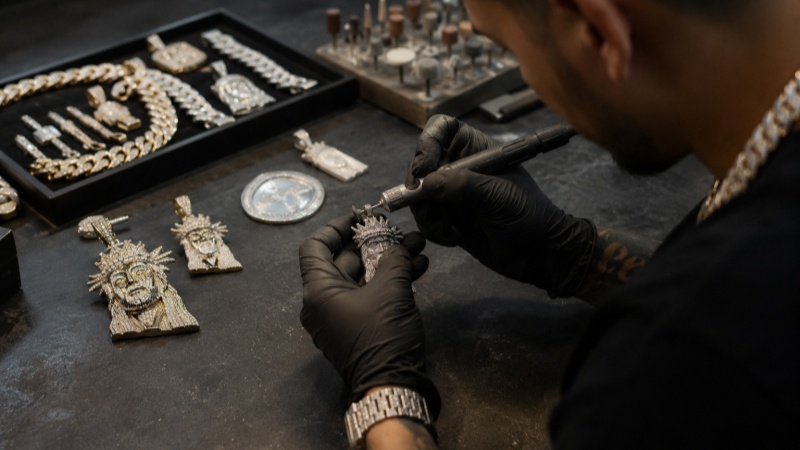
Finding the right hip hop jewelry manufacturer in 2026 is one of the most important decisions for growing brands looking to scale with confidence. Many businesses struggle to identify a reliable hip hop jewelry manufacturer, often facing inconsistent quality, delayed production, and hidden costs after bulk orders begin.
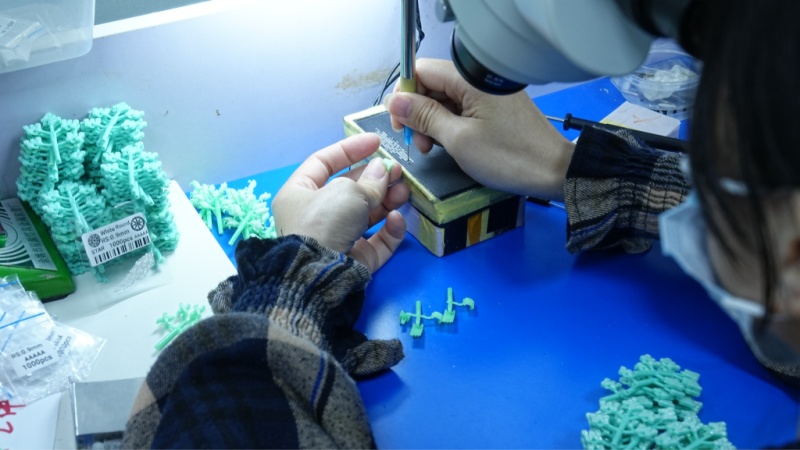
In our experience working with scaling jewelry brands, we have seen how choosing suppliers based only on low pricing can quickly lead to costly setbacks. The right manufacturing partner provides consistency, transparency, and scalable production support. This guide explains exactly what to evaluate so your brand can source smarter and grow faster in 2026.
Why Trust This Guide?
At MissJeweler, we have worked with growing jewelry brands across North America and Europe, supporting OEM and ODM hip hop jewelry production with moissanite, sterling silver, and custom pendant manufacturing.
Through years of factory experience, we have seen the most common sourcing mistakes brands make—and what separates reliable manufacturers from costly production risks.
Reliable factories often operate under structured quality systems such as ISO 9001 quality management standards.
Why Brands Struggle to Find Reliable Manufacturers
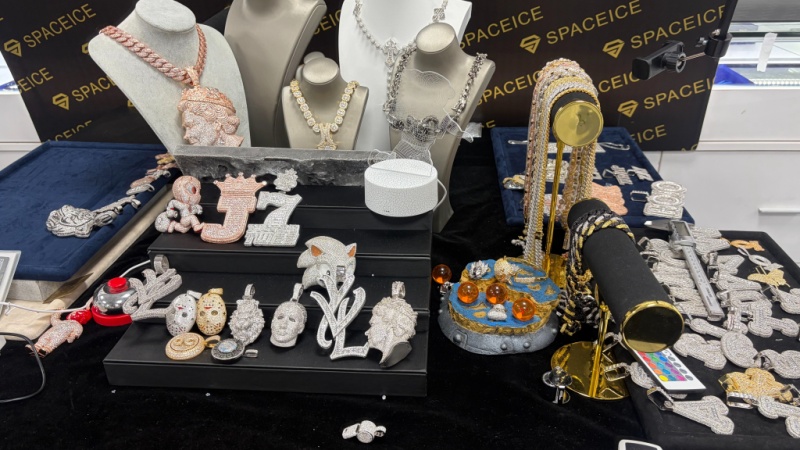
Finding the right manufacturing partner is often one of the biggest challenges for growing hip hop jewelry brands. While many suppliers appear capable during early discussions, hidden issues often surface once sampling or bulk production begins. These problems typically fall into four critical areas For growing brands, these sourcing mistakes often lead to delayed launches, inconsistent customer experiences, and slower business growth.that directly affect product quality, delivery reliability, and brand growth.
Limited Experience Vetting Overseas Suppliers
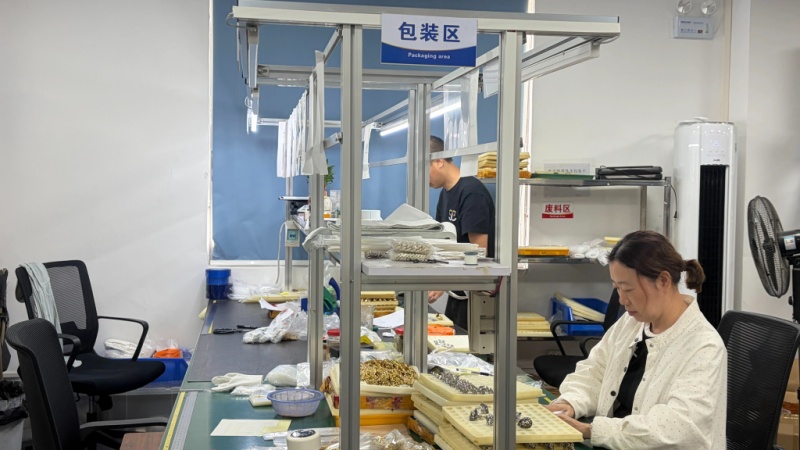
Many brands struggle to distinguish real factories from trading companies. Bulk production often exposes quality inconsistencies in areas such as pavé stone setting, plating durability, polishing precision, clasp strength, and finishing details.Without structured quality control systems, approved samples may not accurately match mass production results, creating return risks and damaging customer trust.
| Factor | Real Factory | Trading Company |
|---|---|---|
| Production Control | Direct | Outsourced |
| Lead Time | More predictable | Often unstable |
| Customization | Stronger | Limited |
| Communication | Direct to production | Multiple layers |
| Cost Transparency | Higher | Often hidden margins |
| QC Consistency | Better | Depends on subcontractors |
Inconsistent Product Quality Across Bulk Orders
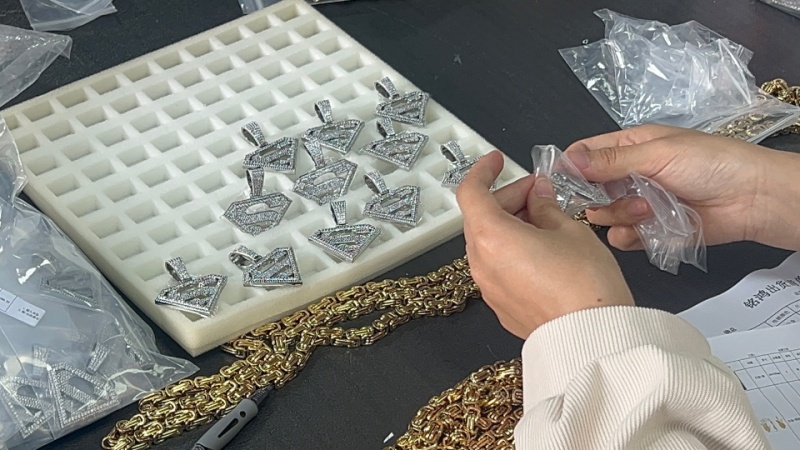
Bulk production often reveals inconsistencies in stone setting, plating thickness, polishing precision, and final finishing quality. Attractive product photos and fast responses may look convincing, but often reveal little about actual production capacity, workshop standards, or quality control systems. Limited transparency during early communication makes supplier evaluation difficult.
Production Delays That Disrupt Brand Growth
Unstable production schedules often lead to missed launches, inventory shortages, and delayed restocks during peak sales periods. In many cases, these delays result from poor internal quality control and repeated rework.For growing brands, delayed production can also mean missed influencer campaigns, failed product launches, and lost seasonal sales opportunities.
High MOQs That Limit Flexibility

Rigid minimum order requirements create unnecessary inventory pressure for growing brands. This makes it harder to test new designs, respond to trends quickly, and scale collections with lower risk.High minimum order requirements can create unnecessary inventory pressure for growing brands and tie up cash flow in untested products. This makes it harder to test new designs, react quickly to market trends, and launch collections with lower risk. Flexible MOQs give brands more freedom to validate products faster and scale more efficiently.
What Makes a Hip Hop Jewelry Manufacturer Truly Reliable
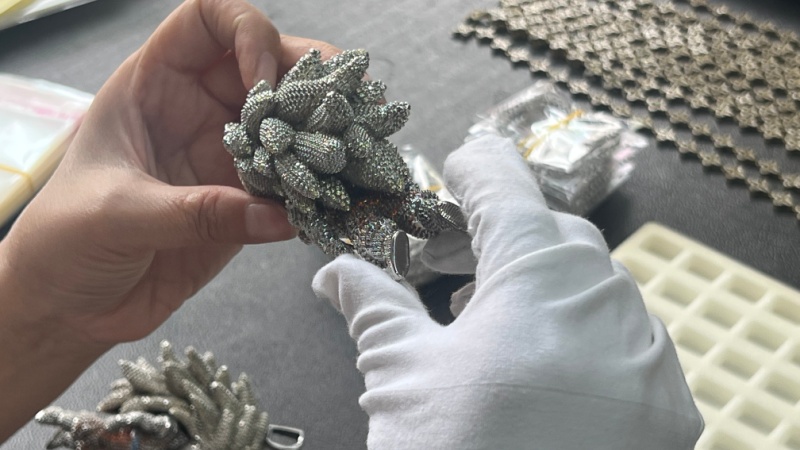
A reliable hip hop jewelry manufacturer is not defined by price alone, but by the ability to consistently deliver quality, communication, and scalable production support. For growing brands, the right partner reduces risk at every stage—from sampling to bulk production—and ensures each order meets predictable standards.
Manufacturer Evaluation Checklist
| Evaluation Area | Good Manufacturer | Red Flag |
|---|---|---|
| Production Type | Real factory | Trading company |
| Stone Setting | Consistent pav¨¦ quality | Loose/inconsistent stones |
| MOQ | Flexible for testing | Very high MOQ |
| Sampling | CAD + sample approval | No approval process |
| QC Process | Multi-stage inspection | Final check only |
| Communication | Fast & transparent | Slow / unclear |
| Lead Time | Stable timelines | Frequently delayed |
| Materials | Clear specifications | Vague answers |
Proven Experience in Hip Hop Jewelry Production
Reliable manufacturers understand the technical requirements of hip hop jewelry production, including micro pavé stone setting consistency, plating durability, clasp strength, and CAD feasibility for oversized pendants.
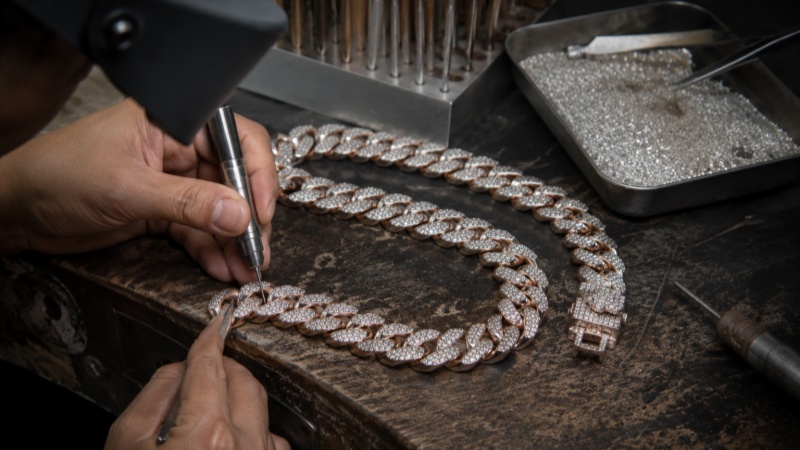
For example, brands should ask suppliers how they control stone loss rates during bulk production, what plating thickness standards they use, and whether pre-production approval samples are required before mass manufacturing. including precise stone setting, detailed designs, and durable finishes. Experience with moissanite and custom pieces ensures smoother development and fewer production errors.
Consistent Quality Control Systems
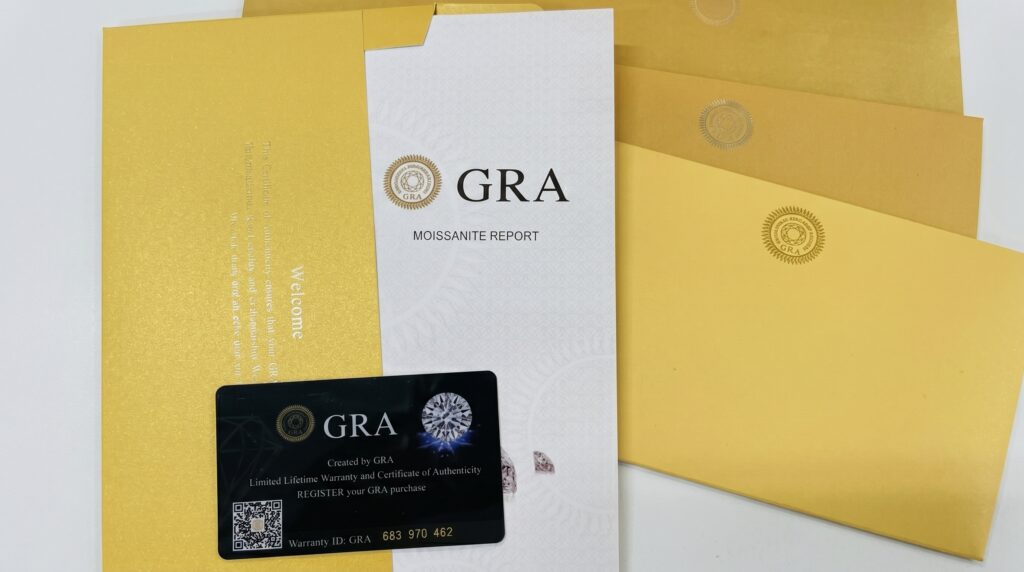
Strong factories operate with structured multi-stage inspections aligned with industry-recognized gemstone standards, including stone checking, polishing control, and plating verification. This helps maintain consistency between samples and final bulk production.
Clear and Honest Communication
Fast response times, transparent pricing, and realistic production timelines are key indicators of a dependable partner. Clear communication reduces misunderstandings and keeps production on track.
Flexible MOQ for Scaling Brands
Flexible minimum order quantities allow brands to test new designs without excessive inventory risk, making it easier to grow collections step by step.
Strong Custom Development Capability
A capable manufacturer supports CAD design, sampling development, and rapid prototyping, helping brands turn ideas into production-ready products efficiently.
Why Cheap Quotes Often Cost More Long-Term
In the hip hop jewelry industry, many growing brands are naturally drawn to the lowest quotation when comparing suppliers. However, in real production experience, the cheapest option often leads to higher long-term costs once quality and consistency issues begin to appear.

One common situation we have seen is brands choosing a manufacturer with pricing nearly 25% lower than market average based on attractive samples and initial communication. While the samples appear acceptable, problems usually emerge during mass production, including inconsistent stone setting, lack of structured quality inspection, and unstable production scheduling.
As production continues, these issues often result in delayed launches, rework costs, and lost sales opportunities during peak demand periods. More importantly, inconsistent product quality can damage customer trust and long-term brand reputation.
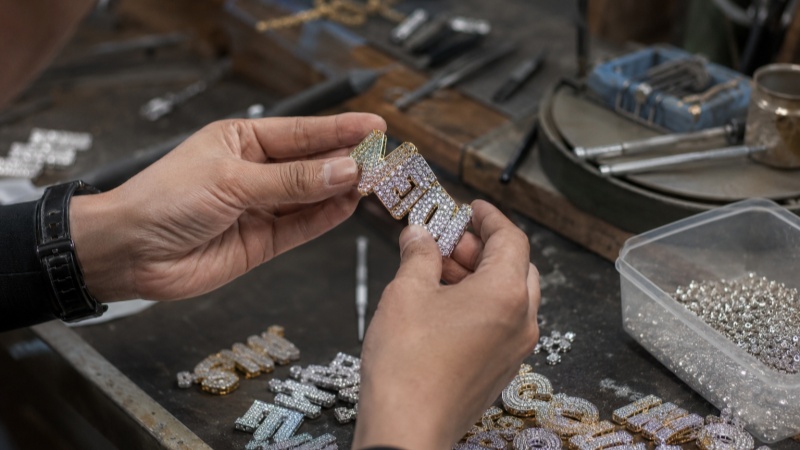
For growing brands, the key lesson is that manufacturing decisions should not be based on unit price alone. Stable production systems, clear quality control processes, and predictable delivery performance are what truly determine long-term profitability.
When Sample Photos Don’t Match Production Reality
One of the most common risks growing brands face when sourcing jewelry is trusting sample images without verifying the actual production system behind them. While early samples may look polished and high-quality, they do not always reflect the consistency of mass production.

In real cases we’ve seen, some brands discovered too late that attractive sample presentations were not backed by a stable manufacturing process. Issues such as inconsistent material standards, missing pre-production approvals, and lack of structured quality control only became visible once bulk orders started.
When switching to a more reliable manufacturing process, key improvements typically include clearly defined material specifications, formal sample approval before production, multi-stage quality inspections, and transparent progress updates throughout production. These systems help ensure that what is approved in sampling is accurately replicated in bulk orders.
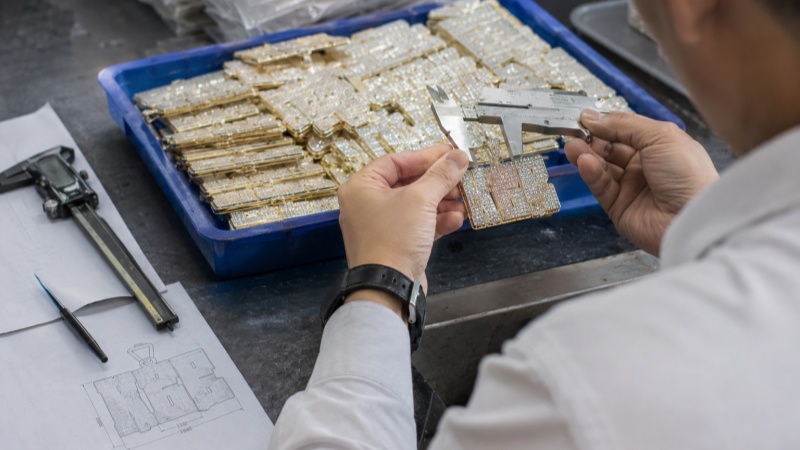
For growing brands, the key takeaway is that sample appearance alone is not enough—production transparency and process control are what guarantee consistent results at scale.
Why Source Directly from Factories
Working directly with a specialized hip hop jewelry factory gives growing brands more control over quality, cost, and production timelines compared to relying on intermediaries. A direct manufacturing relationship helps reduce miscommunication and ensures that product requirements are executed more accurately from sampling to bulk production.
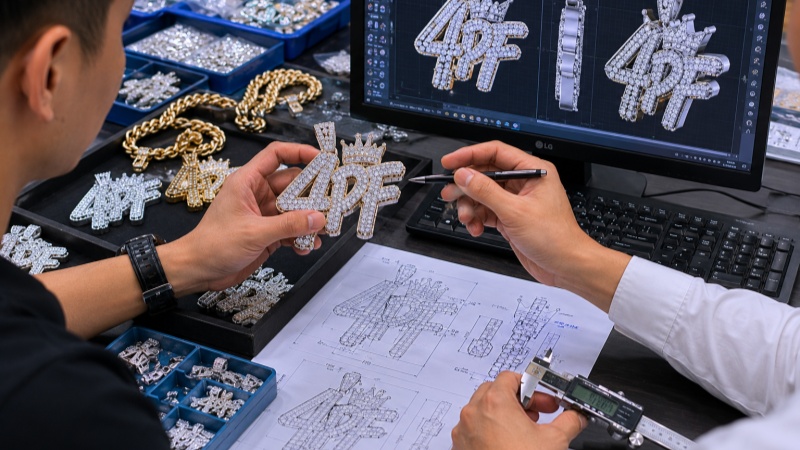
One key advantage is stronger quality control, as production standards are managed internally rather than passed through multiple layers. This improves consistency in stone setting, polishing, and plating results across different batches.
Direct factory sourcing also enables faster sampling and revision cycles. Without unnecessary communication delays, brands can move from design to prototype more efficiently, allowing quicker product testing and market response.
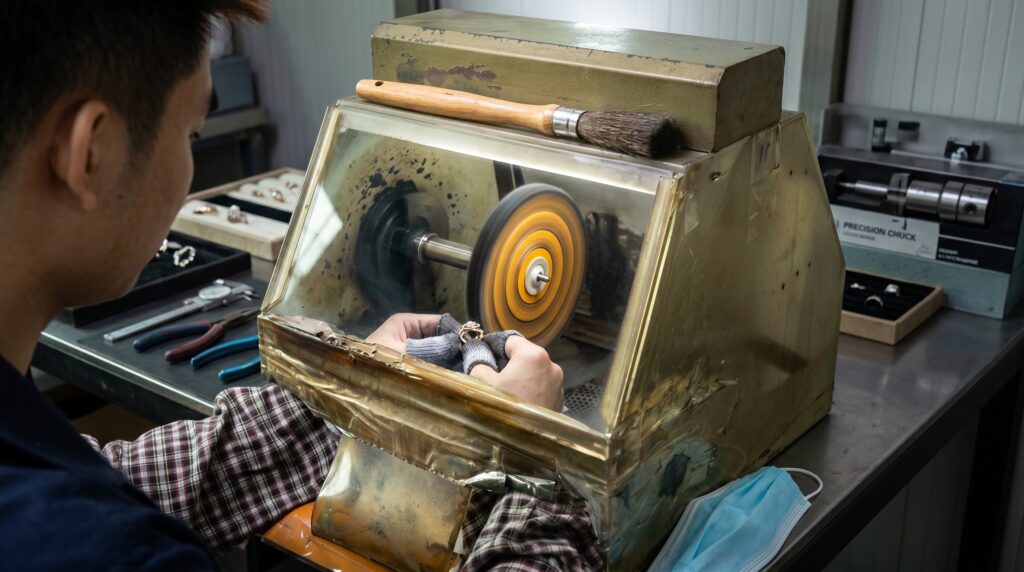
In addition, working directly with the factory often reduces long-term costs and improves customization flexibility. Brands can adjust materials, designs, and finishing details more easily, while also building a more stable foundation for scaling future collections.
How the Right Manufacturing Partner Helps Brands Scale
A reliable manufacturing partner plays a critical role in helping growing hip hop jewelry brands scale efficiently. Beyond simply producing products, the right factory supports faster development cycles, stable quality, and consistent supply, which directly impacts how quickly a brand can respond to market demand.
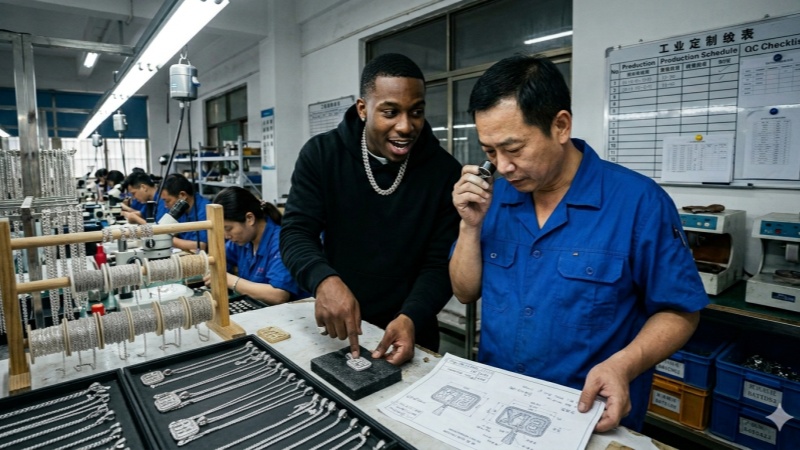
With faster product launch cycles, brands can move from design to market in shorter timeframes, allowing them to capitalize on trends while they are still relevant. This speed advantage is especially important in the fast-moving jewelry market.
Improved product consistency also leads to higher customer satisfaction, fewer returns, and stronger repeat purchase behavior. When customers receive consistent quality across different orders, brand trust naturally increases.
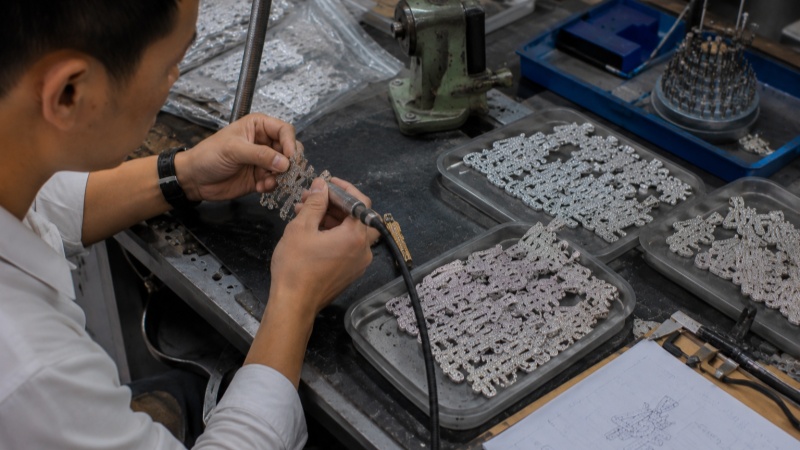
In addition, a strong manufacturing partner enables brands to test more designs with lower risk. Flexible sampling and scalable production allow businesses to experiment with new collections without committing to large upfront inventory.
What Growing Brands Should Look for in a Partner
Choosing a long-term manufacturing partner is a strategic decision that directly affects a brand’s ability to scale. For growing hip hop jewelry brands, the focus should shift from short-term pricing advantages to long-term production stability and collaboration quality.
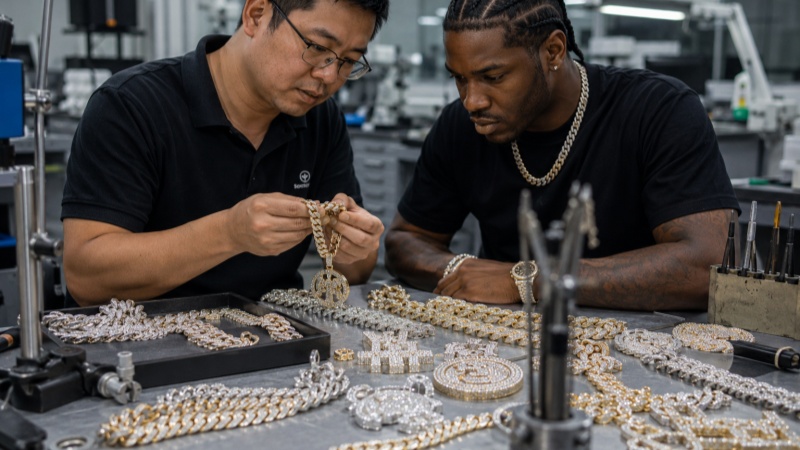
Reliability is more important than low initial cost, as consistent production reduces risks such as delays, quality issues, and customer dissatisfaction. A dependable partner ensures that each order meets predictable standards, helping brands build a stable reputation in the market.
Process transparency is another key factor. Clear communication around materials, production stages, and timelines allows brands to plan inventory and launches with confidence. Without transparency, scaling becomes unpredictable and risky.
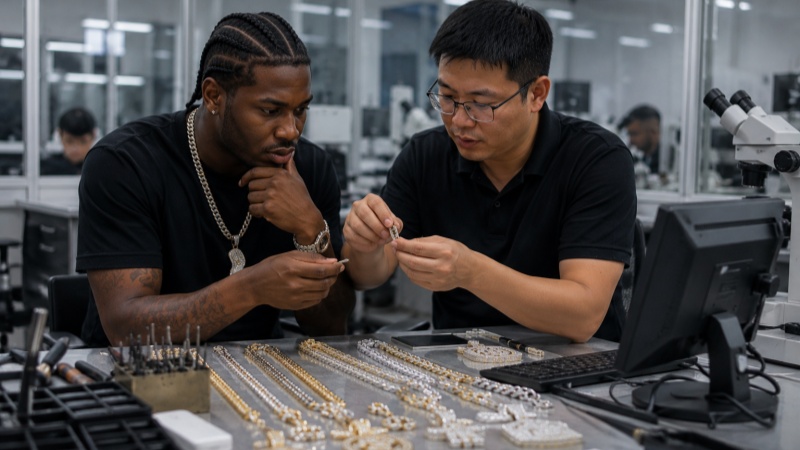
Product consistency is equally critical, especially for brands aiming to build recognizable collections. Stable quality across batches strengthens customer trust and supports repeat business.
Finally, the best manufacturing partners operate with a partnership mindset rather than a transactional approach, supporting long-term brand growth instead of focusing only on individual orders.
FAQ
How do I verify a real jewelry factory?
Ask for workshop videos, production proof, and quality control details.A real factory should be able to provide transparent proof of its production capabilities rather than relying only on product photos or sales presentations.
What is a good MOQ for growing brands?
Flexible MOQs are best for testing designs without high inventory risk.
Why are some supplier prices much lower?
Lower prices often come from thinner plating, weaker stone setting, lower-grade moissanite, or limited quality control systems. While cheap quotes may reduce short-term costs, they often lead to rework, delays, and inconsistent product quality during bulk production.
How long does custom sampling take?
Most custom samples take 7–21 days depending on design complexity.
Why choose a specialized moissanite factory?
It ensures better stone setting precision, consistency, and reliable scaling support.
Choosing the Right Factory Matters
Choosing a reliable hip hop jewelry manufacturer is one of the most important decisions for growing brands. A professional moissanite source factory helps ensure consistent quality, reliable delivery, and smoother production as your business scales. The right manufacturing partner becomes a long-term foundation for sustainable brand growth.
Build with a Trusted Moissanite Factory
MissJeweler helps growing brands scale with consistent moissanite quality, flexible OEM/ODM support, and transparent production from sampling to bulk orders.Need a reliable manufacturing partner for your next collection? Contact us today for a catalog, quote, or custom development consultation.