
Introduction
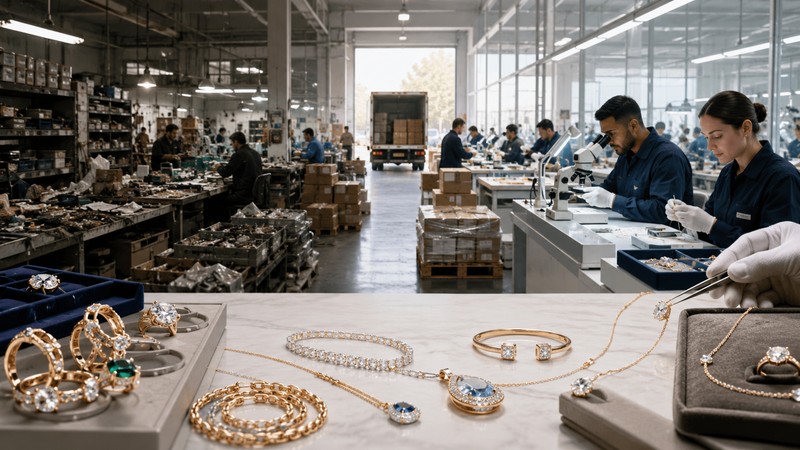
Many growing jewelry brands start with strong designs, real customer demand, and successful marketing campaigns. However, when orders increase faster than production systems can support, the supply chain can quickly become the weakest part of the business. Delayed delivery, unstable plating, loose stones, inconsistent bulk quality, and poor supplier communication can all damage customer trust.
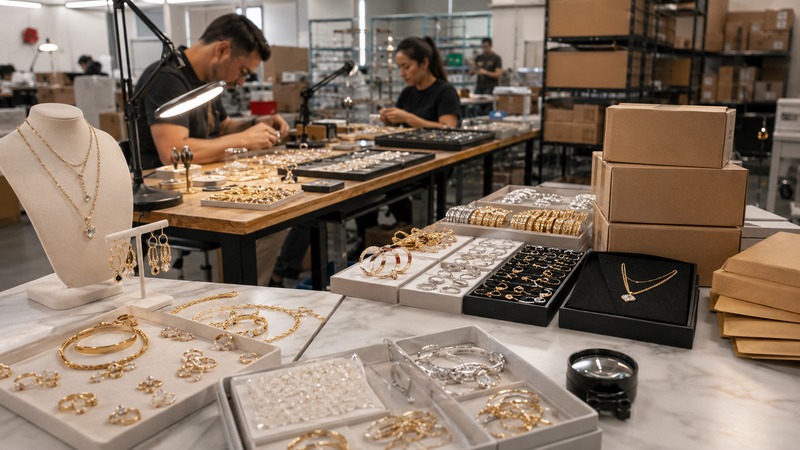
For jewelry brands, wholesalers, retailers, and Shopify sellers, a jewelry supply chain crisis is not only a production issue — it directly affects cash flow, reviews, repeat orders, and brand reputation. The challenge is that many brands try to fix the problem only after complaints have already appeared. This guide explains why jewelry supply chain problems happen, why traditional quick fixes often fail, and what growing brands can do to build a more reliable production system.
What Is a Jewelry Supply Chain Crisis?
A jewelry supply chain crisis happens when production, quality control, delivery, or supplier communication can no longer support a brand’s order growth. It often appears through delayed shipments, sample-to-bulk differences, unstable plating, loose stones, rising returns, and slower supplier response. For growing jewelry brands, these problems can quickly affect cash flow, customer reviews, and repeat orders.
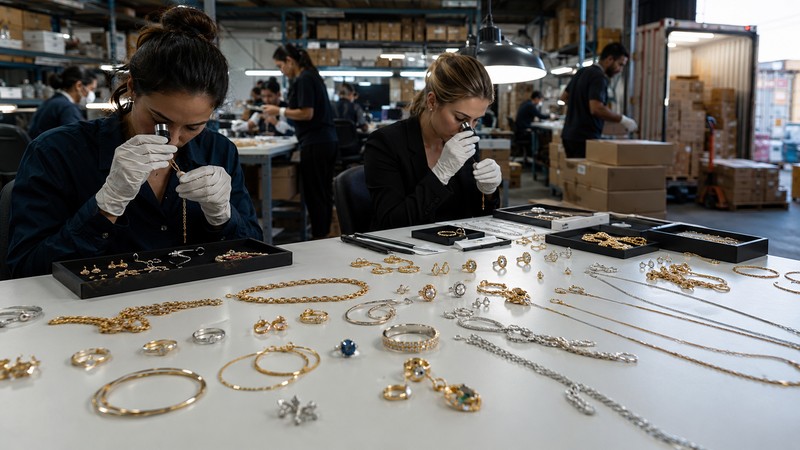
Common warning signs include:
- Bulk goods do not match the approved sample.
- Delivery delays affect launches or seasonal campaigns.
- Plating fades too quickly after normal wear.
- Stones become loose after customers receive the product.
- Supplier communication becomes slower after payment.
- Returns, refunds, and negative reviews start increasing.
Why Growing Jewelry Brands Face More Supply Chain Risk
Growing jewelry brands usually pass through three stages: product validation, fast growth, and brand expansion. The real supply chain crisis often appears during the fast-growth stage. At this stage, order volume increases, SKU numbers expand, and customers expect stable quality across every batch.
When demand grows quickly, production changes from small-batch testing to repeated bulk manufacturing. This puts more pressure on material sourcing, polishing, plating, stone setting, packaging, quality control, and delivery planning. If the supplier does not have a stable system, every weak point becomes more visible.
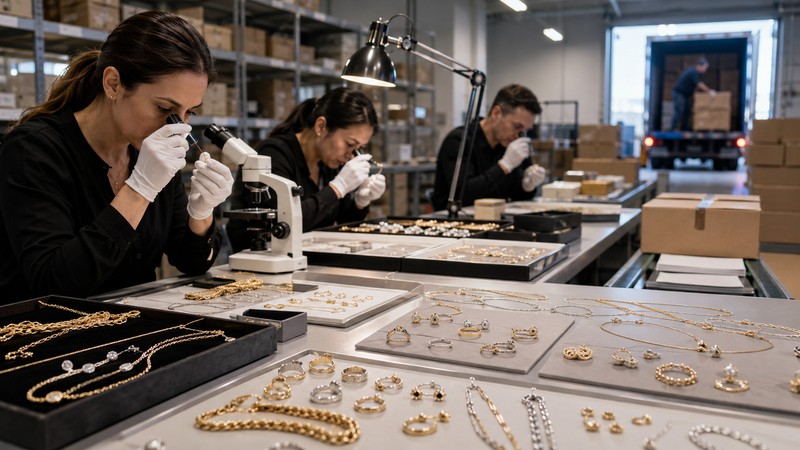
According to Shopify’s guide to supply chain management, growing commerce brands must manage supplier reliability, inventory planning, and fulfillment consistency. Jewelry brands face even higher risk because each product includes visual details, material choices, handwork, stones, finishing, and packaging.
The Hidden Cost of Supply Chain Failure
A jewelry supply chain crisis usually does not start with one big failure. It often starts with repeated small issues that slowly damage customer trust. For example, one batch may have slightly different plating color, another batch may have loose stones, and another order may miss the launch date.
In one anonymized internal case, a fashion jewelry brand increased sales by about 50% during a growth period, but customer complaints rose much faster because production quality was not stable enough. The brand had to slow down new product launches and spend several months rebuilding its supplier and QC process.
The 5 Most Common Jewelry Supply Chain Problems
1. Sample and Bulk Order Differences
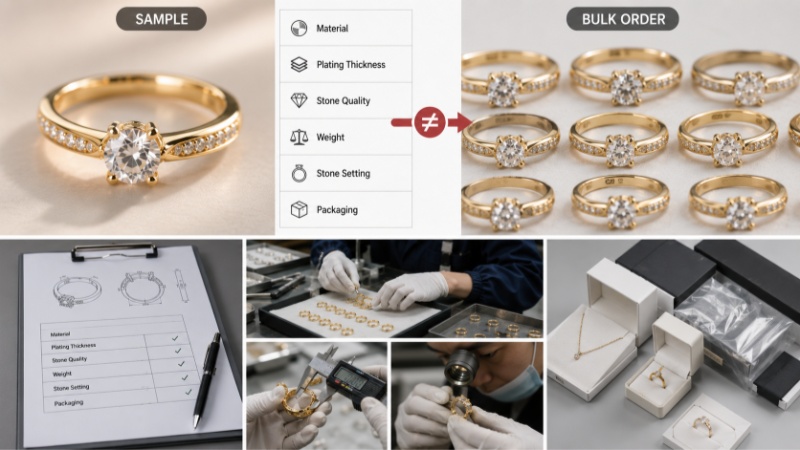
One of the most common supply chain problems is sample-to-bulk inconsistency. A sample may have the correct weight, finish, stone setting, and plating color, but the final production batch can look different if the approved sample is not converted into clear manufacturing standards. Even small variations in plating thickness, polishing, or stone placement can affect product quality and customer satisfaction.
The solution is to go beyond sample approval. Suppliers should document key specifications such as materials, plating requirements, stone details, weight standards, and packaging requirements, and use them as the reference standard for bulk production.
2. Unstable Plating Quality
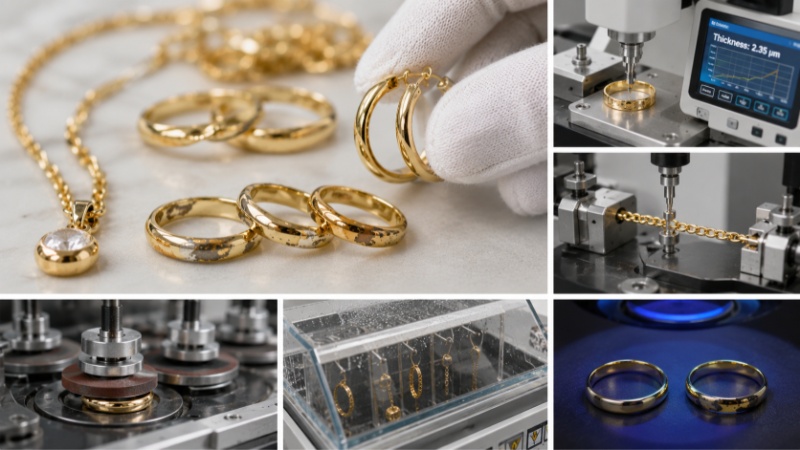
Plating quality is one of the leading causes of jewelry returns and complaints. Problems such as fading, discoloration, uneven color, dark spots, and coating wear may not be visible during final inspection but can appear after customers start wearing the jewelry.
To reduce risk, suppliers should use more than visual inspection. Testing methods such as plating thickness measurement, adhesion testing, wear resistance testing, and salt spray testing help verify that the coating can withstand real-world use rather than simply look acceptable before shipment.
3. Loose Stones and Weak Setting
Loose stones directly damage customer trust and brand reputation. This issue is common in moissanite jewelry, tennis bracelets, pavé rings, and other stone-intensive designs, often caused by weak prong control, poor setting techniques, incorrect stone sizing, or rushed production.
To prevent stone loss, inspections should take place throughout production rather than only before shipment. Factories should verify stone tightness, prong security, alignment, and overall symmetry, while conducting first-piece approval for complex designs before moving into full-scale production.
4. Material and Specification Confusion
Many jewelry supply chain problems begin with unclear product descriptions. Words like “silver color,” “gold finish,” “diamond look,” or “premium plating” are not enough for B2B production.
Buyers should confirm whether the product is 925 sterling silver, brass, stainless steel, gold vermeil, gold plated, or another base material. They should also confirm whether the stone is moissanite, cubic zirconia, lab-grown diamond, or natural diamond. The Gemological Institute of America provides useful education about gem materials and identification, which can help buyers understand why clear material naming matters.
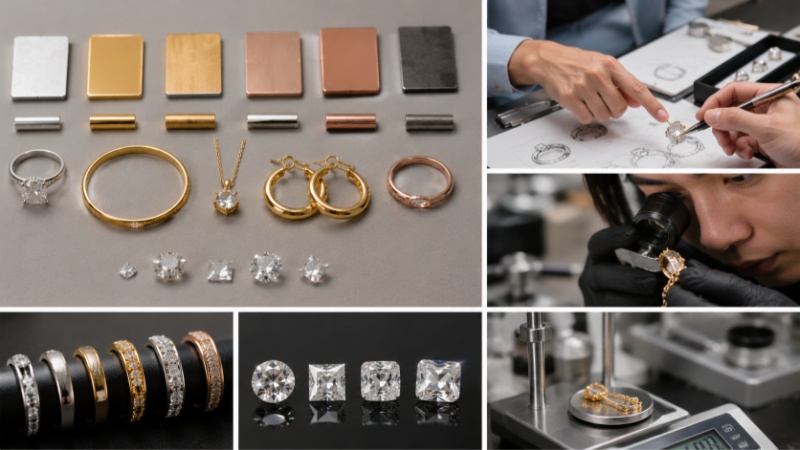
If the material is not confirmed before sampling, pricing and customer communication can become inaccurate. This can create disputes later when buyers discover that the product is not what they expected.
5. Delivery Delays and Missed Sales Windows
Delivery delay is another major supply chain risk for growing jewelry brands. The real cost of a delayed order is not only the production cost; it is the lost sales opportunity.
If a brand prepares a product launch, influencer campaign, holiday sale, or wholesale delivery schedule, a late shipment can affect the entire marketing plan. The brand may have paid for ads, content, packaging, and promotion, but still have no inventory ready to sell.
Many delays happen because suppliers promise unrealistic lead times to win the order. A stronger approach is to confirm production capacity, order queue, material availability, sample timeline, bulk production time, QC time, and shipping schedule before placing the order.
Why Traditional Fixes Often Make Things Worse
When supply chain problems happen, many brands respond quickly but not always correctly. The biggest mistake is treating symptoms instead of fixing the production system behind them.
| Common Quick Fix | Why It Often Fails | Better Direction |
|---|---|---|
| Switching suppliers immediately | The new supplier may have the same hidden problems | Audit supplier capability before committing |
| Choosing the lowest price | Low cost may reduce material or QC standards | Compare total value, not just unit price |
| Relying only on samples | A good sample does not guarantee bulk consistency | Document production standards |
| Only doing final inspection | Problems may be found too late | Add in-process QC |
| Holding too much inventory | Creates cash pressure and dead stock | Improve reorder planning |
| Using many small suppliers | Harder to control quality and communication | Build a stable supplier system |
Traditional fixes often feel fast, but they may create new risks. For example, switching suppliers without proper evaluation can restart the same problem with a different factory. Choosing the lowest price may save money at first, but it can increase returns, complaints, and replacement costs later.
Growing brands need a more proactive approach. Instead of waiting for defects to appear, they should build supplier standards before sampling, check quality during production, and use after-sales feedback to improve future orders.
Build Brand-Level Quality Standards
Many growing jewelry brands have design standards, but they do not have clear production quality standards. To scale safely, a brand needs both design control and manufacturing control.
Before sampling or bulk production, the supplier should confirm base metal, plating type, plating thickness, stone type, stone size, stone grade, polishing level, logo position, target weight, packaging method, and inspection standard. These details should be written down, not only discussed in messages.
This is especially important for 925 sterling silver jewelry, gold-plated jewelry, moissanite jewelry, custom pendants, tennis bracelets, rings, earrings, and logo jewelry. When the standard is clear, the factory can reproduce the approved sample more consistently during bulk production.
Control the Full Production Process
A reliable jewelry supply chain should not depend only on final inspection. Quality needs to be controlled at every key production stage.
The main control points include raw material sourcing, CAD confirmation, mold making, casting, polishing, stone setting, plating, cleaning, final QC, and packaging. If a problem is found early, it is easier and less expensive to correct.
For example, loose stones should be checked during the setting process, not only before shipment. Plating quality should be reviewed through thickness, adhesion, color tone, and surface finish checks. For gem and material education, buyers can also refer to the GIA Gem Encyclopedia to better understand why accurate material naming matters.
Prepare Safety Stock for Fast Growth
Fast-growing jewelry brands need to prepare for sudden demand. Safety stock does not mean holding too much finished inventory; it means preparing the key materials that affect delivery speed.
For core products, brands can prepare common stone sizes, chains, clasps, findings, packaging materials, and semi-finished parts in advance. This gives the supplier more flexibility when repeat orders increase.
For example, if a brand sells moissanite tennis bracelets, keeping common moissanite sizes and bracelet components ready can shorten the reorder cycle. This helps the brand respond faster during promotions, influencer campaigns, or seasonal sales.
Use Flexible Production for New Designs
Jewelry trends change quickly, especially for DTC brands, influencer brands, hip hop jewelry brands, and fashion jewelry collections. Flexible production helps brands test new designs without taking heavy inventory risk.
A good supplier should support small-batch sampling, quick design adjustment, and stable bulk production after the product is validated. This allows brands to test market demand before committing to larger orders.
Flexible production also helps improve products after customer feedback. If customers report weak clasps, fading, uncomfortable fit, or packaging damage, the supplier should help adjust the next batch instead of repeating the same problem.
Track Feedback and Improve Each Batch
Customer complaints should not only be treated as after-sales problems. For growing brands, customer feedback is supply chain data.
If customers report fading, loose stones, darkened surfaces, broken clasps, or damaged packaging, the brand should share this information with the supplier. The factory can then check whether the problem came from material choice, plating process, stone setting, polishing, packaging, or shipping protection.
ASQ’s quality management system resources explain the importance of process control and continuous improvement. In jewelry production, this means each order should help improve the next order.
Case Study: Before and After Supply Chain Upgrade
One anonymized growing jewelry brand faced unstable delivery, rising customer complaints, slow new product development, and weak inventory planning during a fast-growth stage. The brand did not only need a cheaper supplier; it needed a more reliable supply chain system.
After introducing documented production standards, first-piece confirmation, in-process QC, plating review, stone setting inspection, packaging review, and reorder planning, the brand improved delivery certainty and reduced after-sales pressure.
| Key Metric | Before | After |
|---|---|---|
| Stable delivery rate | 72% | 96% |
| Complaint rate | 3.20% | 0.90% |
| Return rate | 5.10% | 1.40% |
| New product development cycle | 45 days | 18 days |
| Inventory turnover | 3 times/year | 6 times/year |
The biggest improvement was not only cost reduction. It was certainty. When quality, delivery, and reorder planning became more predictable, the brand could plan product launches with more confidence.
Supplier Checklist Before You Commit
Before placing a bulk jewelry order, buyers should evaluate the supplier carefully. A reliable supplier should be able to explain not only what they can make, but also how they control quality, timing, and consistency.
Use this checklist before you commit:
- Can the supplier confirm all material details in writing?
- Can they provide CAD support or first-piece confirmation for custom designs?
- Do they control plating thickness, polishing, and stone setting standards?
- Do they offer in-process QC, not only final inspection?
- Can they explain how they test plating durability?
- Are lead times based on real production capacity?
- Can they support your expected order volume over the next 6–12 months?
- Do they keep production records for traceability?
- Can they review packaging to reduce shipping damage?
- Do they communicate clearly when problems appear?
This checklist helps brands avoid choosing suppliers based only on price or sample appearance. It also makes communication more professional and reduces the chance of misunderstanding before production begins.
Common Mistakes Growing Jewelry Brands Should Avoid
The first mistake is treating the supply chain as simple OEM production. For a growing jewelry brand, the supply chain is part of brand competitiveness. If production quality is unstable, the brand experience will also become unstable.
The second mistake is only comparing unit prices. Buyers should also evaluate supplier communication, quality control ability, material accuracy, delivery capacity, and long-term support. A slightly higher production cost may reduce much larger after-sales costs.
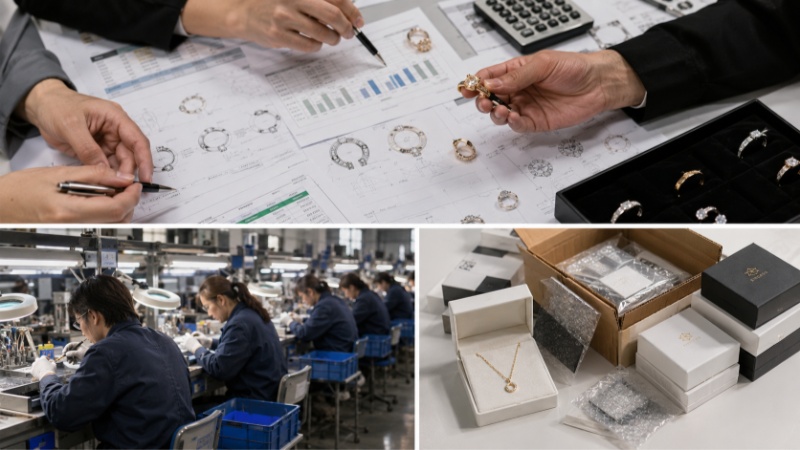
The third mistake is using viral product thinking instead of system thinking. A best-selling product can bring traffic, but only a stable supply chain can turn that traffic into repeat orders, customer trust, and long-term growth.
When This Solution May Not Fit
This supply chain model is most useful for brands with stable product planning, repeat order potential, and long-term growth goals. It may not be the best fit for brands that only depend on short-term market speculation.
If a business only wants the lowest possible price for one-time products, a structured supply chain system may feel unnecessary. But for brands that care about stable quality, lower return risk, and repeat customer trust, this system can create stronger long-term value.
How Missjeweler Supports Growing Jewelry Brands
Missjeweler supports growing jewelry brands, wholesalers, and retailers with custom jewelry production, OEM/ODM manufacturing, moissanite jewelry, 925 sterling silver designs, gold-plated collections, and wholesale jewelry orders. Our focus is to help brands reduce supply chain uncertainty before problems reach their customers.
Our process includes material confirmation, stone confirmation, CAD support, sample development, production planning, in-process QC, plating durability review, stone setting inspection, polishing checks, and packaging review before shipment. For brands developing custom pendants, rings, bracelets, necklaces, earrings, or jewelry packaging, we help confirm what is realistic for both sampling and bulk production.
We are not positioned as the cheapest supplier. Our goal is to be a reliable, professional, and practical jewelry manufacturing partner for brands that care about stable quality, accurate lead times, and long-term customer trust.
Conclusion
Most jewelry supply chain problems stem from weak production standards, inconsistent quality control, and unrealistic delivery planning. By building a reliable manufacturing process and working with the right supplier, growing brands can reduce risks, improve consistency, and scale with confidence.
Ready to Build a More Reliable Jewelry Supply Chain?
Share your design or production requirements with Missjeweler today and discover where potential supply chain risks may be affecting your business. Let our team help you achieve more consistent quality, reliable delivery, and smoother growth for your next jewelry collection.
FAQ: Jewelry Supply Chain Problems
1. What causes a jewelry supply chain crisis?
A jewelry supply chain crisis usually comes from unclear specifications, weak QC, unstable suppliers, poor planning, or delivery delays. These problems become more serious when order volume grows quickly.
2. Why does the bulk order look different from the sample?
Bulk orders may differ from samples when the supplier has no documented production standard. Buyers should confirm material, plating, stone, weight, polishing, and packaging details before production.
3. What is the biggest quality risk in jewelry production?
The biggest risks are sample-to-bulk inconsistency, poor plating durability, and loose stones. These issues can cause returns, complaints, and negative reviews.
4. How can buyers check a jewelry supplier’s QC ability?
Ask whether the supplier uses in-process QC, plating thickness checks, stone setting inspection, adhesion testing, salt spray testing, and final packaging review.
5. Why is the cheapest jewelry supplier risky?
The cheapest supplier may reduce material quality, plating thickness, labor time, or inspection standards. This can increase after-sales costs and damage brand trust.