
Introduction
More sales should mean more success. But for many growing jewelry brands, the opposite happens — sales go up, and suddenly everything starts falling apart behind the scenes.
Orders arrive late. Products have quality problems. Customers complain. Refunds pile up. And the profit you worked so hard to earn quietly disappears.
This is what we call a supply chain crisis — and almost every growing jewelry brand hits one at some point.
The good news? It is not random bad luck. It follows a predictable pattern, and it has a predictable solution. This guide breaks it all down so you can spot the warning signs early, avoid the most expensive mistakes, and build a supply chain that actually supports your growth instead of slowing it down.
Chapter 1: Why Do Growing Jewelry Brands Run Into Supply Chain Problems?
Here is the honest truth: growing fast is hard on your supply chain.
When your brand is small and orders are steady, your factory can handle it. But the moment your sales start climbing — a viral post, a big influencer feature, a successful ad campaign — everything changes. Suddenly you need more products, faster, at better quality, all at the same time.
Most factories are not built for that kind of sudden change. And most brands are not prepared for it either.
Here is a real example. In 2025, one of our partner fashion jewelry brands grew their online sales by 50% in a single season. Sounds amazing, right? But at the same time, their customer complaints went up by 120%, and their product returns doubled.
Why? Because their factory could not keep up. Quality checks got rushed. Products that should have been caught as defective got shipped anyway. And the brand had to hit pause on finding new customers just to fix the mess at the back end.
That is the supply chain trap. Your growth creates pressure. The pressure creates mistakes. The mistakes damage your brand’s reputation. And fixing your reputation costs more than the growth ever earned you.
The real problem is this: most factories work the same way for a small order and a huge order. They do not have a flexible system that adjusts as your needs change. When things get busy, corners get cut — and those cuts always show up in the final product.
Quick Answer: Why does growing sales often lead to supply chain problems?
The core reason is that most factories are not built to flex. When orders spike, they do not have smart scheduling or quality checkpoints in place. Without those systems, quality drops and deliveries fall behind. A well-managed supply chain keeps delivery delays below 5% — even during busy seasons.

Chapter 2: The Three Biggest Problems With Traditional Supply Chain Solutions
Most jewelry brands try to solve supply chain problems in ways that actually make things worse. Here are the three most common traps — and why they backfire.
Problem 1: Nobody Is Talking to Each Other
In most traditional setups, the buying team and the factory team do not share real-time information. Decisions made on one end do not reach the other end fast enough.
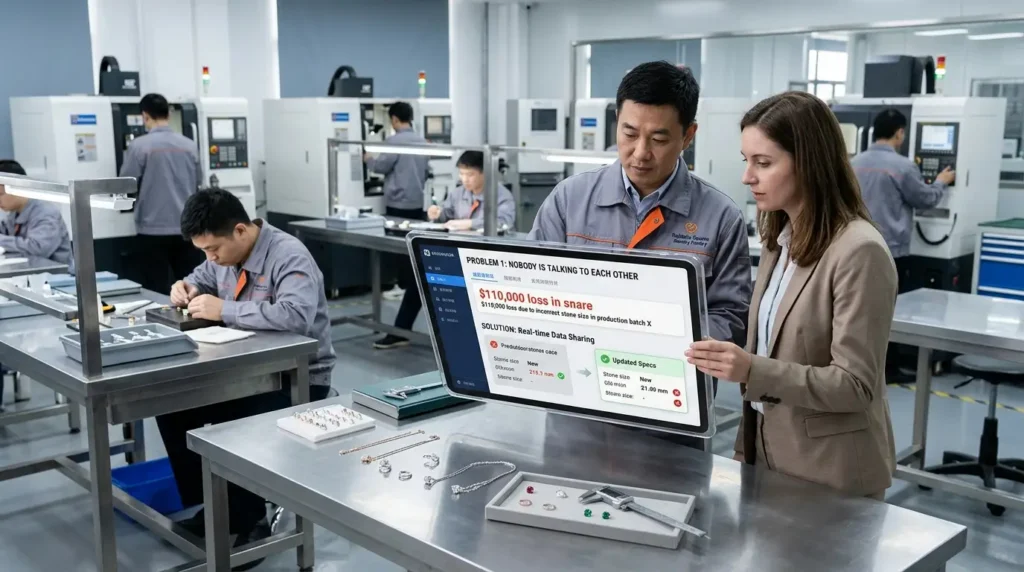
Here is what that looks like in real life. One fast-growing brand made a small design change to one of their bestselling pieces. The update was noted internally — but the factory never got the updated specifications in time. An entire production run was completed with the wrong stone size. The financial loss was around $110,000.
That is not a factory failure. That is a communication failure. When information does not flow clearly between your team and your manufacturer, expensive mistakes like this are just a matter of time.
The solution is a transparent, shared digital system where both sides can see real-time updates on designs, specifications, and production status — so nothing falls through the cracks.
Problem 2: Choosing the Cheapest Option Costs You More in the End
It feels smart to negotiate hard on price. But when brands pressure factories to cut costs too much, the factory has to cut something — and that something is usually quality.
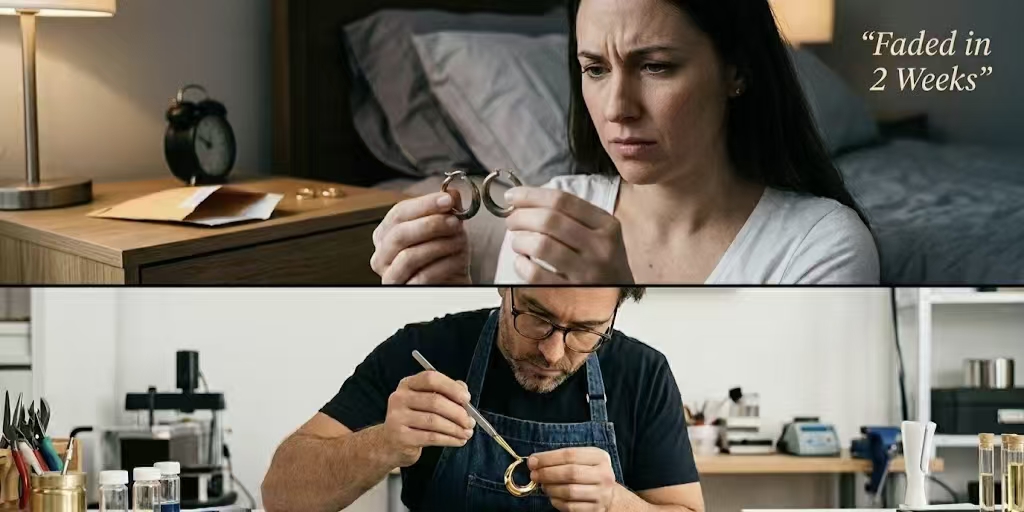
One jewelry brand chose a lower-cost plating process to save money on their new collection. Two weeks after launch, the pieces started fading and discoloring. The cost to process all the returns, handle customer complaints, and replace the defective stock was three times larger than the money they saved by going with the cheaper process.
At MISSJEWELER, we do not calculate cost by looking at the price of one order. We look at the total return on your investment over time — which means accounting for defect rates, returns, customer trust, and repeat purchases. A slightly higher unit cost with zero defects will always beat a cheap unit cost with a 5% return rate.
Problem 3: Nobody Takes Responsibility When Things Go Wrong
When a quality problem happens, who is responsible? If the answer is unclear, you lose — in time, money, and missed opportunities.
One international jewelry brand had a quality issue close to their biggest sales season. Because their supplier agreement did not clearly define who was responsible for what, the process of sorting out the problem dragged on. By the time it was resolved, the sales window had closed. That one unresolved supply chain issue cost them an entire season of revenue.
The fix is simple but critical: write accountability into the contract from the start. Guaranteed response times, lifetime quality warranties, and clear rules for who handles what — these are not nice extras. They are the foundation of a supply chain relationship that actually protects your business.
Quick Answer: How do you calculate the true return on a jewelry manufacturing partnership?
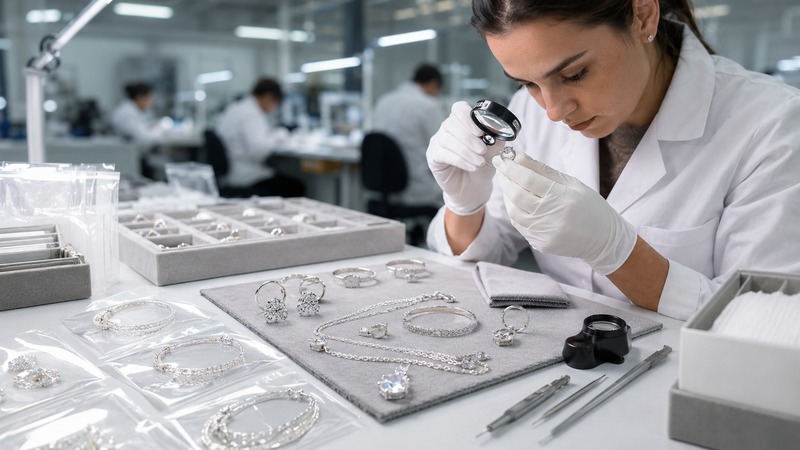
Do not just look at the unit price. The real formula is: Total ROI= (Order Profit – Defect Costs – Late Delivery Losses) ÷ Total Investment. When you switch to a well-managed supply chain system, hidden costs typically drop by 40% and your overall return improves by 1.8x.
Chapter 3: The Brand Protection System That Actually Works
At MISSJEWELER, we have spent years working with over 500 jewelry brands of all sizes. From that experience, we built a supply chain system that focuses on one thing above everything else: certainty.
Certainty means you know your products will be delivered on time. You know the quality will match what you approved. And you know that if anything goes wrong, it will be handled fast — without you having to fight for it.
Here is how the system works, broken into three practical areas:
Part 1: Get Everything Right Before Mass Production Starts
The cheapest place to fix a problem is before it happens. That is why we get involved early — during the design and sampling stage — long before the factory starts making your products at scale.
We test materials under stress. We simulate how the plating will hold up over time. We check that every detail of your design can actually be produced consistently at volume.
The result? For our partner brands, the percentage of products that pass quality checks on the first try jumped from 82% to 96.5%. The cost of mold revisions and sample corrections dropped by 60%.
Fixing problems at the sample stage costs a fraction of fixing them after 3,000 units have already been produced.
Part 2: Check Quality at Every Step — Not Just at the End
Most factories do a final check at the end of production. The problem is that by the time you find a defect at the end, it is already everywhere.
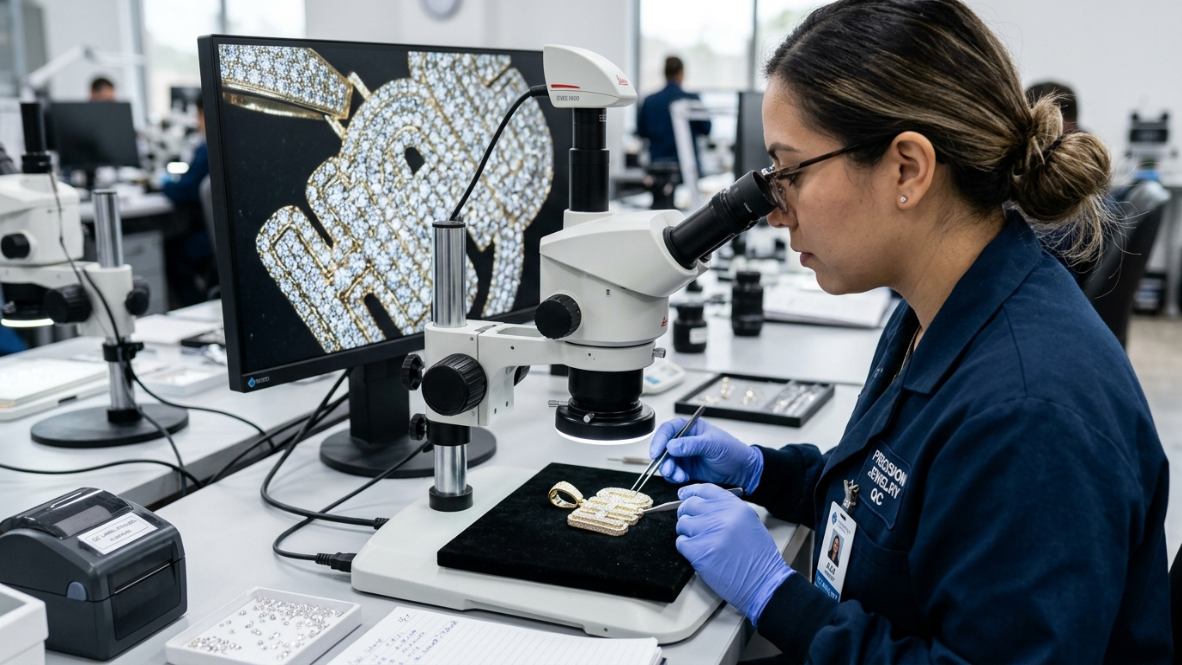
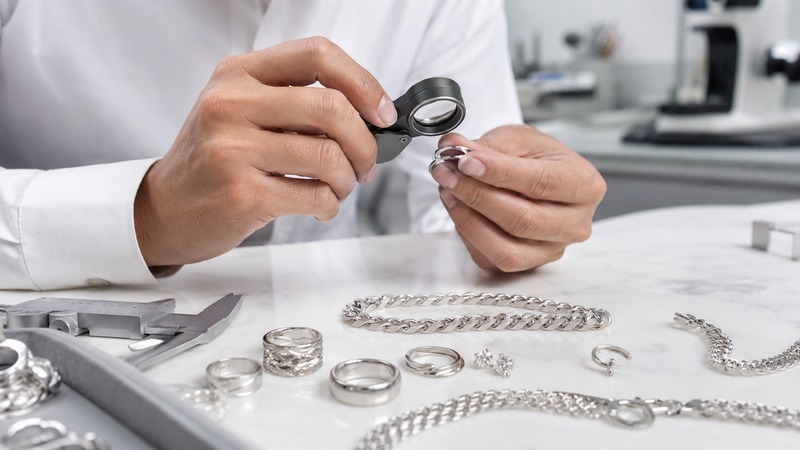
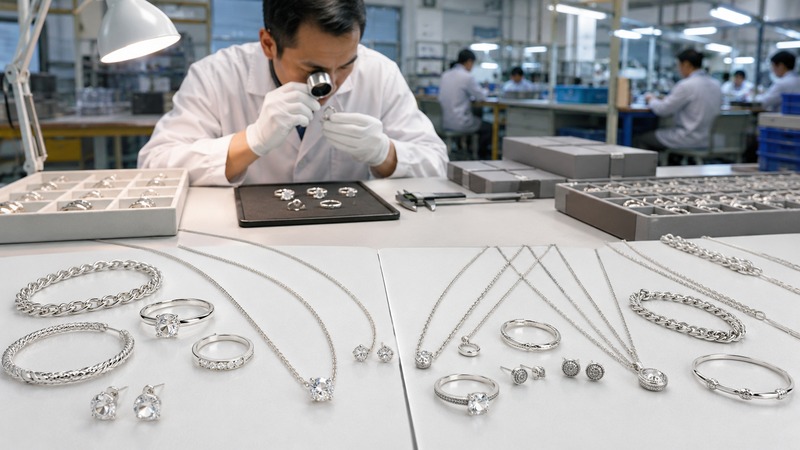
Our system uses 6 separate quality checkpoints throughout the production process — both physical inspections and optical testing tools. This means problems get caught early, when they are easy and cheap to fix.
At the same time, we use an ERP system to lock in a dedicated production capacity for your brand. Your orders are not competing with other customers for factory time. One of our clients who orders around 5,000 pieces per month maintains an on-time delivery rate of 98% — and during peak seasons, their production capacity can flex up by 30% without any drop in quality.
Part 3: Support That Does Not Stop After Delivery
The relationship does not end when the products ship. We provide 24/7 customer support and lifetime quality guarantees — and both are written directly into the main service agreement, not buried in fine print.
Every quarter, we also share a detailed report on how products are performing and what improvements we are making to materials and processes. This data helps our partner brands develop new products faster and with fewer revisions.
The results speak for themselves. One partner brand reduced their new product development time by 25% in their second year. Their repeat orders grew by 45%.
A note on who this system is right for:
This approach is designed for brands that are serious about building long-term quality and value. It is not the right fit if your main goal is to find the lowest possible price, if you do not have a clear brand identity yet, or if your monthly sales are still under 100 units and you are still testing which products work. If that is where you are, starting with ready-made wholesale or light-touch manufacturing is a smarter first step.
Quick Answer: How does a source factory keep quality consistent across different production batches?
Relying on human judgment alone creates batch-to-batch differences. MISSJEWELER uses standardized operating procedures, digital tracking at every checkpoint, and ISO 9001 certification to lock in precise parameters — plating time, polishing pressure, stone setting tolerances. Combined with first-article inspection and AQL sampling, we keep color variation below 0.5 and structural pass rates above 99%.

Chapter 4: Real Numbers From a Real Brand
Here is what happened when one of our partner brands switched from a traditional manufacturer to the MISSJEWELER Brand Protection System.
These numbers were verified by both internal quality records and third-party financial review:
| Metric | Before (Traditional Factory) | After (MISSJEWELER System) | Improvement |
|---|---|---|---|
| On-time delivery rate | 74.50% | 98.20% | 23.70% |
| Defect / complaint rate | 4.80% | 0.75% | –84.4% |
| Average after-sales response time | 48 hours | 2 hours (24/7) | –95.8% |
| Hidden costs as % of revenue | 18% | 6.50% | –63.9% |
The brand’s supply chain manager said it clearly: “MISSJEWELER gives us more than production capacity. They give us certainty. Our complaint rate dropped dramatically. Our delivery schedule is completely predictable. The results went beyond what we expected.”
Chapter 5: The Mistakes You Must Avoid
Based on working with over 500 brands, here are the three most damaging mistakes we see growing jewelry brands make — and the smarter way to handle each one.
Mistake 1: Rushing Delivery by Cutting Quality Checks
It feels like a time-saving move. Skip a few quality steps, get the order out the door faster. But it almost always backfires.
The smarter approach: Use what we call a “parallel path” method. Run the plating and stone-setting tests at the same time as other production steps, rather than stacking everything in a single slow line. Done right, this can shorten your total production time by 15% — without touching quality at all.
Mistake 2: Treating Your Manufacturer Like a Cost to Minimize
If you only talk to your factory about price, you miss most of the value they can offer.
The smarter approach: Share your product data and development plans with your factory. Build a joint sampling process. A factory with more than 10 years of experience can spot structural weaknesses in a design before production even starts — saving you the cost of fixing problems later, after tooling and materials have already been paid for.
Mistake 3: Leaving Quality Guarantees Out of the Contract
A verbal promise is worth nothing when something goes wrong.
The smarter approach: Make sure your purchasing agreement includes specific, written terms — lifetime quality warranty, 24/7 response guarantee, and clear rules about who pays what if targets are not met. This turns quality assurance from a conversation into a commitment. It also protects your cash flow by preventing unexpected costs after delivery.
Conclusion
A strong supply chain is essential for sustainable jewelry brand growth. Focus on preventing issues during sampling, tracking quality throughout production, and defining clear quality commitments from the start. These steps help reduce defects, improve delivery performance, and protect your profits. If you are looking for a reliable jewelry manufacturing partner that supports your brand’s long-term success, we would be happy to discuss your project.
Work with a Reliable Jewelry Supplier
Contact MISSJEWELER to request your free Supply Chain Certainty Diagnostic Report and find out exactly where your supply chain is strong, where it is vulnerable, and what to do about it.
Frequently Asked Questions
Q1: What is a supply chain crisis for a jewelry brand?
It happens when your factory, quality control, or delivery system cannot keep up with growth, leading to delays, defects, and higher costs.
Q2: How can I tell if my factory can support growth?
Check whether they offer dedicated production planning, quality checks throughout production, and a clear process for handling defects and delays.
Q3: Is a higher-quality factory worth the extra cost?
Usually, yes. Lower defect rates, fewer returns, and more reliable delivery often reduce total costs and protect your brand reputation.
Q4: What does a lifetime quality warranty mean?
It means the factory takes responsibility for manufacturing defects and provides repair, replacement, or compensation according to agreed terms.
Q5: When should I involve my factory in product development?
As early as possible. Early involvement helps identify design issues, improve manufacturability, and reduce production risks.
Q6: What is AQL sampling?
AQL (Acceptable Quality Level) is a quality inspection standard used to determine whether a production batch meets agreed quality requirements.
Q7: Is supply chain planning important for small brands?
Yes. Building a reliable supply chain early helps prevent costly problems and supports smoother growth as demand increases.