
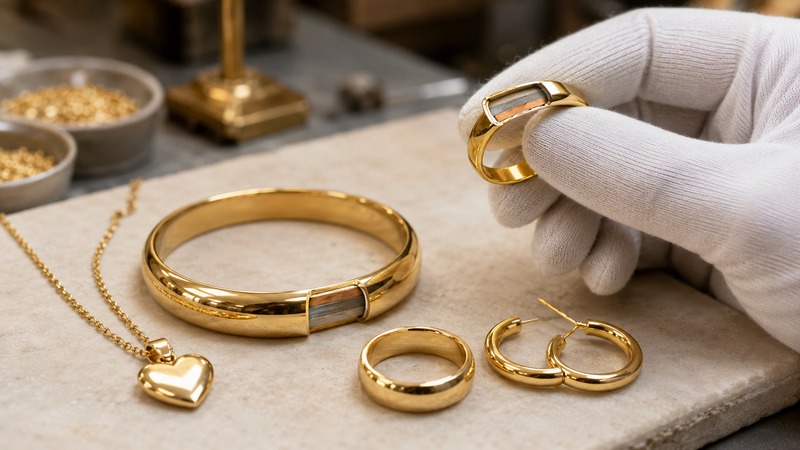
Gold plated brass jewelry combines a brass base with a thin outer layer of real gold, making it suitable for fashion and mid-priced collections. Brass offers strong design flexibility for detailed shapes, textured surfaces and larger silhouettes. However, durability depends on plating thickness, surface preparation, underlayers, product construction and care. B2B buyers should compare measurable specifications instead of vague claims such as “premium plating.” This guide explains what brands should check before approving samples, bulk production and repeat orders.
What Affects Plating Durability Before Bulk Production?
The finish may gradually change through friction, sweat, humidity, perfume or chemical exposure. Buyers should confirm the brass composition, gold color, plating thickness, tolerance, underlayer, protective coating and inspection standard before approving bulk production.
What Is Gold Plated Brass Jewelry?
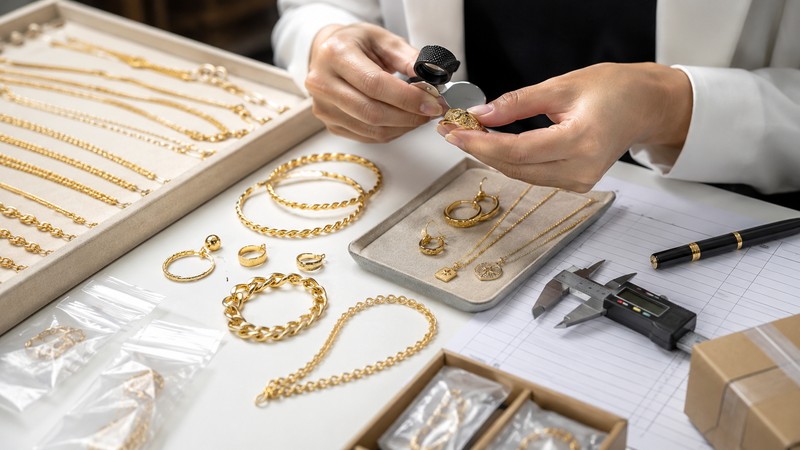
Gold plated brass jewelry starts with a brass base that is formed, cast, stamped or machined into the required design. The brass provides the structure of the product, while polishing, cleaning and plating create the final surface appearance.
A complete product may include several layers rather than only brass and gold. The usual structure includes the brass base, surface preparation, an optional underlayer, the gold plating and an optional protective coating.
Descriptions such as 14K or 18K gold plated usually refer to the composition or color direction of the outer gold layer. They do not mean that the entire product is made from 14K or 18K solid gold, and they do not automatically indicate how thick the plating is.
Gold karat and plating thickness should therefore be treated as separate specifications. Gold karat helps define color and composition, while plating thickness indicates how much gold is deposited on the surface.
Brands should also distinguish gold plating from gold vermeil and solid gold. Clear material descriptions help reduce customer misunderstandings, returns and advertising risks.
The US Federal Trade Commission provides guidance on describing jewelry materials and precious-metal finishes through its Jewelry Guides. Product pages should accurately identify both the brass base and the plated finish.
Is Gold Plated Brass Good for Jewelry?
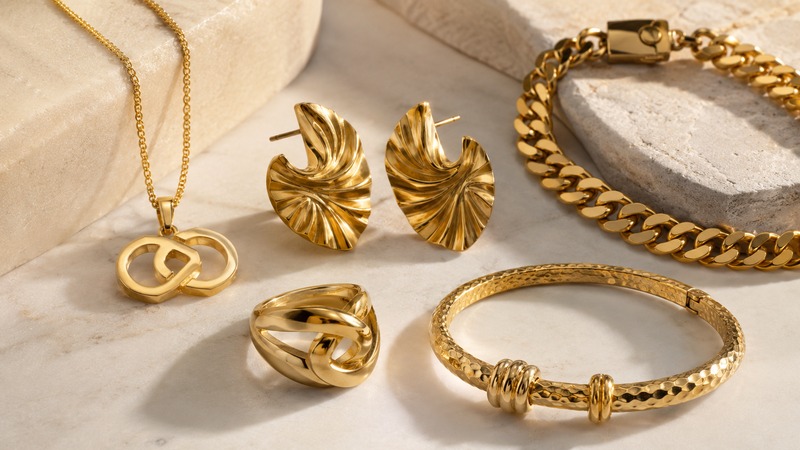
Gold plated brass is a practical material when a brand needs detailed designs, visible volume and a controlled production cost. It is particularly useful for fashion collections, seasonal launches and low-MOQ product testing.
Brass can be cast, stamped, engraved, textured and polished into many different shapes. This flexibility supports logo pendants, sculptural earrings, Cuban-style products, statement rings and textured bracelets.
Compared with solid gold, brass allows brands to develop larger products without placing the same amount of capital into raw material. This can reduce inventory pressure during an initial product launch.
The lower material cost does not mean every brass product is automatically inexpensive. CAD work, molds, polishing, plating, stones, clasps, packaging and inspection can still make a complex design costly to produce.
Brass also has limitations that should be considered before ordering. Exposed brass may oxidize, high-friction areas may lose color faster, and large solid designs may become uncomfortable if their weight is not controlled.
The product category also matters. A plated brass pendant normally experiences less friction than a ring or bracelet, so the same specification may not produce the same wear performance across every SKU.
| Brass Characteristic | Buyer Benefit | Main Risk |
|---|---|---|
| Easy to form | Supports custom and complex designs | Thin areas may bend |
| Lower raw-material cost | Makes trend testing easier | Buyers may accept overly thin plating |
| Good polishing potential | Creates a smoother plated finish | Poor preparation reduces adhesion |
| Suitable for large shapes | Delivers strong visual impact | Excess weight may reduce comfort |
Does Gold Plated Brass Tarnish or Fade?
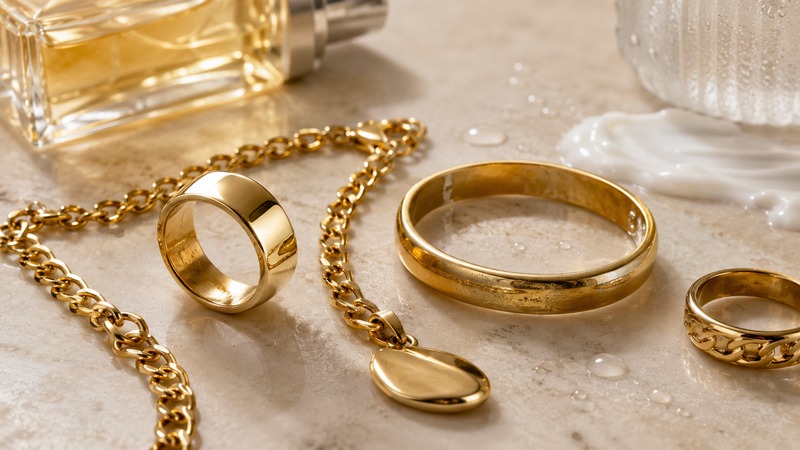
Yes, gold plated brass jewelry can fade or discolor over time. The visible change usually occurs when the outer gold layer becomes worn, damaged or chemically affected.
Gold color fading and brass oxidation are related but different problems. Fading describes the gradual loss of the gold-colored surface, while oxidation occurs when exposed brass reacts with air, humidity or other substances.
Surface residue can also make jewelry appear darker even when the plating has not fully worn away. Perfume, sunscreen, lotion, makeup and cleaning products may collect on textured or recessed areas.
Friction is one of the most important wear factors. Ring interiors, bracelet bottoms, chain links, clasp areas and raised edges normally experience more contact than flat pendant surfaces.
Poor polishing or cleaning before plating can also reduce adhesion. Even a relatively thick plated layer may perform poorly if the underlying surface contains residue, roughness or unstable solder areas.
Brands should avoid absolute claims such as “never tarnishes,” “permanent gold color” or “waterproof forever.” A more reliable product description explains the material, finish and recommended care without promising unlimited durability.
Customer care should support the product specification. Wearers should remove plated jewelry before swimming, showering, exercising or using strong cleaners, and they should allow perfume and lotion to dry before putting jewelry on.
How Long Does Gold Plated Brass Jewelry Last?
There is no universal lifespan for gold plated brass jewelry. Durability depends on the plating specification, product type, wear frequency, friction, storage and customer care.
It is therefore risky to promise that every plated product will last one, two or five years. A customer wearing a ring every day creates different conditions from someone wearing earrings occasionally.
Earrings and pendants usually experience lower surface contact than rings and bracelets. Product category is often more useful than gold karat alone when estimating the risk of visible wear.
Plating thickness can influence performance, but it should not be considered in isolation. Surface preparation, underlayers, design edges, movement between parts and protective coatings also affect the result.
The approved sample should be reviewed under realistic conditions whenever possible. For high-friction products, buyers may request abrasion, artificial sweat or controlled wear testing before bulk approval.
| Product | Friction Level | Main Wear Area | Buyer Priority |
|---|---|---|---|
| Rings | High | Inner band and raised edges | Abrasion resistance |
| Bracelets | High | Bottom surface and clasp | Link and clasp inspection |
| Necklaces | Medium | Chain links and skin contact | Color and connection consistency |
| Earrings | Low to medium | Posts, backs and edges | Pair matching and post strength |
| Pendants | Low to medium | Back surface and jump rings | Edge and connection inspection |
Is Gold Plated Brass Safe for Skin?
Gold plated brass can be suitable for many customers, but skin compatibility depends on the complete material structure. The visible gold surface alone does not confirm that every component is suitable for sensitive skin.
The brass composition, underlayer, solder, posts, backs, clasps and jump rings may contain different metals. Each component should be reviewed separately when a brand makes material or skin-safety claims.
Nickel-free and hypoallergenic are not identical statements. A product may avoid intentionally added nickel but still contain other materials that affect a sensitive wearer.
The intended sales market also matters. The European Union’s REACH restrictions cover substances used in consumer products, including certain limits relevant to jewelry materials and components.
Buyers can review current restrictions through the European Chemicals Agency’s REACH restriction list. Testing requirements should be selected according to the destination market and product category.
Brands should request appropriate documentation before using claims such as nickel-free, lead-free, cadmium-free or hypoallergenic. Unsupported claims create compliance, return and reputation risks.
Children’s jewelry and products designed for continuous skin contact require greater caution. The supplier should understand the target market before recommending materials, coatings or testing plans.
Gold Plated Brass vs Other Jewelry Materials
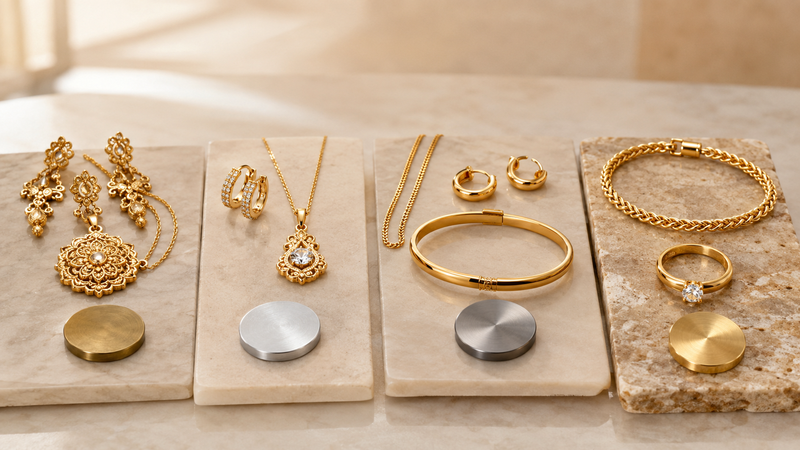
Gold plated brass provides strong design flexibility and accessible pricing, but it does not offer the same material value as solid gold. The correct choice depends on retail positioning, design complexity, expected wear and inventory budget.
Gold plated sterling silver normally carries a higher base-metal cost than brass. It can support a more premium product story, but the outer gold finish can still wear because the product remains plated.
Gold plated stainless steel is often selected for simple everyday products. Stainless steel can provide good structural durability, although it may be less suitable than brass for certain detailed cast shapes and fine surface textures.
Solid 10K or 14K gold does not rely on an outer gold-plated finish when sold unplated. It supports higher-value positioning but requires significantly more working capital and inventory control.
| Material | Relative Cost | Design Flexibility | Plating Wear Risk | Best Positioning |
|---|---|---|---|---|
| Gold plated brass | Low to medium | High | Medium to high | Fashion and statement jewelry |
| Gold plated sterling silver | Medium | High | Medium | Mid-market and gifting |
| Gold plated stainless steel | Low to medium | Medium | Low to medium | Everyday basics |
| 10K or 14K solid gold | High | Medium | None when unplated | Premium jewelry |
Brass is often the better option when the design requires visible size, texture or customization at a controlled cost. Sterling silver may suit brands that want stronger precious-metal recognition, while stainless steel may suit simpler durability-focused collections.
There is no single best metal for every product. Brands should select materials according to the customer promise they can realistically support.
Which Products Work Best in Plated Brass?
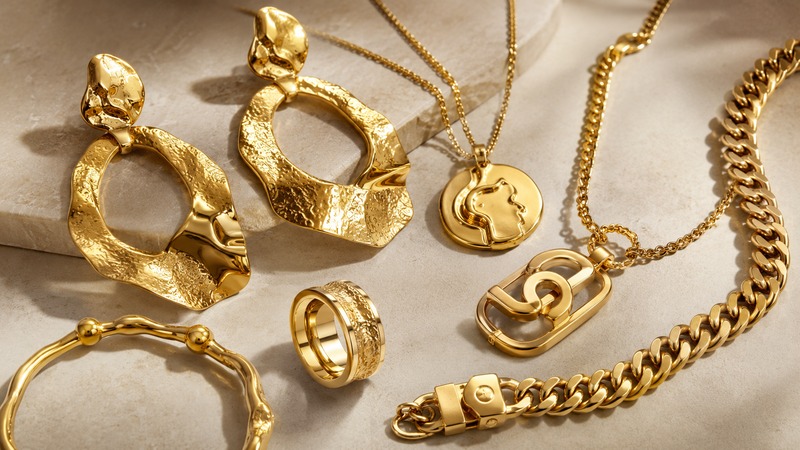
Gold plated brass works best for products that benefit from detailed shaping and strong visual volume. Statement earrings, pendants and necklaces are often practical starting categories.
Large earrings can use brass for sculptural contours, hammered textures and geometric shapes. Buyers should still record single-ear weight, because a visually attractive design may become uncomfortable during extended wear.
Pendants are suitable for logos, letters, symbols and raised details. The back surface, jump ring and chain connection should receive the same attention as the visible front.
Fashion rings can also be made from plated brass, but they experience high friction. The inner band, raised edges and stone-setting areas require closer inspection and clearer customer-care guidance.
Bracelets and Cuban-style chains create strong visual impact, but their links continually contact one another. Link movement, clasp strength, solder quality and total product weight should be checked before bulk approval.
| Product | Suitability | Main Advantage | Main Risk |
|---|---|---|---|
| Statement earrings | High | Large custom shapes | Weight and post strength |
| Pendants | High | Detailed logos and textures | Back-surface wear |
| Necklaces | High | Flexible design options | Chain-link friction |
| Fashion rings | Medium | Fast trend development | High hand friction |
| Bracelets | Medium | Strong visual volume | Desk and clasp contact |
| Cuban chains | Medium to high | Substantial appearance | Link friction and weight |
What Plating Specifications Should Buyers Confirm?
Buyers should define measurable plating requirements before approving the sample. Gold color, thickness, tolerance, measurement position, underlayer and protective coating should all be recorded.
The required gold color should be confirmed with a physical reference whenever possible. Descriptions such as yellow gold or 18K gold can still vary between factories, plating tanks and production batches.
A physical color sample is more dependable than a photograph. Lighting, cameras and screen settings can make the same gold tone appear warmer, paler or darker.
The target plating thickness should be expressed in measurable terms. Descriptions such as premium plating, heavy plating or luxury finish are not precise enough for inspection.
Buyers should also agree on an acceptable thickness tolerance. Without a tolerance, the supplier and buyer may interpret the same target differently during bulk production.
Measurement position is important because complex shapes do not always receive identical deposition in every area. Front surfaces, backs, edges, recessed sections and high-friction points may show different readings.
The underlayer should also be confirmed. Copper, palladium, nickel or other barrier layers may be used depending on the product, process and destination market.
A protective coating may help reduce surface contact and chemical exposure. However, it should not be used to hide poor polishing, unstable plating or an unsuitable base-metal structure.
Every component should be specified separately when necessary. Posts, earring backs, clasps, hinges, jump rings, chains, solder and stone cups may not use the same metal as the main body.
Which Quality Tests Matter Before Bulk Orders?
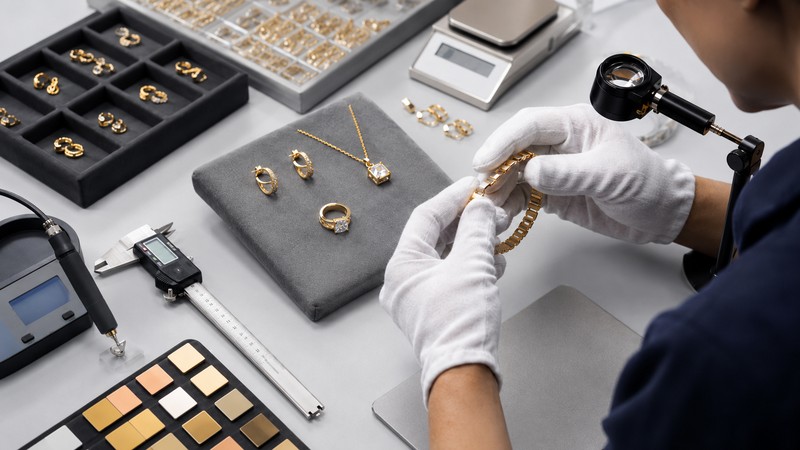
The most useful quality checks depend on the design, intended market and expected wear conditions. Testing should be risk-based rather than applied as an identical checklist to every product.
Visual inspection should cover scratches, pinholes, bubbles, exposed solder, plating gaps and color variation. Internal surfaces and recessed areas should also be checked, not only the front shown in product photography.
Functional inspection should include post strength, clasp force, hinge movement and jump-ring closure. Stone security, pearl attachment, symmetry, dimensions and product weight should be recorded where relevant.
Plating thickness measurement can help verify whether production matches the approved specification. The agreed measurement point and sampling method should be documented before inspection begins.
Adhesion, abrasion and artificial sweat testing may be useful for higher-risk products. The chosen test should reflect the product’s real use, because a ring and an occasional-wear pendant face different conditions.
Material testing may be required for nickel, lead, cadmium or other restricted substances. The destination market should determine the applicable standard and documentation.
A documented quality system supports consistent records and corrective action. ISO 9001 provides a recognized framework for quality management, although certification alone does not guarantee the performance of a particular jewelry product.
More information is available through the ISO 9001 quality management overview. Buyers should still review product-specific samples, specifications and inspection results.
The strongest approval process connects every production stage. CAD files, physical samples, color references, plating records, in-line inspections and final inspections should point to the same approved standard.
What Makes Gold Plated Brass Jewelry Cost More?
The cost of gold plated brass jewelry depends on more than the visible gold color. Design complexity, weight, polishing, plating, components, stones and inspection all influence the quotation.
Direct costs may include brass weight, CAD work, molds, hollow construction and stone setting. Moving parts, custom clasps and detailed textures also increase production time and risk.
Plating thickness, underlayers and protective coatings add process cost. More demanding testing and inspection requirements may also increase the initial price.
Packaging should not be treated as a minor expense. Weak packaging can allow earrings to bend, chains to tangle and plated surfaces to rub during transport.
The lowest quotation may reduce visible cost by using thinner metal, less polishing or thinner plating. These savings can later become returns, replacements, negative reviews and lost repeat customers.
For B2B buyers, total cost is more useful than unit price alone. A slightly higher production price may reduce after-sales expenses when it includes clearer specifications and stronger quality control.
Common Buying Mistakes to Avoid
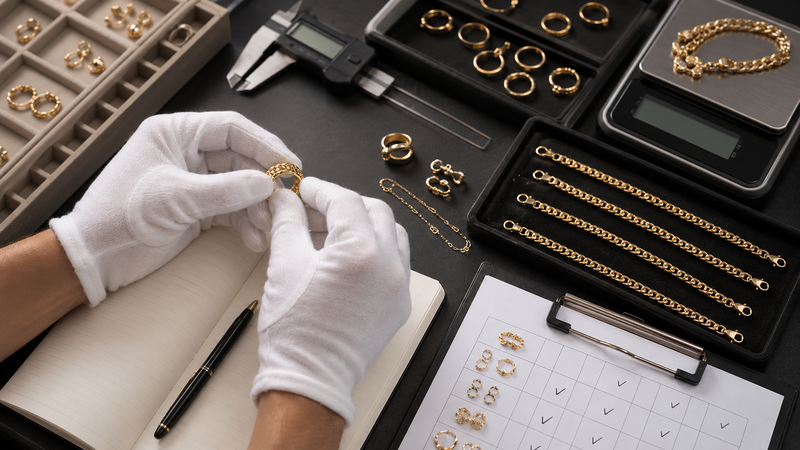
The first common mistake is comparing products only by gold karat. An 18K-colored finish is not automatically thicker or more durable than a 14K-colored finish.
The second mistake is accepting vague plating descriptions. If a specification cannot be measured during inspection, it cannot reliably control samples, bulk production or repeat orders.
Another mistake is approving jewelry from photographs alone. Photos cannot confirm actual weight, closure force, edge feel, post strength, true gold color or wearing comfort.
Buyers also create risk when they assume every component uses the same metal. The body, posts, backs, clasps, chains and solder may have different compositions and wear behavior.
One specification should not be used for every product category. Rings and bracelets generally require more attention to friction than earrings and pendants.
Ordering a large quantity before testing is another preventable mistake. New designs and new suppliers are better evaluated through physical samples and low-MOQ trial orders.
Finally, brands should avoid unsupported customer promises. Claims such as waterproof, tarnish-free or permanently hypoallergenic should be supported by defined materials and appropriate evidence.
How to Source Gold Plated Brass Jewelry
A useful sourcing process begins with a complete specification sheet. A reference image and target price are not enough to control a custom production order.
The RFQ should include the product category, dimensions, target weight and design file. It should also identify the brass requirement, gold color, plating thickness, quantity, packaging and destination market.
Stone size should be specified in millimeters rather than only carat-equivalent descriptions. Component materials and attachment methods should also be recorded for stones, pearls, chains and clasps.
Buyers should ask where plating thickness will be measured and how batch color will be controlled. They should also confirm whether a physical sample and color reference will be retained.
A low-MOQ trial order can reveal issues that one sample cannot. Pair consistency, packing errors, batch color variation and component failure often become clearer during small-batch production.
A dependable sourcing process should follow these stages:
- Confirm the design, dimensions and target market.
- Approve CAD drawings or technical specifications.
- Review a physical sample for color, weight and function.
- Test high-risk materials, surfaces and components.
- Place a low-MOQ trial order where appropriate.
- Conduct in-line production inspections.
- Compare final goods with the approved sample.
- Retain records for repeat orders.
Buyers should also confirm how the supplier handles nonconforming products. A reliable factory should explain rework, replacement, inspection and communication procedures before problems occur.
How Missjeweler Supports Plated Brass Projects
Missjeweler supports jewelry brands, wholesalers and online retailers developing custom gold plated brass collections. Our role is to turn design ideas into clearer production specifications before bulk manufacturing begins.
Development can include CAD drawings, physical samples, stone selection and component confirmation. Low-MOQ trial orders allow brands to test new designs without committing immediately to large inventory.
Gold color, plating requirements and high-risk product areas can be recorded during sample development. This helps connect the approved sample with in-line inspection, final inspection and repeat-order production.
Missjeweler also supports custom packaging for different jewelry categories. Appropriate inserts, pouches and boxes help reduce movement, scratching and deformation during transport.
Our approach is based on practical communication rather than vague promises. Buyers receive clearer information about materials, production progress, inspection points and possible design risks before approving bulk orders.
Conclusion
Gold plated brass jewelry can provide flexible design, accessible pricing and strong visual impact, but its performance depends on the complete material, plating and quality-control specification. Missjeweler helps brands move from CAD and physical samples to low-MOQ trials, bulk inspection and repeat orders with clearer gold-color, component and production records.
Develop Your Gold Plated Brass Collection
Send Missjeweler your design, target gold color, plating requirements and order quantity to receive a practical custom development and sampling plan.
FAQ
Is gold plated brass made with real gold?
Yes, the outer layer contains real gold, but the main structure is brass rather than solid gold.
Does gold plated brass jewelry tarnish?
It can fade or discolor when friction, moisture or chemicals weaken the plating and expose the brass underneath.
How long does gold plated brass jewelry last?
There is no fixed lifespan, because durability depends on the plating, product type, wear frequency and customer care.
Is gold plated brass suitable for sensitive skin?
It depends on the complete material structure, including the brass, underlayer, solder, posts, clasps and other components.
What should wholesale buyers check before ordering?
Confirm the brass composition, gold color, plating thickness, tolerance, underlayer, components, physical sample and inspection standard before approving bulk production.