
Introduction
PVD usually offers stronger wear resistance on properly prepared stainless steel jewelry, while traditional electroplating gives buyers more flexibility across brass, sterling silver, colors, and low-MOQ collections. The process name alone, however, does not determine how long a finish will last. Base metal, surface preparation, underlayer, thickness, product structure, friction points, and customer use all affect the result. For B2B buyers, the real question is which method can be specified, tested, repeated, and supported at the target price. This guide compares both options from a practical sourcing, quality-control, and bulk-production perspective.
Which Jewelry Plating Lasts Longer?
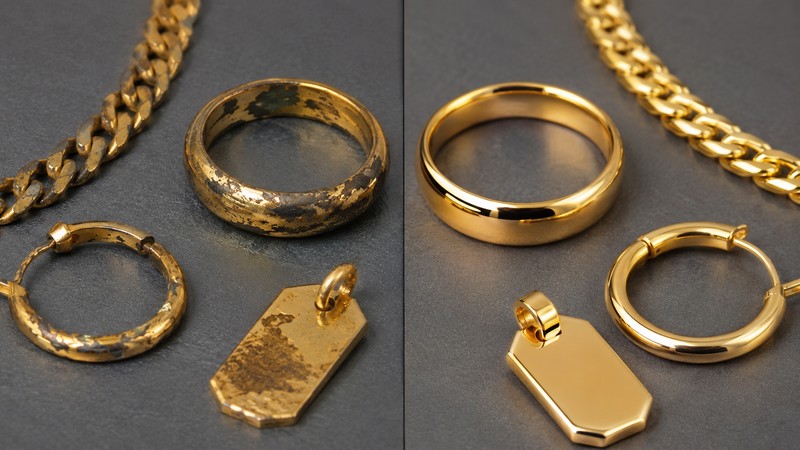
PVD normally performs better on high-friction stainless steel products because it creates a hard, well-bonded surface when the metal is prepared correctly. Traditional plating can still deliver reliable performance on brass and 925 sterling silver when its underlayer, thickness, tolerance, and protective coating are clearly defined.
The better choice depends on the complete product system rather than one marketing claim. A steel ring worn daily has different risks from a plated brass pendant, while a moving Cuban chain needs different testing from a low-friction pair of earrings.
What PVD Coating Means for Jewelry Buyers
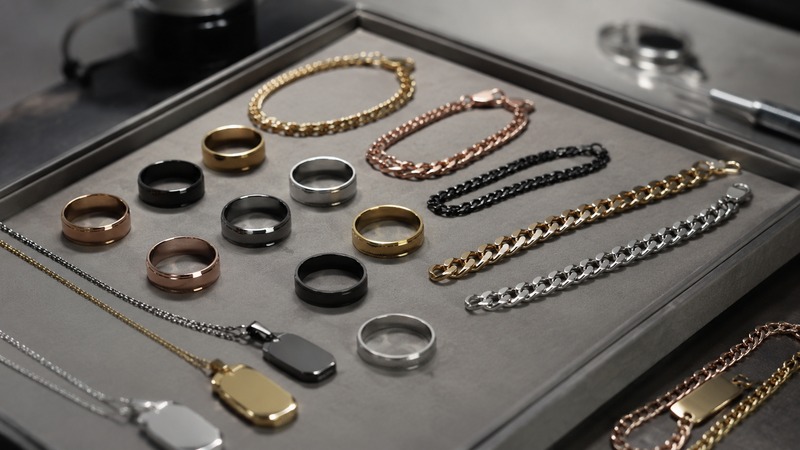
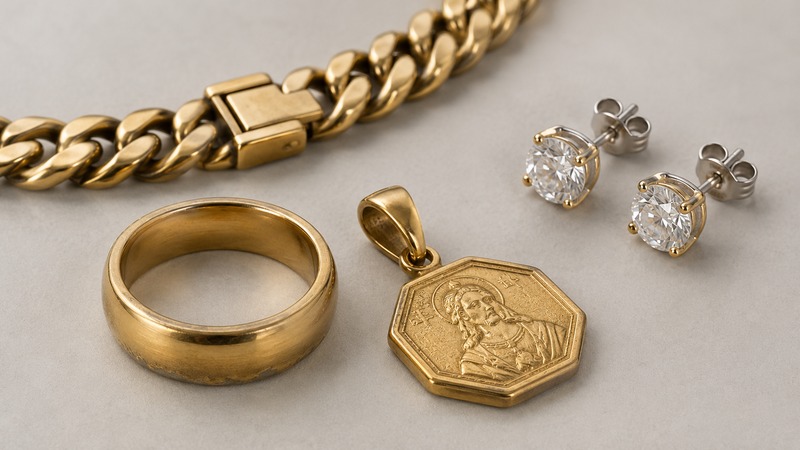
PVD stands for Physical Vapor Deposition, a process that deposits coating material in a controlled vacuum environment. It is commonly used on stainless steel and titanium to create gold, rose gold, black, gunmetal, and other modern finishes.
Its main buyer advantage is surface hardness and wear resistance. When polishing, cleaning, activation, loading, and process control are stable, PVD can perform well on rings, bracelets, chains, and daily-wear products.
PVD is not the same as “never fading.” Edges, clasp parts, chain-link contact points, ring bottoms, and other high-friction zones can still wear, especially after repeated contact with sweat, salt water, chlorine, perfume, sunscreen, or cleaning chemicals.
Base-metal compatibility must be confirmed before sampling. Stainless steel and titanium are common PVD bases, while brass, sterling silver, and zinc alloy may require different preparation, barrier layers, or production methods.
How Traditional Electroplating Works in Jewelry
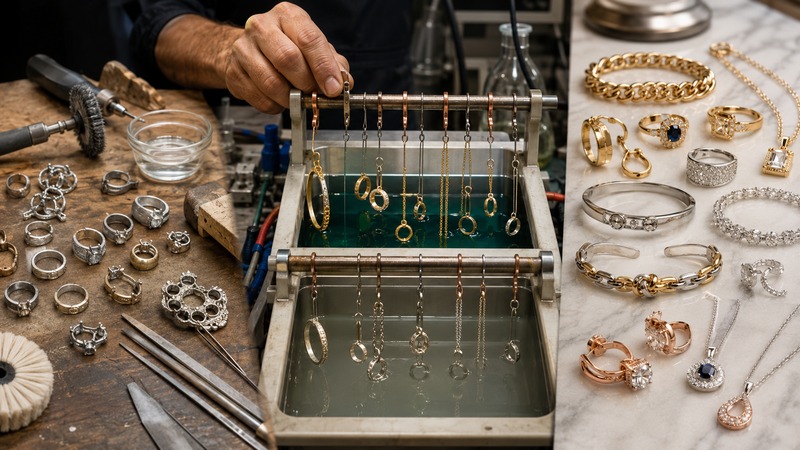
Traditional jewelry plating usually refers to electroplating, where a decorative metal layer is deposited through an electrochemical process. Common examples include gold plated brass, rhodium plated sterling silver, gold plated silver, and two-tone fashion jewelry.
A complete plating structure contains more than the visible color. It may include the base metal, polishing, cleaning, activation, an underlayer, the decorative coating, and an optional protective topcoat.
Traditional plating is valuable because it is flexible. It can support detailed designs, stone-set products, multiple colors, small test orders, seasonal collections, and products that may need future replating.
Quality varies when the specification is incomplete. “18K gold plated” does not tell a buyer the base metal, target thickness, tolerance, measurement point, underlayer, color standard, or topcoat.
PVD vs Traditional Plating: Side-by-Side Comparison
| Factor | PVD Coating | Traditional Electroplating |
|---|---|---|
| Common base metals | Stainless steel, titanium | Brass, 925 silver, steel, other alloys |
| Wear resistance | Often stronger on steel | Depends on thickness and layer structure |
| Color flexibility | More limited but repeatable | Broad color and local-plating options |
| Small-order flexibility | May depend on batch loading | Often easier for low-MOQ sampling |
| Complex designs | Depends on geometry and equipment | Usually more adaptable |
| Replating | Often more difficult | Usually easier |
| Best use | Daily-wear steel jewelry | Brass, silver, detailed, seasonal jewelry |
| Main risk | Poor pretreatment or edge wear | Thin plating or undefined underlayer |
PVD is usually the stronger starting point for high-friction stainless steel jewelry. Traditional electroplating is often more practical for brass, sterling silver, complex color work, small test collections, and designs that may need refinishing.
What Really Determines Plating Longevity?
Base Metal
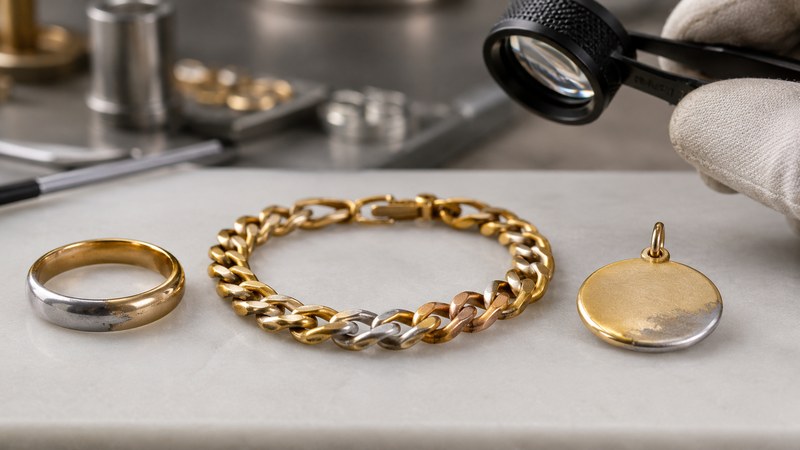
The base metal affects both adhesion and what customers see after wear. Stainless steel may show less obvious contrast after coating loss, while brass can expose a yellow or copper tone and sterling silver may reveal areas that later tarnish.
A durable finish therefore begins with the correct material decision. Buyers should confirm the exact alloy, not only a broad description such as “steel,” “silver,” or “brass.”
Surface Preparation
Surface preparation is one of the most important causes of success or failure. Degreasing, polishing, ultrasonic cleaning, removal of residue, surface activation, and controlled handling all affect coating adhesion.
Poor preparation can cause peeling, pinholes, uneven color, or early edge failure. A premium coating applied over an oily, scratched, or contaminated surface will not deliver premium durability.
Underlayer and Barrier Layer
The underlayer can influence adhesion, color, corrosion control, and base-metal isolation. It may also reduce migration from copper-rich alloys or improve the final decorative color.
Buyers should not assume every supplier uses the same layer structure. The underlayer material, purpose, and market restrictions should be agreed before sample approval.
Coating Thickness
Thickness matters, but it cannot be judged without context. PVD and electroplating use different materials and deposition structures, so a larger micron number does not automatically prove a longer life.
A useful thickness specification includes a target, tolerance, and measurement location. Outer surfaces, inner surfaces, sharp edges, recessed areas, and moving links may not receive identical coverage.
Product Structure
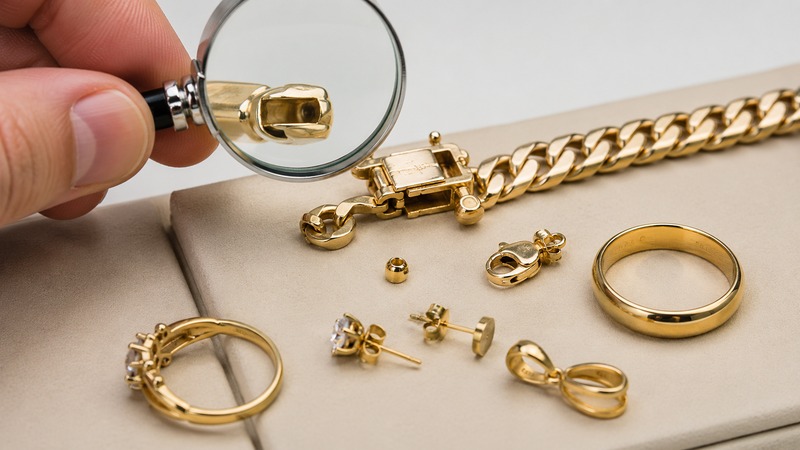
Product structure often determines where wear starts. Ring bottoms rub against desks, bracelet interiors contact skin, Cuban links move against one another, and clasp tongues repeatedly slide through openings.
The highest-risk area may not be visible in a product photo. Buyers should inspect internal links, edges, hinges, jump rings, soldered points, pendant bails, ear posts, and backs.
Wearing Environment
Water resistance and chemical resistance are not the same claim. Clean water, sweat, seawater, chlorinated water, perfume, sunscreen, sanitizer, skincare, and household cleaners affect surfaces differently.
Marketing terms should remain realistic and supportable. The FTC Jewelry Guides provide guidance on jewelry descriptions and material claims in the United States.
Which Plating Works Best by Jewelry Type?
| Jewelry Type | Recommended Starting Point | Main Wear Risk |
|---|---|---|
| Stainless steel rings | PVD | Ring bottom and edges |
| Stainless steel bracelets | PVD | Inner surface, links, clasp |
| Cuban chains | PVD or tested reinforced plating | Link friction and solder points |
| Brass earrings | Traditional plating | Posts, backs, edges |
| Sterling silver rings | Gold or rhodium plating | Ring bottom and prongs |
| Pendants | Depends on base metal | Bail and chain contact |
| Black jewelry | Often PVD | Scratches exposing bright metal |
| Two-tone jewelry | Often electroplating | Color boundary and masking |
| Stone-set jewelry | Structure-dependent | Prongs, glue, heat, movement |
High-friction steel products usually justify PVD testing first. Lower-friction brass earrings, pendants, two-tone styles, and silver stone-set jewelry often benefit from the flexibility of traditional electroplating.
No table should replace a real sample review. Width, weight, openings, sharp edges, moving parts, stone-setting order, polishing access, and packaging can change the recommended process.
Cost Differences Buyers Should Calculate
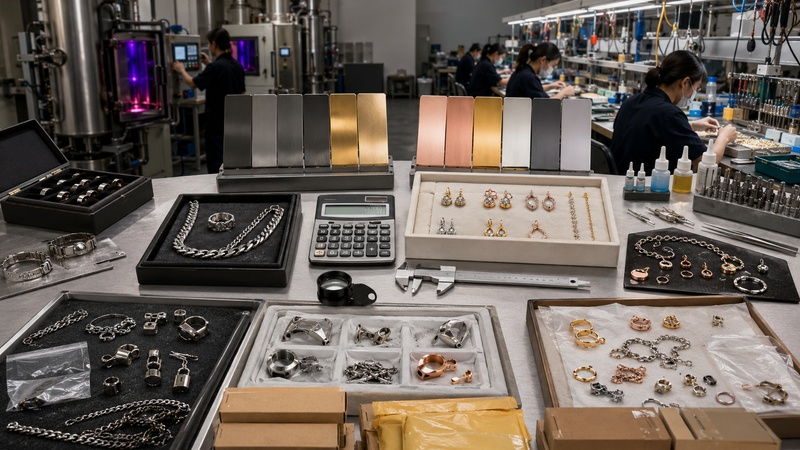
The lowest unit price does not show the complete cost of a finish. Buyers should compare material preparation, underlayers, coating material, equipment loading, thickness, color changes, testing, inspection, and packaging.
PVD may cost more when small batches use equipment inefficiently or require separate color runs. Traditional plating may be more economical for small seasonal orders, multiple colors, brass products, or designs requiring local masking.
Hidden quality costs are often larger than the quotation difference. Rework, replating, color mismatch, delays, failed inspection, returns, replacement orders, negative reviews, and inconsistent reorders all reduce value.
PVD may provide better long-term value for repeat stainless steel SKUs with frequent wear. Traditional plating may provide better value for low-friction products, silver jewelry, low-MOQ launches, and designs needing future refinishing.
How to Test Plating Before Bulk Production
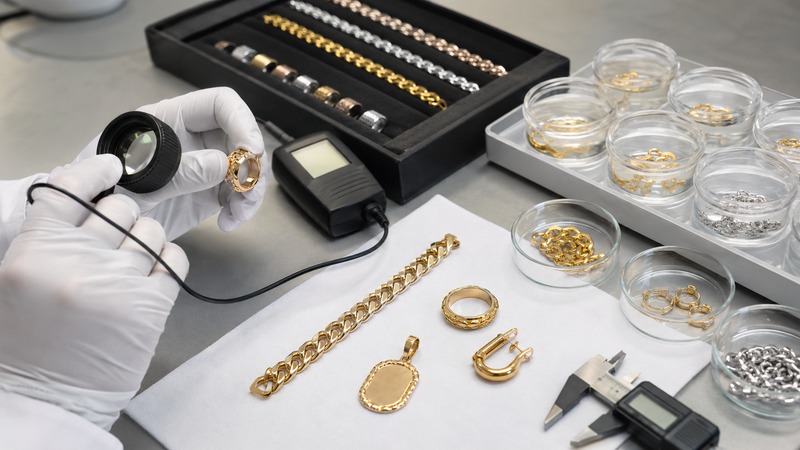
The approved sample should be a measurable production standard, not only a visual reference. Record the base metal, dimensions, weight, surface finish, process, color, thickness, tolerance, measurement points, underlayer, topcoat, test method, and packaging.
Visual inspection should cover color, gloss, pinholes, scratches, exposed metal, stains, residue, and inconsistent coverage. The inspection must include hidden and high-friction areas rather than only the product front.
Thickness measurement confirms whether production matches the approved specification. Buyers should define where readings are taken because curved edges, recessed areas, and moving components may require separate checks.
Adhesion and abrasion tests evaluate different risks. Adhesion checks whether the coating bonds securely, while abrasion testing shows how it responds to repeated rubbing or contact.
Artificial perspiration and controlled corrosion tests can support comparison. Test methods and pass criteria should reflect the target market, product type, and intended claim instead of one universal number.
Restricted-substance requirements should be confirmed before production. European-market buyers can review ECHA REACH restrictions, while production controls can follow quality-management principles described in ISO 9001.
Testing does not prove that jewelry will last forever. It creates controlled evidence that helps compare samples and reduce variation between sampling, bulk production, and reorders.
What to Include in a Plating RFQ
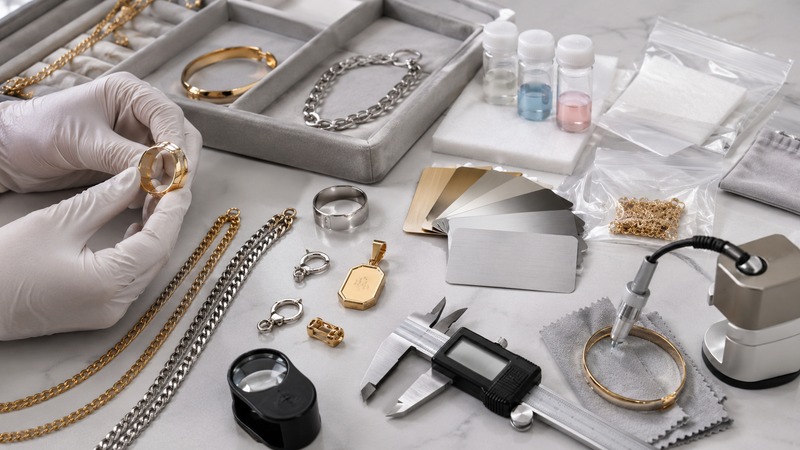
A complete RFQ gives the supplier enough information to recommend a realistic process. Include the product category, reference image, dimensions, target weight, base metal, surface finish, color, coating method, quantity, destination market, and delivery date.
The finish specification should state the target thickness, tolerance, measurement points, underlayer, protective coating, and approved color reference. Buyers should identify high-friction zones such as ring bottoms, bracelet interiors, chain links, clasp parts, and pendant bails.
Testing requirements must be agreed before the quotation is finalized. Include thickness checks, adhesion, abrasion, artificial perspiration, color comparison, restricted-substance testing, nickel requirements, and customer-specific pass criteria.
Packaging should protect the approved surface after production. Individual bags, soft separators, anti-tangling methods, dry storage, and protection from metal-to-metal contact can reduce scratches before delivery.
Common Plating Claims Buyers Should Question
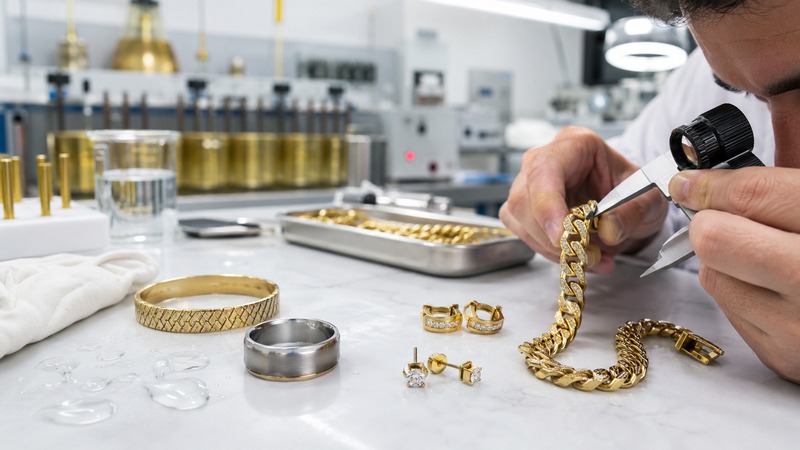
“PVD never fades” is too absolute. A well-applied PVD finish can offer strong wear resistance, but friction, impact, chemicals, poor preparation, and sharp design features can still cause wear.
“Waterproof” should not be treated as permanent color protection. Occasional clean-water contact is different from repeated exposure to sweat, seawater, chlorinated pools, sanitizer, perfume, or cleaning chemicals.
“Thicker always means better” is incomplete. Coating material, hardness, adhesion, layer structure, product geometry, and application consistency matter alongside thickness.
“All PVD suppliers produce the same quality” is unrealistic. Equipment control, chamber loading, cleaning, activation, base-metal consistency, fixture design, and color management can vary.
“Traditional plating is always low quality” ignores controlled production. Defined thickness, suitable underlayers, stable baths, careful rinsing, complete inspection, and protective coatings can deliver reliable results.
Which Plating Should Jewelry Brands Choose?
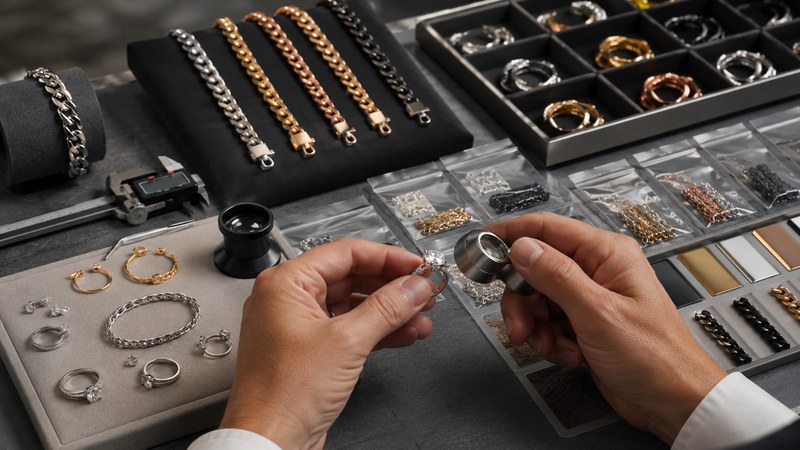
Startup brands should prioritize simple specifications, limited colors, low-risk products, and measurable samples. Traditional plating may be easier for low-MOQ testing, while PVD can be tested selectively on steel products with clear repeat potential.
Established brands can compare multiple structures before committing to a long-term SKU. Side-by-side wear tests, sealed samples, color standards, batch records, and reorder controls provide stronger evidence than a general durability claim.
Stainless steel brands should focus on PVD adhesion, edge coverage, link movement, clasp wear, and color consistency. Products should be evaluated after function testing because movement can expose weaknesses hidden in a static sample.
Sterling silver and moissanite brands should focus on plating around prongs, ring bottoms, settings, soldered areas, and clasp components. The finish must support the structure without reducing stone security or creating rough contact points.
How Missjeweler Supports Better Plating Decisions
Missjeweler helps buyers define the complete finish before sampling begins. Our team reviews the product type, base metal, surface finish, target color, method, thickness, measurement points, underlayer, friction areas, testing needs, and packaging requirements.
The goal is practical repeatability rather than an unsupported durability promise. Approved samples, measurable specifications, process inspection, final QC, and clear communication help reduce sample-to-bulk differences.
Different products may require different solutions within one collection. A stainless steel Cuban chain, a brass earring, and a sterling silver moissanite ring should not automatically use the same plating structure or test plan.
Conclusion
PVD is often the stronger starting point for wear-resistant stainless steel jewelry, while traditional electroplating remains more flexible for brass, sterling silver, complex colors, low-MOQ collections, and products that may require replating. Missjeweler helps brands compare materials, layer structures, high-wear areas, testing requirements, and bulk-production risks so the approved finish is clear, measurable, and repeatable.
Discuss Your Jewelry Plating Specifications
Send Missjeweler your product type, base metal, target color, order quantity, and expected wear conditions to receive a practical plating and sample-testing recommendation.
FAQ
Is PVD more durable than traditional gold plating?
PVD is usually more wear resistant on properly prepared stainless steel. Traditional plating can still perform well when its thickness, underlayer, and product use are correctly specified.
Does PVD jewelry fade or tarnish?
PVD can still wear at high-friction areas. Sweat, chlorine, seawater, chemicals, scratches, and poor preparation can shorten its visible life.
Is PVD better for stainless steel jewelry?
PVD is often a strong choice for steel rings, bracelets, and chains. Buyers should still test edges, clasps, inner surfaces, and moving links.
Is traditional plating better for sterling silver?
Traditional gold or rhodium plating is usually more practical for sterling silver. It supports stone-set designs, color flexibility, and future replating.
What should buyers confirm before bulk production?
Confirm the base metal, method, color, thickness, tolerance, measurement points, underlayer, testing, and packaging. Keep a sealed approved sample as the bulk-production reference.