
Introduction
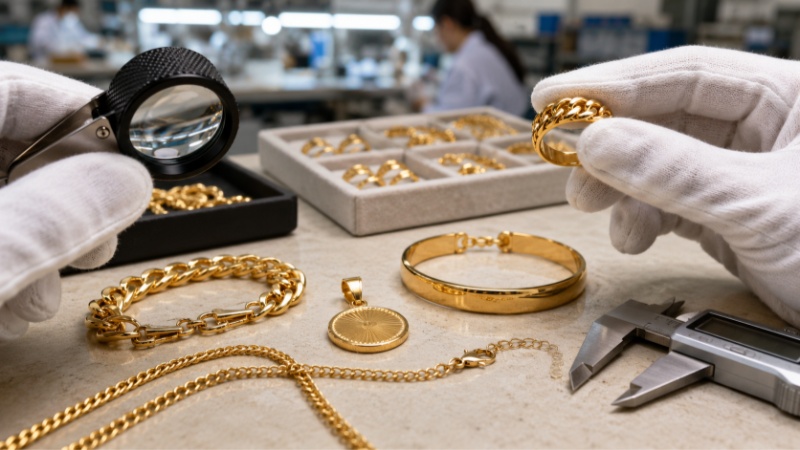
18K gold plated brass is popular in fashion jewelry because it gives brands a rich gold look at a more accessible cost. However, it is not the same as solid 18K gold, because the jewelry has a brass base with an 18K gold-color plated surface. Yes, 18K gold plated brass can tarnish, fade, lose shine, or expose the brass color over time. For B2B buyers, the real issue is not only whether it tarnishes, but how to reduce customer complaints, returns, and repeat order inconsistency. This guide explains what buyers should check before placing bulk orders for 18K gold plated brass jewelry.
What Is 18K Gold Plated Brass?
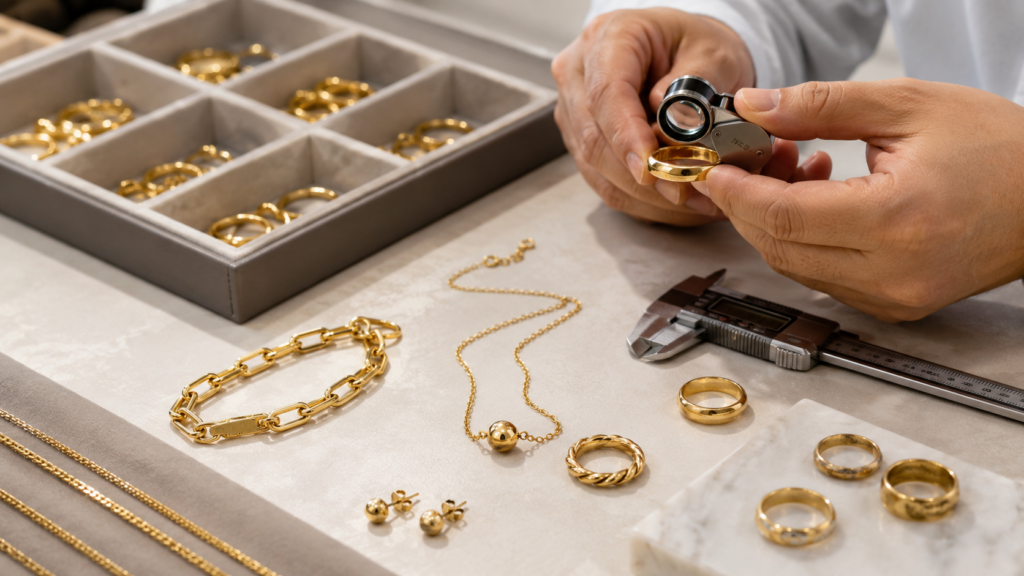
18K gold plated brass means the jewelry is made with a brass base and finished with an 18K gold-color plated layer. The surface may look like gold, but the full piece is not solid 18K gold. This makes it more affordable for fashion jewelry, trend testing, seasonal collections, and low MOQ product launches.
Brass is mainly made from copper and zinc, and copper can react with air, sweat, moisture, salt, and acidic substances. This is why brass jewelry needs careful plating control, especially when it is used for rings, bracelets, chains, and daily-wear necklaces. If the plating layer becomes thin or damaged, the brass base may become visible.
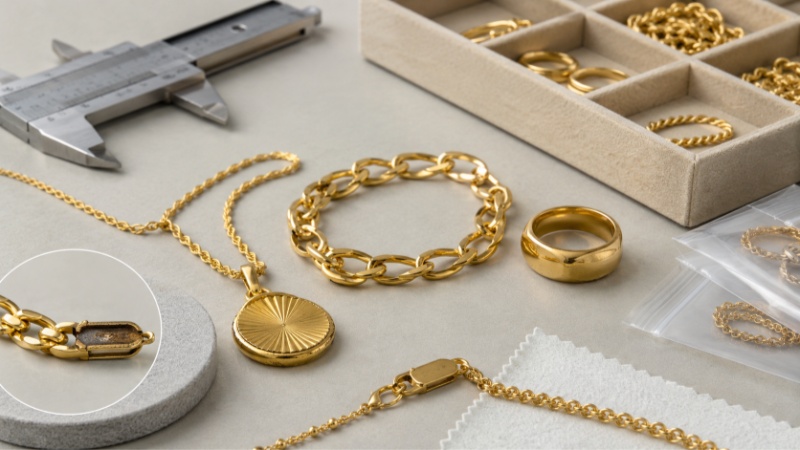
For B2B buyers, the key is to confirm the full material structure before sampling. A clear order specification should include base metal, 18K gold color, plating thickness, surface finish, protective coating, and packaging standard. Without these details, two products may look similar in photos but perform very differently after customers wear them.
Does 18K Gold Plated Brass Tarnish?
Yes, 18K gold plated brass can tarnish or fade over time. The brass base may oxidize, and the plated surface may wear down because of friction, sweat, perfume, alcohol, sunscreen, seawater, pool water, and cleaning chemicals. The speed depends on plating quality, surface preparation, wearing frequency, and customer care habits.
Buyers should also understand the difference between tarnish, fading, oxidation, and plating wear. Tarnish usually refers to surface discoloration, while fading often means the gold color becomes lighter or less bright. Oxidation may come from the brass base, and plating wear happens when the surface layer becomes thin after repeated friction.
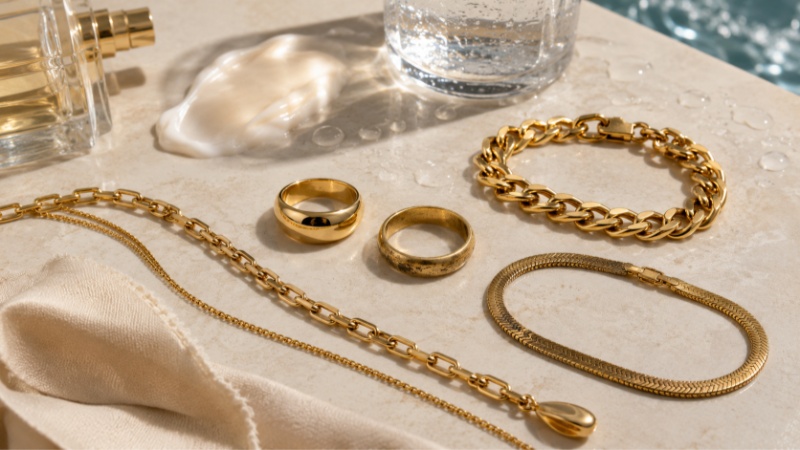
For jewelry brands, the safest approach is to avoid unrealistic claims. Terms like “never tarnish,” “permanent gold color,” or “fully waterproof” can create customer expectations that plated brass jewelry cannot always meet. A more professional approach is to explain care instructions clearly and control production standards before shipment.
Why Does Gold Plated Brass Tarnish?
The first reason is the brass base metal itself. Because brass contains copper, it may react with sweat, air, moisture, salt, and acidic skin conditions when the plated layer becomes worn or damaged. This can lead to darkening, dullness, exposed yellow-red brass color, or possible green marks on skin.
The second reason is insufficient plating thickness. Thin plating may look attractive in product photos, but it usually has weaker wear resistance in real use. Rings, bracelets, Cuban chains, rope chains, and daily-wear necklaces face more friction because they often touch skin, clothing, clasps, bags, tables, and hard surfaces.
The third reason is weak surface polishing and pre-treatment. Good plating does not start in the plating tank; it starts before plating with polishing, cleaning, oil removal, and surface preparation. If the surface has scratches, rough edges, casting pits, or oil residue, the plated layer may show uneven color, poor adhesion, dull areas, or faster fading.
The fourth reason is uneven protective coating. Protective coating or E-coating can help slow down tarnish and fading, but it must be applied evenly, especially on edges, clasps, chain links, and high-touch areas. If the coating is too thin or inconsistent, some areas may lose shine or expose base color faster.
The fifth reason is daily wear and chemical exposure. Customers may wear jewelry while sweating, swimming, applying perfume, using sunscreen, washing hands, or cleaning with alcohol-based products. These conditions can affect plated brass jewelry, especially in summer collections and daily-wear product lines.
Factory Experience: Where Problems Appear First
From Missjeweler’s factory experience, complaints about 18K gold plated brass jewelry are most common in rings, bracelets, Cuban chains, and high-frequency daily-wear necklaces. These products have higher friction because they touch skin, clothing, clasps, bags, and hard surfaces more often than earrings or simple pendants. This means the risk is not the same across every jewelry category.
Customer feedback usually appears within a few weeks to a few months after delivery. Common problems include fading on the inner side or edges of rings, lighter color around Cuban chain clasps, slight color difference between necklaces and approved samples, dull surfaces, loss of shine, and occasional green marks on skin. These issues are especially sensitive for online brands because customers may leave reviews quickly.
After checking these cases, the most common causes are insufficient plating thickness and weak polishing or pre-treatment control. Other causes may include unstable plating process, uneven E-coating, and long exposure to sweat, seawater, perfume, sunscreen, or other chemicals. For B2B buyers, this means the question should not stop at “does 18K gold plated brass tarnish?”
A better question is how the supplier controls the full production process. Buyers should ask about plating thickness, surface polishing, pre-treatment, protective coating, color standard, adhesion testing, wear testing, and final QC before confirming bulk orders. These details help reduce problems before they reach the customer.
How Long Does 18K Gold Plated Brass Last?
There is no fixed lifespan for 18K gold plated brass jewelry. It may last from a few months to longer than one year, depending on plating thickness, wearing frequency, surface preparation, protective coating, storage, and care habits. A light-use pendant and a daily-wear ring may perform very differently.
This is why B2B buyers should be careful with lifespan promises. Instead of saying the jewelry will last a certain number of years, brands should focus on confirmed specifications and realistic care instructions. Good plating and strict QC can extend use time, but plated brass should not be described as permanent.
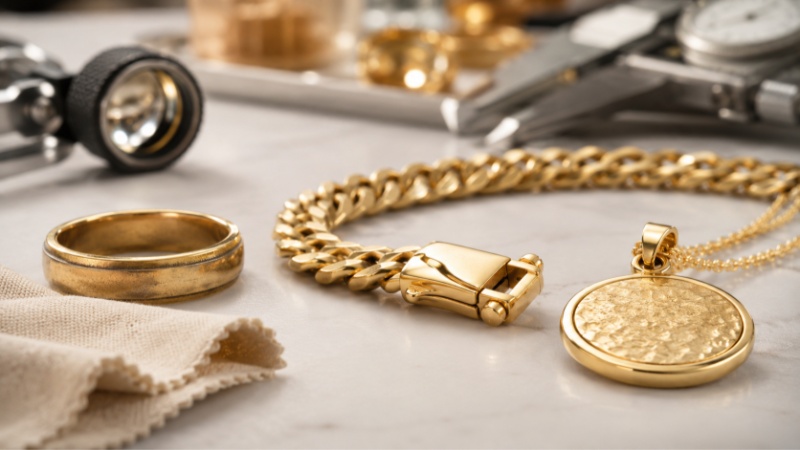
For bulk orders, confirmed production details are more useful than general claims. A supplier that can explain base metal, polishing, plating thickness, protective coating, sample approval, and final QC is usually more reliable than one that only offers a low price. This is especially important for repeat orders and best-selling styles.
7 Checks Before Bulk Orders
1. Confirm the Base Metal
Before placing an order, buyers should confirm whether the jewelry is brass, stainless steel, 925 silver, or another base metal. Do not rely on a general description like “gold plated jewelry” without knowing what is under the plating. Different base metals have different cost levels, tarnish risks, and customer expectations.
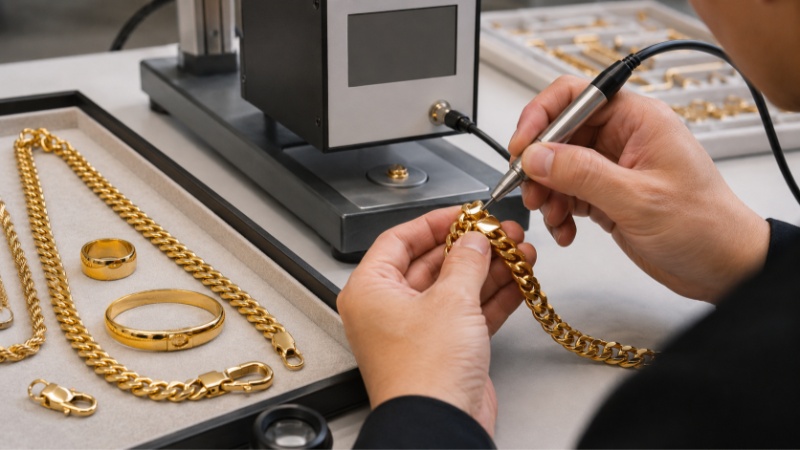
For 18K gold plated brass jewelry, the brass specification should stay consistent from sample to bulk production. If the base metal changes between sample and mass order, the final color, weight, polishing result, and plating performance may also change. Material consistency is the first step to reducing disputes.
2. Confirm Plating Thickness
Plating thickness is one of the most important checks for gold plated brass jewelry. Thin plating may reduce the unit price, but it can increase after-sales risk if the product is sold as daily-wear jewelry. Buyers should compare process specifications, not only photos and quotes.
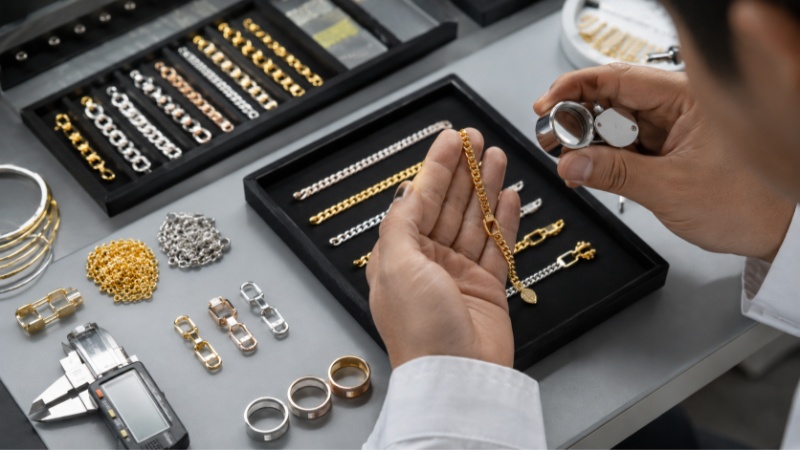
High-friction products need more attention. Rings, bracelets, Cuban chains, rope chains, and clasps often need stronger plating control because these areas wear faster. If the supplier cannot explain the plating standard clearly, buyers should be cautious before confirming bulk production.
3. Check 18K Gold Color Standard
18K gold color is not always exactly the same across factories or batches. Some 18K gold plated jewelry may look light yellow, rich yellow, warm gold, or slightly rose-toned depending on the plating formula and production control. This can create complaints when customers reorder the same style.
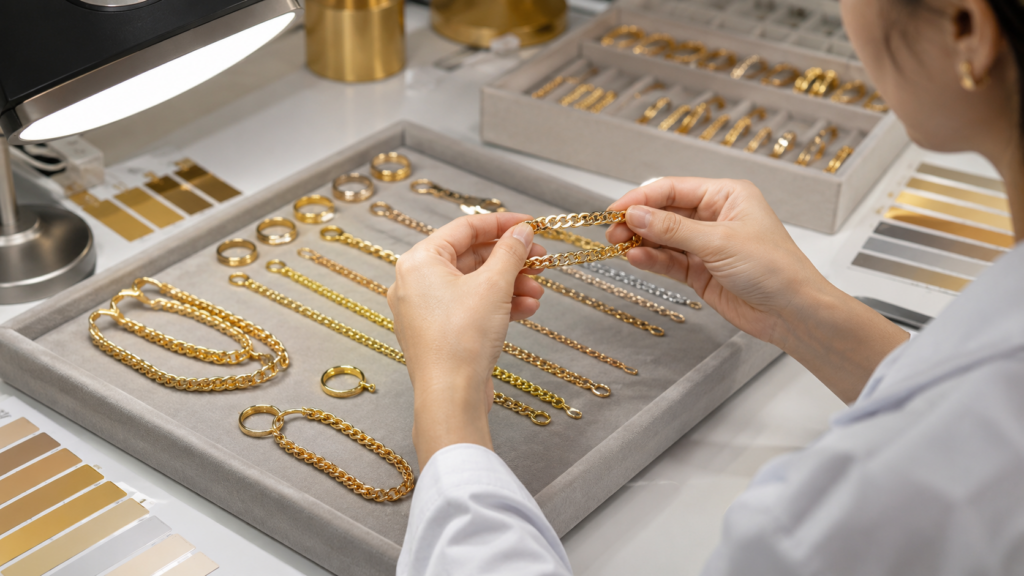
Before mass production, buyers should approve a physical sample or color standard. For repeat orders, the factory should keep color records and compare new production with the approved sample. This helps reduce color difference between sample, first order, and restock orders.
4. Review Surface Polishing
Surface polishing directly affects the final look and plating quality. If the jewelry surface is rough, scratched, uneven, or poorly cleaned, the plating layer may not appear smooth or stable. This is why polishing should be checked before plating, not only after the finished product is packed.
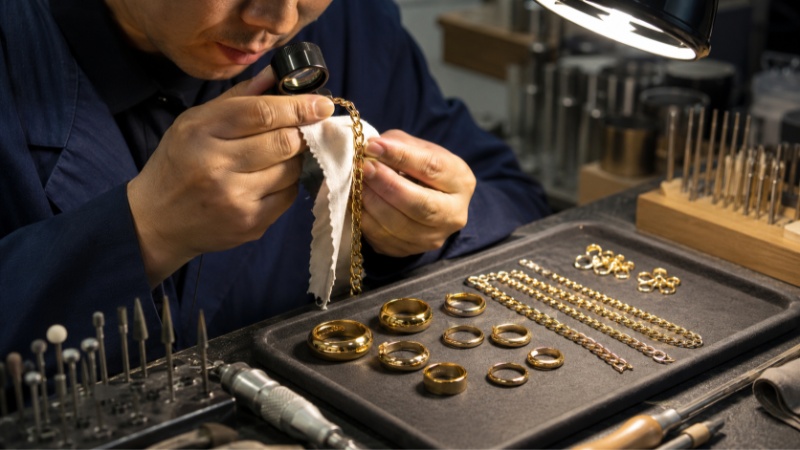
For chain products, buyers should pay attention to links, clasps, edges, and contact areas. For rings, the inner side and edges are often the first places where fading appears. These details may be small, but they strongly affect customer experience after wearing.
5. Ask About Protective Coating
Protective coating or E-coating can help slow down tarnish, fading, and oxidation. It is especially useful for brass fashion jewelry, daily-wear products, and gold-tone collections sold in competitive online markets. However, it should be treated as a risk-reduction process, not a permanent guarantee.
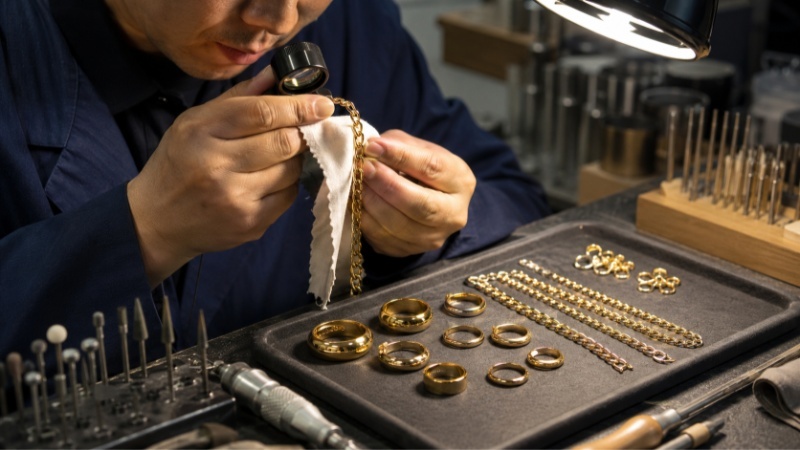
Buyers should ask whether protective coating is included and how it is controlled. The coating should be even on edges, clasp areas, chain links, and other high-touch parts. If the coating is inconsistent, some areas may become dull or faded faster than others.
6. Test Samples Before Production
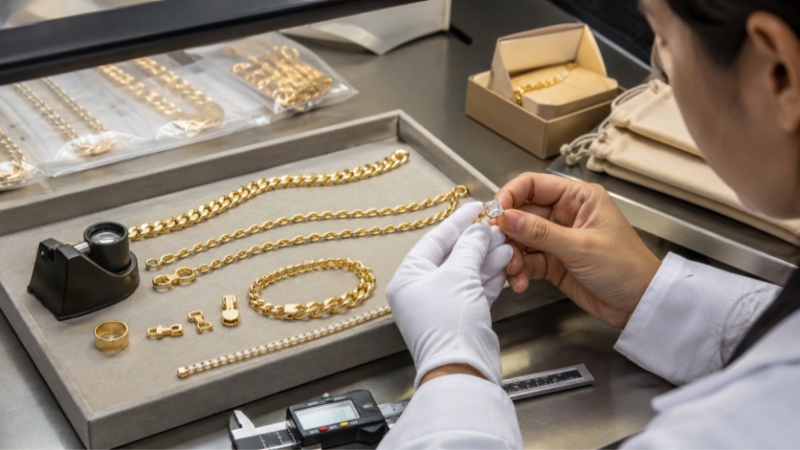
Sample testing helps buyers find problems before large losses happen. A sample should be checked for gold color, shine, plating coverage, edge quality, clasp finish, chain link consistency, stone setting, and packaging method. For best-selling styles, buyers should create an approved sample record.
Sample approval is important, but it is not the only step. Missjeweler usually recommends combining approved sample confirmation with plating thickness control, surface polishing review, protective coating confirmation, and final QC standards. This helps reduce sample-to-bulk inconsistency.
7. Prepare Care Instructions
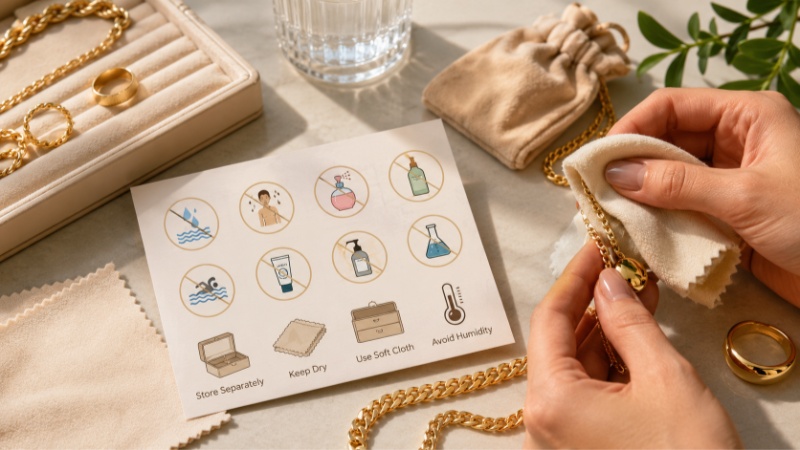
Clear care instructions can reduce unnecessary disputes after customers receive the jewelry. Customers should avoid water, sweat, perfume, alcohol, lotion, sunscreen, cleaning products, seawater, and pool water when wearing plated brass jewelry. They should also store pieces separately and keep them dry.
For B2B buyers, care cards are useful for online sellers, retail brands, and wholesale orders. A simple care card helps align customer expectations with the real performance of gold plated brass jewelry. It also shows that the brand is professional and transparent.
18K Gold Plated Brass vs Other Materials
Different materials fit different market positions. 18K gold plated brass is useful for affordable fashion jewelry, trend testing, low MOQ launches, and seasonal collections. However, it has a higher tarnish and fading risk than some other options if plating and care are not controlled.
Gold plated stainless steel may be better for stronger daily-wear positioning. Gold plated 925 silver and gold vermeil are more suitable for premium collections, while solid 18K gold has the strongest value perception but the highest cost. Buyers should choose materials based on target price, customer expectations, and after-sales risk tolerance.
| Material | Base Metal | Tarnish Risk | Cost | Best For |
|---|---|---|---|---|
| 18K Gold Plated Brass | Brass | Medium to High | Low | Fashion jewelry, trend testing, low MOQ |
| Gold Plated Stainless Steel | Stainless steel | Lower | Medium | Daily-wear jewelry |
| Gold Plated 925 Silver | Sterling silver | Medium | Higher | Premium silver collections |
| Gold Vermeil | 925 silver | Medium | Higher | Higher-value gold-tone jewelry |
| Solid 18K Gold | Gold alloy | Low | Highest | Fine jewelry |
For regulated markets, buyers should also pay attention to honest product descriptions and material claims. The FTC Jewelry Guides are useful for understanding jewelry marketing language in the United States, while ECHA REACH helps buyers understand chemical safety expectations in the European market. These references are not competitors and can support more responsible product descriptions.
Missjeweler’s Risk Control Process
When customers worry about 18K gold plated brass fading or unstable color, Missjeweler confirms key standards before sampling and bulk production. These include base metal specification, 18K gold color standard, plating thickness requirement, approved sample confirmation, surface polishing quality, protective coating or E-coating, adhesion test, wear test, first-piece check, and final QC inspection.
The most important steps are approved sample confirmation, plating thickness control, surface polishing and pre-treatment, protective coating application, and final QC inspection. These steps help reduce color difference, fast fading, exposed brass base, dull surface, and customer complaints. They also help buyers keep repeat orders more consistent.
For high-friction products, Missjeweler pays extra attention to edges, clasp areas, chain links, inner ring surfaces, and polishing consistency. These are the areas where fading or color change usually appears first in real customer use. Checking these areas before shipment can reduce avoidable after-sales issues.
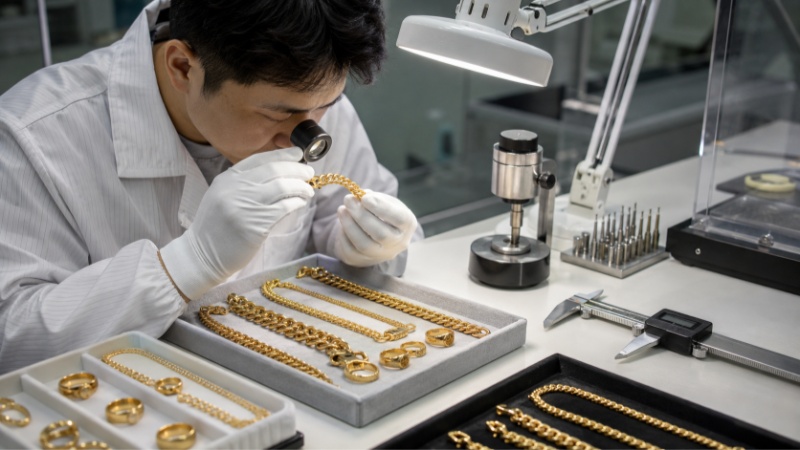
Missjeweler does not position gold plated brass as a material that will never change color. The more reliable goal is to help brands reduce complaints through clear specifications, sample approval, controlled production, and practical care guidance. This fits growing jewelry brands that need stable quality without unrealistic promises.
For process management, buyers can also refer to quality management concepts from ISO 9001. A structured quality system helps brands think beyond the finished product and pay attention to records, consistency, inspection, and continuous improvement. For product marking and precious metal descriptions, the UK hallmarking guidance can also help buyers understand why material claims should be accurate.
Common B2B Problems with Plated Brass
Common B2B problems include gold color difference, fast fading, exposed brass base color, dull surface, green marks on skin, and unstable repeat order color. These issues often happen when buyers compare only low prices or product photos without confirming plating and surface standards. A low initial cost may create higher complaint costs later.
Another common problem is sample-to-bulk inconsistency. The first sample may look good, but bulk goods may show different gold tone, weaker shine, or more visible surface defects if production records are not controlled. This is why approved samples and final inspection standards should be part of the order process.
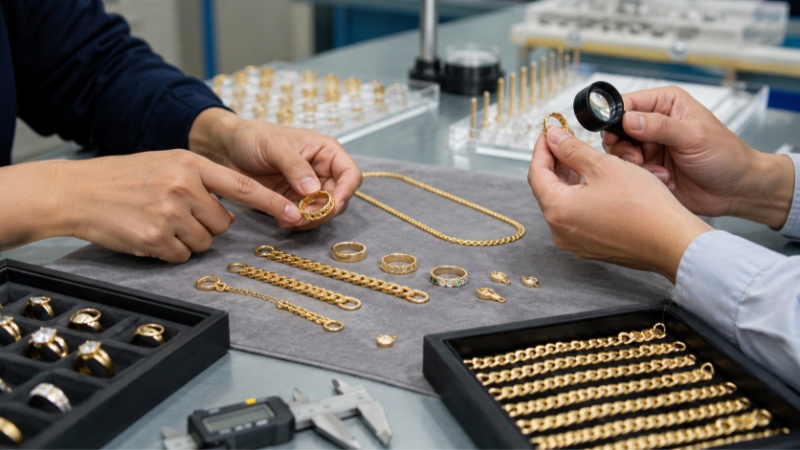
Some complaints also come from unclear customer expectations. If a brand markets plated brass jewelry as waterproof, sweat-proof, or never-fading, customers may feel disappointed when normal material reaction appears. Honest care instructions can protect both customer trust and brand reputation.
Questions Buyers Should Ask Suppliers
Before placing a bulk order, buyers should ask specific process questions. Useful questions include: What is the base metal? What plating thickness will be used? What 18K gold color standard will be followed? Is there an approved sample for color and finish? These questions make the order clearer before production starts.
Buyers should also ask about polishing, pre-treatment, coating, and testing. Important questions include: Is protective coating or E-coating included? Will the factory test plating adhesion? Can the supplier do wear testing for high-friction products? Is there a first-piece check before mass production? These checks help reduce hidden production risks.
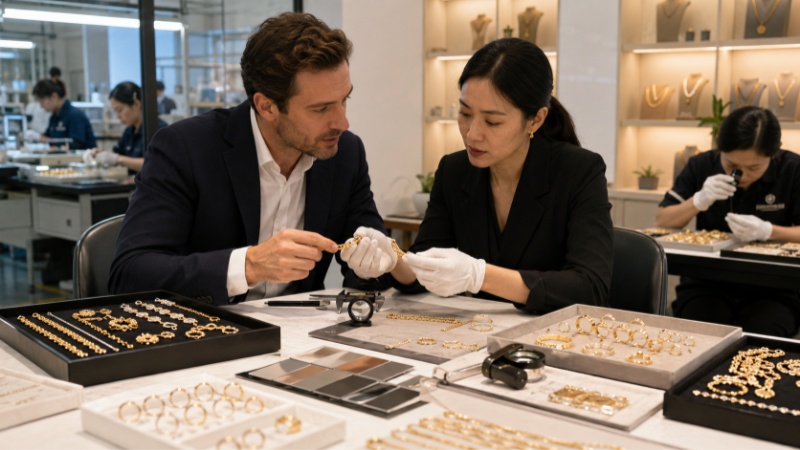
Final inspection should not be ignored. Buyers should ask how the supplier checks rings, clasps, chain links, edges, stone settings, packaging, and repeat order color consistency before shipment. Better questions before production can prevent bigger problems after delivery.
How Missjeweler Supports Plated Brass Orders
Missjeweler supports OEM/ODM 18K gold plated brass jewelry for rings, earrings, bracelets, chains, Cuban chains, pendants, and custom logo jewelry. Buyers can confirm base metal, 18K gold color, plating thickness, surface finish, stone setting, approved sample, packaging, and care card details before production.
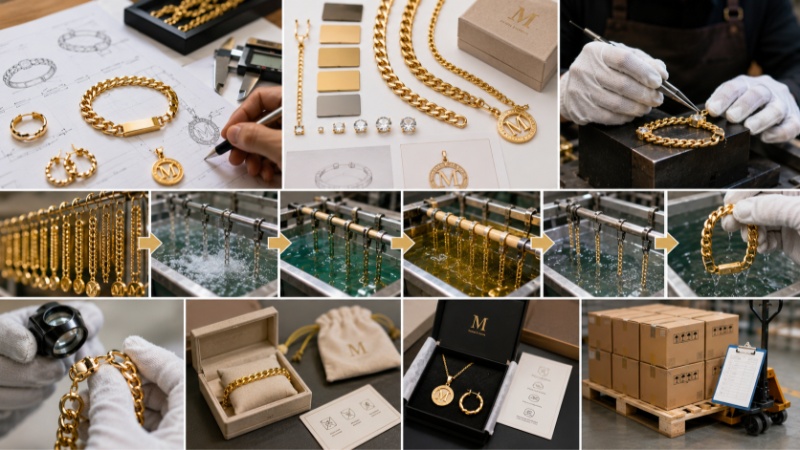
During production, Missjeweler focuses on polishing, pre-treatment, plating control, protective coating, first-piece check, process inspection, and final QC. For growing jewelry brands, low MOQ trial orders can help test new styles before larger restocks. This is useful for brands that want to reduce risk while building a more stable product line.
The goal is not to promise that brass jewelry will never tarnish. The goal is to help B2B buyers reduce fading complaints, improve sample-to-bulk consistency, and build more reliable repeat orders through clear communication and controlled production standards. This is a practical approach for brands selling gold-tone fashion jewelry in competitive markets.
Conclusion
Conclusion
18K gold plated brass may tarnish, fade, or lose shine over time, especially with friction, sweat, moisture, perfume, seawater, or chemicals.
For B2B buyers, clear plating thickness, polishing, protective coating, sample approval, and final QC help reduce complaints.
A reliable supplier should not promise “never tarnish,” but help brands control quality and manage customer expectations.
Start Your 18K Gold Plated Brass Order
Need stable 18K gold plated brass jewelry for your next collection? Missjeweler helps growing brands confirm plating thickness, gold color, samples, packaging, and QC before bulk production. Contact us to start a low MOQ trial order or request a fast OEM/ODM quote.
FAQ
1. Does 18K gold plated brass tarnish?
Yes. 18K gold plated brass can tarnish, fade, or lose shine over time, especially with sweat, water, perfume, sunscreen, or chemicals.
2. Is 18K gold plated brass real gold?
It has an 18K gold-color plated surface, but the base metal is brass. It is not solid 18K gold jewelry.
3. How long does 18K gold plated brass last?
There is no fixed lifespan. It depends on plating thickness, wearing habits, surface preparation, protective coating, and care.
4. Does 18K gold plated brass turn skin green?
It may happen when the plating wears down and brass reacts with sweat or skin chemistry. Better plating and care instructions can reduce this risk.
5. Is 18K gold plated brass good for B2B brands?
Yes, if positioned correctly. It is suitable for fashion jewelry, trend testing, low MOQ collections, and affordable gold-tone designs.