
Introduction
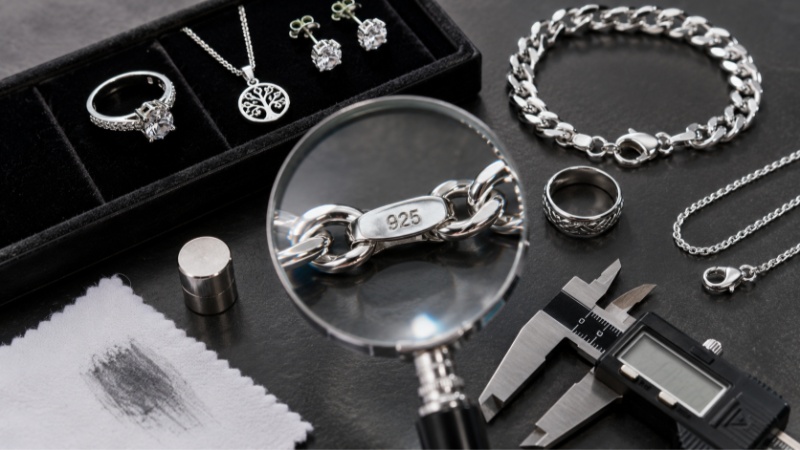
925 sterling silver jewelry is popular because it offers a strong balance of real silver value, daily-wear durability, and flexible custom design options. The term “925” means the jewelry contains 92.5% silver and 7.5% other metals, usually copper, to improve strength. However, a stamp alone is not enough because fake, plated, or unclear products may also carry a “925” mark. For consumers, authentication helps avoid overpaying for fake silver jewelry, but for B2B buyers, it also helps reduce returns, customer complaints, product page errors, and brand trust risks. This guide explains nine practical checks jewelry brands, retailers, and wholesale buyers can use before sampling or bulk production.
What Does 925 Sterling Silver Mean?
925 sterling silver means the metal contains 92.5% silver and 7.5% other metals. Pure silver is soft, so sterling silver is commonly used for rings, earrings, pendants, bracelets, chains, and custom jewelry that need better strength for daily wear. Common marks include 925, S925, Sterling, Ster, and Ag925. For B2B buyers, the key point is not only reading the stamp, but also confirming material composition, supplier records, and approved production standards.
| Mark | Meaning | Buyer Note |
|---|---|---|
| 925 | 92.5% silver | Common mark |
| S925 | Sterling silver | Often used in Asian markets |
| Sterling | Sterling silver | Common in US/UK markets |
| Ster | Sterling silver | Short form of sterling |
| Ag925 | Silver 925 | ¡°Ag¡± means silver |
For buyers selling in regulated markets, product descriptions should be accurate and supported by clear material confirmation. The FTC Jewelry Guides are useful for understanding honest jewelry descriptions in the United States. For European buyers, the ECHA REACH framework is also helpful when considering chemical safety expectations. Clear material claims protect both customer trust and long-term brand reputation.
Why Authentication Matters for Buyers
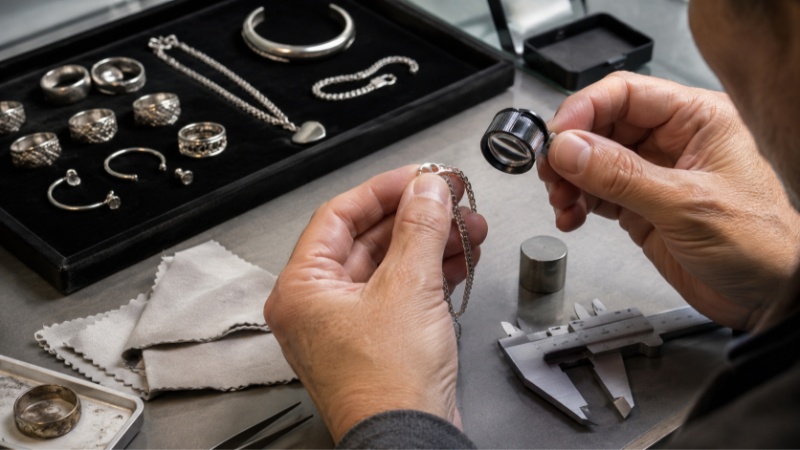
Authentication matters because fake or unclear silver jewelry can create pricing mistakes, return disputes, and negative customer reviews. Some products may be silver plated, silver colored, or made from base metal while still carrying a 925 stamp. If buyers use the wrong material description on product pages, packaging, invoices, or customs documents, the risk becomes bigger than one single order. For wholesale buyers, authentication should happen before sampling and mass production, not after complaints appear.
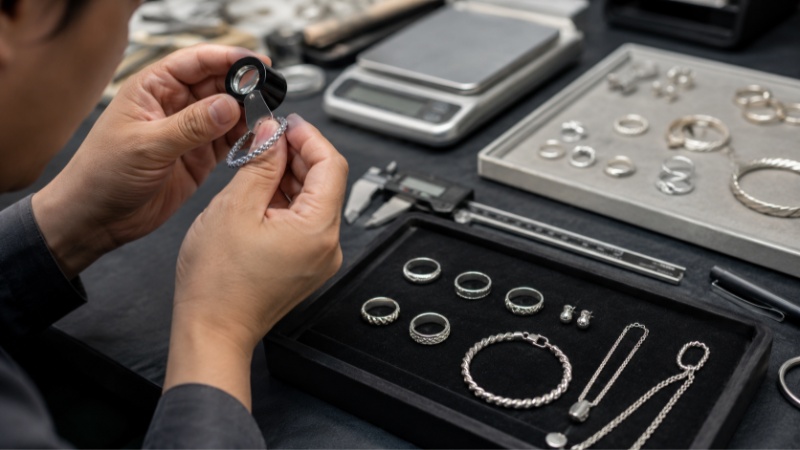
From Missjeweler’s factory experience, a common issue is that some buyers only focus on the 925 stamp, product photos, or the lowest quotation. They may not confirm the actual base metal, plating process, stone configuration, weight tolerance, or production standard clearly enough. In real production, this can lead to material misunderstanding, gold color difference, unstable finish, quality complaints, or even return problems. These issues often come from unclear specifications before the order starts, so buyers should use an approved sample as the bulk production reference.
Check the 925 Stamp First
The 925 stamp is usually found on the inner ring band, clasp, earring post, pendant back, bracelet tag, or chain end. A clean and consistent stamp can be a good sign, especially when it appears in a reasonable position for the product structure. However, the stamp is only the first step, not final proof of authenticity. Fake jewelry can also carry a 925 mark, so buyers should combine stamp checking with other inspection methods.
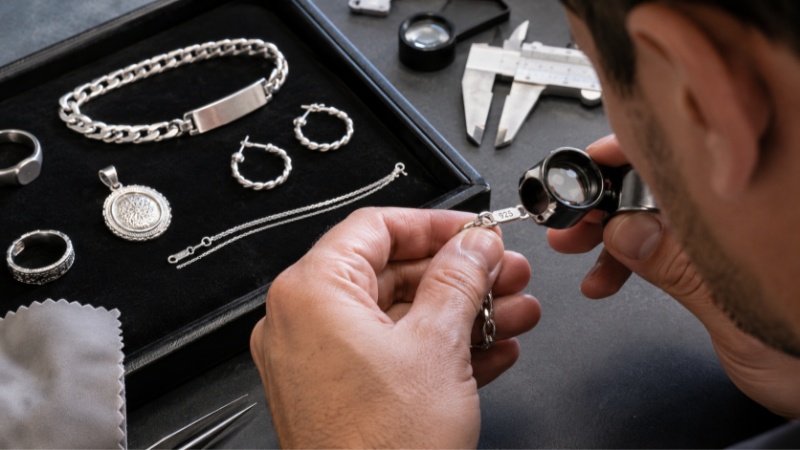
For B2B orders, buyers should confirm the stamp position before sample approval and bulk production. This is especially important for small earrings, thin chains, delicate pendants, and custom logo jewelry where the stamp position may affect appearance or production difficulty. If the stamp is placed after production without clear confirmation, the final product may not match the buyer’s expectations. A clear stamp standard helps reduce confusion during repeat orders.
Inspect Color, Weight, and Finish
Real sterling silver usually has a bright white metallic shine, not a cheap gray, yellow, or overly dull appearance. The surface should look smooth after proper polishing, especially on visible areas such as ring bands, pendant fronts, bracelet surfaces, and chain links. Poor polishing, rough edges, or uneven color may not prove the item is fake, but they are warning signs that quality control needs closer attention. Appearance alone cannot authenticate 925 silver, but it can help buyers find possible problems early.
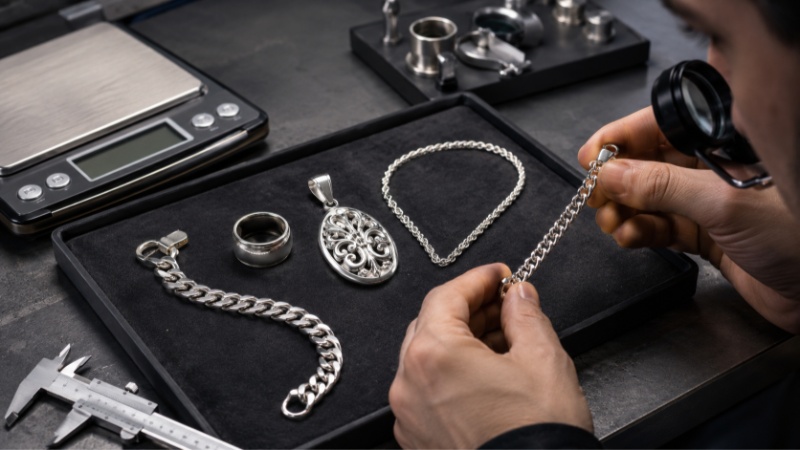
Weight is also important because extremely lightweight jewelry may need extra material confirmation. Some hollow designs are normal, but low weight combined with a very low price may suggest thin structure, plated base metal, or unclear specifications. For gold plated 925 silver jewelry, buyers should confirm the silver base, plating color, plating thickness, and surface protection separately. A product can be real 925 silver but still fail customer expectations if the finish, plating, or weight tolerance is not controlled.
Use a Magnet Test Carefully
Sterling silver is not strongly magnetic, so a strong reaction to a magnet may suggest magnetic base metal inside the product. This test is simple and useful for quick screening when buyers inspect samples, returned goods, or warehouse stock. If a ring, chain, or pendant is strongly attracted to a magnet, it should not be accepted as real 925 silver without further testing. However, buyers should not rely on this method alone.
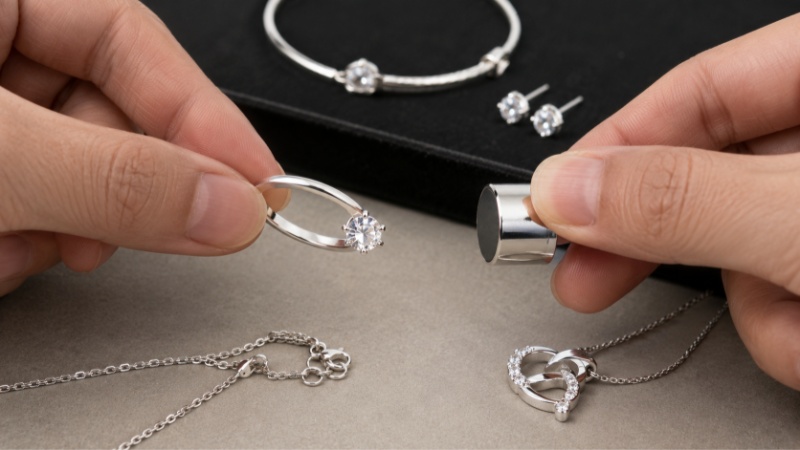
Passing the magnet test does not prove the jewelry is real 925 sterling silver. Many non-magnetic base metals can also pass this test, so it only helps identify some obvious risks. For B2B buyers, the magnet test can be used as a basic first check, but it should not replace supplier documents, sample confirmation, or professional testing. It is best used together with stamp inspection, finish inspection, and material proof.
Try a Soft Cloth Rub Test
Real silver may leave slight dark marks on a white polishing cloth because silver can oxidize over time. This does not mean the jewelry is poor quality; it is a normal reaction related to silver and surface exposure. A soft cloth rub test can help buyers notice whether the surface behaves like silver, especially for plain sterling silver jewelry. Still, this is only a simple screening method, not a final authentication test.
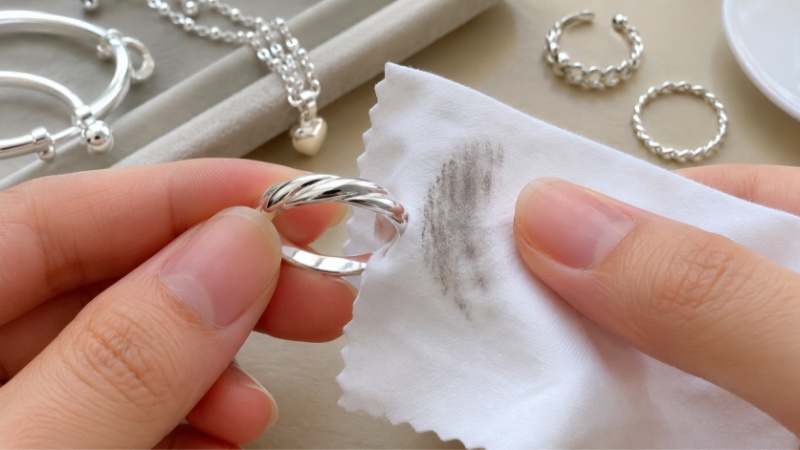
For plated or coated products, the result may be less obvious because the surface layer can block direct contact with silver. Gold plated 925 silver, rhodium plated silver, and anti-tarnish coated jewelry may not react in the same way as plain silver. Buyers should avoid damaging the product surface during this test. For finished samples or high-value pieces, it is safer to use professional testing or supplier material confirmation.
Consider Professional Silver Testing
Professional testing can provide stronger evidence when buyers need clear material confirmation before large orders. Common methods include XRF testing, acid testing, and lab inspection. XRF testing is useful because it can check metal composition without damaging the jewelry surface. Acid testing may be helpful in some cases, but it can damage polished or plated jewelry if not handled correctly.
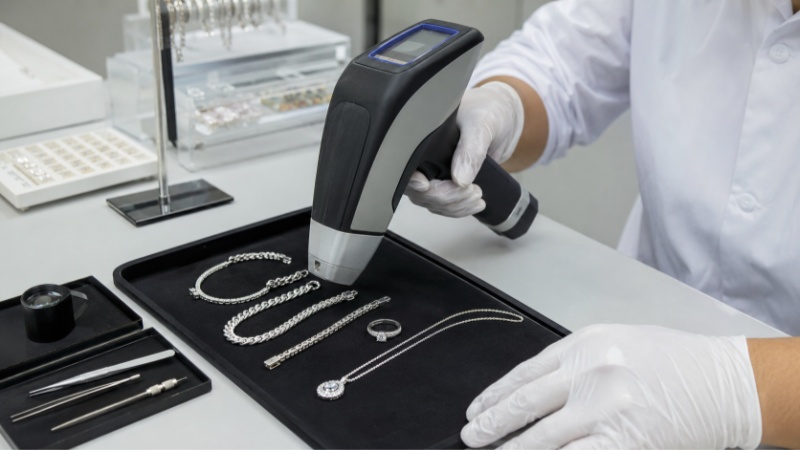
For B2B buyers, testing is especially important for private label collections, repeat orders, high-value moissanite silver jewelry, and regulated markets. Buyers can also ask suppliers for material reports or third-party testing when needed. A quality management approach, such as the principles described in ISO 9001, can help buyers understand why records, inspection steps, and process control matter. Professional testing should support, not replace, clear communication with the supplier.
Watch for Silver Plated Jewelry
Silver plated jewelry is not the same as 925 sterling silver jewelry. Silver plated products usually have only a thin silver layer over another base metal such as brass, copper, or alloy. They may look similar when new, but their value, durability, pricing, and marketing claims are different. If a buyer sells silver plated jewelry as 925 sterling silver, customer complaints and trust issues can appear quickly.
| Type | Base Metal | Silver Content | Buyer Risk |
|---|---|---|---|
| 925 Sterling Silver | 92.5% silver | High | Higher cost but clearer value |
| Silver Plated | Brass, copper, alloy, etc. | Surface only | Mislabeling risk |
| Silver Color Jewelry | Base metal | Usually none | High complaint risk |
For B2B buyers, the safest approach is to confirm whether the product is solid 925 silver, gold plated 925 silver, rhodium plated 925 silver, or silver plated base metal. These descriptions sound similar, but they represent very different materials and price points. Product pages, packaging, and invoices should use accurate wording. Clear descriptions help protect both the buyer and the end customer.
Confirm Plating and Stone Details
Many 925 silver jewelry products are not plain silver only. They may be gold plated, rose gold plated, white gold plated, rhodium plated, or set with moissanite, CZ, or other stones. For gold plated 925 silver jewelry, buyers should confirm plating color, plating thickness, surface finish, and anti-tarnish protection. This is important because the base metal can be real 925 silver while the plating quality still creates complaints.
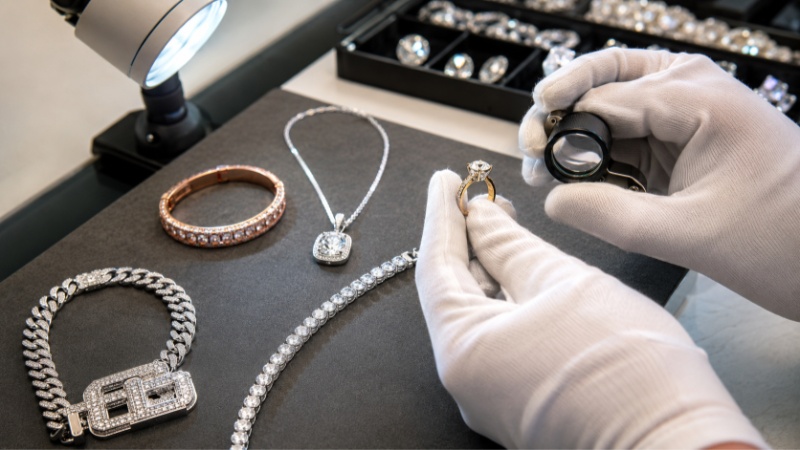
Stone-set 925 silver jewelry also needs clear specifications before bulk production. Buyers should confirm stone type, size, grade, cut, setting method, and stone security, especially for rings, tennis bracelets, Cuban chains, pendants, and custom logo jewelry. A loose stone, uneven setting, or poor polishing can damage the customer experience even when the silver itself is authentic. For wholesale orders, material authentication and production quality should be checked together.
Ask Suppliers for Material Proof
Buyers should ask suppliers for material composition confirmation before sampling and bulk production. This can include product specifications, material records, sample approval, XRF testing support, or third-party testing when necessary. Buyers should also confirm whether the product is solid 925 silver, gold plated 925 silver, rhodium plated silver, or silver plated base metal. Clear proof helps avoid confusion between similar-looking products.

In Missjeweler’s 925 silver jewelry orders, buyers can confirm the 925 silver base metal, 925 stamp position, CAD drawing, physical sample, plating color, plating thickness, surface finish, and stone configuration before production. During production, Missjeweler checks casting, polishing, and stone setting quality while matching the order with material records and confirmed process standards. Before shipment, finished goods are inspected according to the approved sample, including stamp position, color consistency, plating appearance, stone firmness, packaging, and labeling. This process helps reduce material disputes, quality complaints, and sample-to-bulk inconsistency.
Avoid Common Buyer Mistakes
One common mistake is believing the 925 stamp without further checking. Another mistake is confusing silver plated jewelry with sterling silver because both can look similar in photos. Buyers may also ignore plating thickness, stone setting, polishing quality, weight tolerance, or approved sample records. These details can affect customer satisfaction even when the product looks attractive at first.
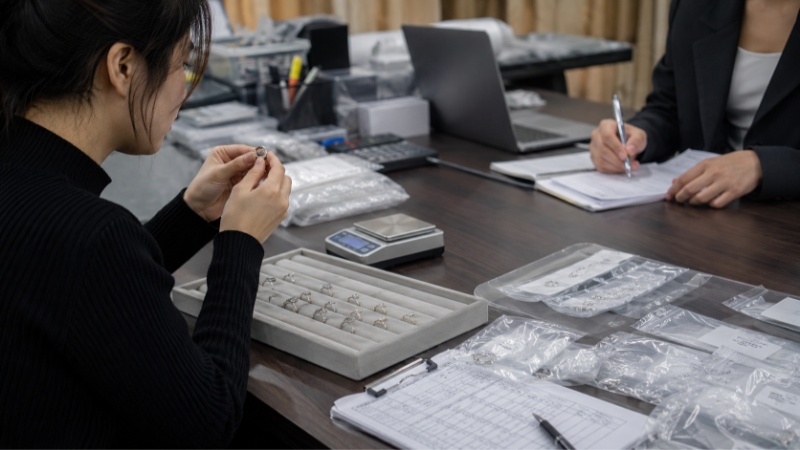
The lowest price is not always the safest choice for B2B orders. If the price is much lower than expected, buyers should confirm base metal, plating process, stone configuration, and quality standard before moving forward. Not keeping approved samples can also create repeat order inconsistency. For growing brands, these mistakes can affect reviews, restock planning, and customer trust.
How Missjeweler Supports 925 Silver Orders
Missjeweler supports OEM/ODM 925 sterling silver jewelry for rings, pendants, earrings, bracelets, chains, moissanite jewelry, tennis bracelets, Cuban chains, and custom logo jewelry. Buyers can confirm base metal, plating color, stone quality, CAD design, sample details, and bulk order standards before production. This helps growing jewelry brands reduce material confusion and build more stable product lines.
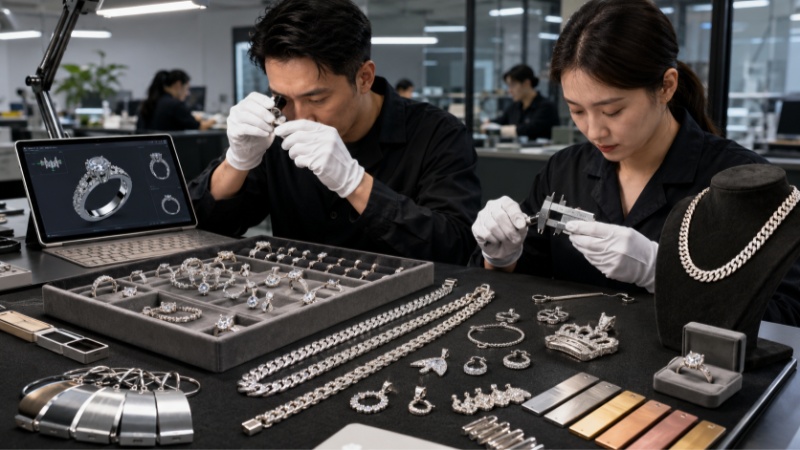
For custom orders, Missjeweler focuses on sample confirmation, production tracking, process inspection, final QC, and repeat order consistency. Buyers can request support for low MOQ trial orders, custom styles, plating requirements, and fast quotation. Instead of only checking finished products after shipment, the goal is to reduce risk before production starts. This is especially useful for brands selling 925 silver jewelry in competitive online markets.
Conclusion
Authenticating 925 sterling silver jewelry should not rely on one method only. Buyers should combine stamp checking, physical inspection, simple screening, supplier documents, approved samples, and professional testing when needed. A 925 mark is useful, but it cannot replace clear material confirmation and production control. For B2B orders, the best protection is to define standards before sampling and mass production.
For jewelry brands, authentication is not only about proving the silver content. It is also about reducing mislabeling risk, color difference, plating complaints, stone setting issues, and sample-to-bulk inconsistency. When buyers work with a supplier that controls material records, plating standards, stone setting, and final inspection, they can protect customer trust and improve repeat order stability.
CTA
Need reliable 925 silver jewelry for your brand? Work with Missjeweler to confirm material, plating, samples, stone setting, and QC before bulk production, and get OEM/ODM 925 sterling silver jewelry with low MOQ and fast quotation support.
FAQ
1. Is 925 sterling silver real silver?
Yes. 925 sterling silver is real silver because it contains 92.5% silver and 7.5% other metals, usually added to improve strength. It is widely used for rings, earrings, pendants, chains, bracelets, and custom jewelry.
2. Does a 925 stamp always mean real silver?
No. A 925 stamp is helpful, but it is not final proof because fake or unclear jewelry can also carry this mark. Buyers should combine stamp checking with physical inspection, supplier documents, and professional testing when needed.
3. What is the best way to test 925 silver jewelry?
XRF testing is one of the more reliable methods because it can check metal composition without damaging the jewelry. For large B2B orders, buyers can also request material confirmation, approved samples, or third-party testing.
4. Is silver plated jewelry the same as 925 sterling silver?
No. Silver plated jewelry only has a thin silver layer over another base metal, while 925 sterling silver uses silver as the main material. The two products have different value, durability, pricing, and marketing claims.
5. What should B2B buyers confirm before ordering?
B2B buyers should confirm base metal, 925 stamp position, plating color, plating thickness, stone quality, sample standard, polishing, packaging, and QC requirements. These details help reduce material disputes, customer complaints, and sample-to-bulk inconsistency.