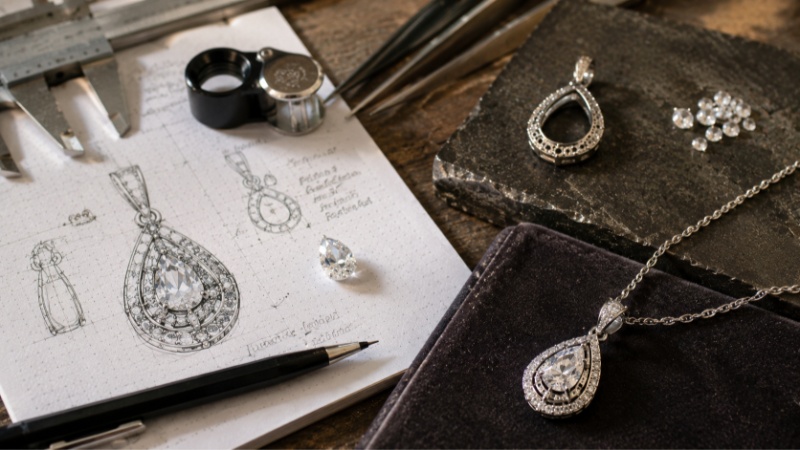
Many brands want to create jewelry with a personalized design, and custom pendants allow them to come up with unique products. A custom piece made just for the right customer, considering that these items are quite dominant in hip hop jewelry, logo jewelry, name pendants, cross pendants, and even photo pendants. Many buyers believe they need a finished design before starting their custom pendant project. However, a jewelry maker can work from just a sketch or a reference photo.
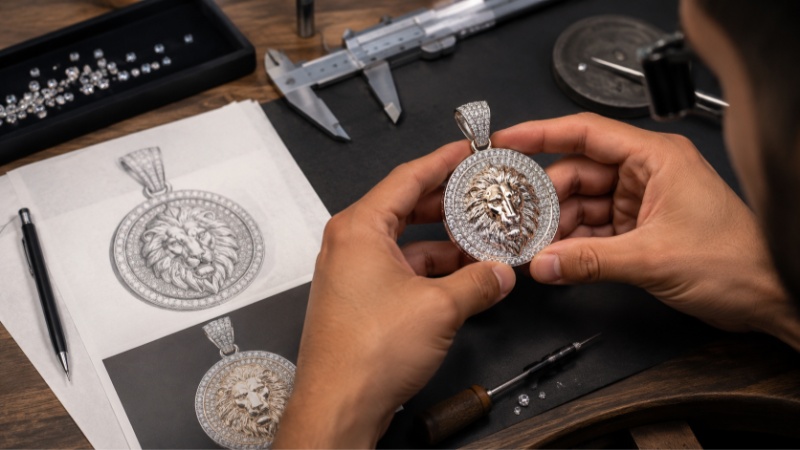
This blog will cover how jewelry manufacturers create customized jewelry pendants. The finished piece is a perfect replica of what the customer had in mind and drew on a piece of paper.
What’s a Custom Piece of Jewelry Pendant?
As the trend of personalized jewelry for women keeps getting popular, more and more people want to bring their ornamental vision to life. A custom pendant is desdigned as per your specific data, logo, name, symbol, size, material, stone choice, or brand style. It’s not mass-produced (even though most custom pendants are priced similarly to off-the-shelf jewelry). You’ll get a necklace or pendant that’s uniquely yours. These generation of pendants have different types:
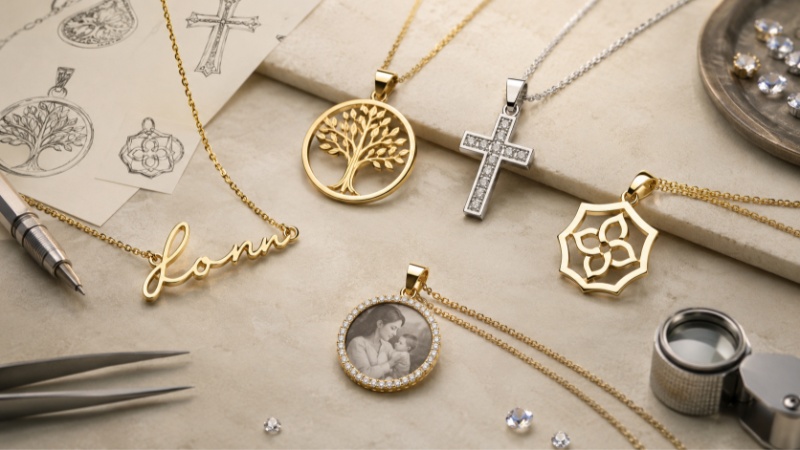
- Custom name pendants
- Company or brand logo pendants
- Custom image or family portrait pendants
- Religious or stylistic pendants (e.g., with a cross)
- Bold, iced-out hip hop pendants (popular in streetwear)
- Moissanite pendants (they feature brilliant moissanite stones)
- Letter pendants (they contain a single letter or initials)
Custom Pendants for Jewelry Brands
Custom pendants are beyond personal accessories for your customers. Jewelry brands in the world treat these customized ornaments as things that reflect a customer’s personal style, personal details, signature brand-defining products, limited collections for exclusive releases, influencer merchandise for partnerships, and high-margin wholesale items for retail partners.
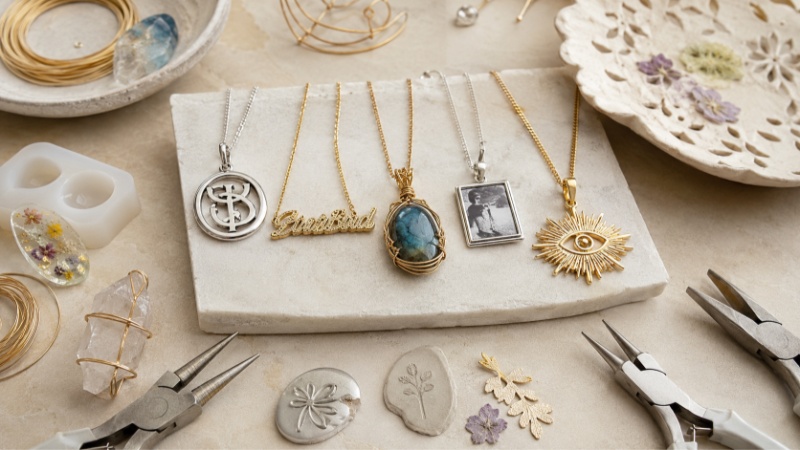
Also, resin casting places items inside liquid plastic. Wire wrapping is best for beginners to wrap metal wire around gemstones. Wire-wrapped stones involve wrapping jewelry wire around un-drilled raw crystals. Pliers used in jewelry making include round-nose, chain-nose, and flat-nose varieties. Metal clay involves rolling clay, stamping designs, and cutting shapes. Decoupage techniques in jewelry involve gluing decorative cutouts into pendant blanks.
Can You Make Custom Jewelry Without a Finished Design?
If you wish to create the perfect pendant, you don’t always need a professional design before you start. The goal is to convert jewelry leads who don’t have custom designs ready. A good manufacturer can actually help convert rough ideas into production-ready designs. Even many potential customers hesitate because they don’t know how to explain their idea or concept.
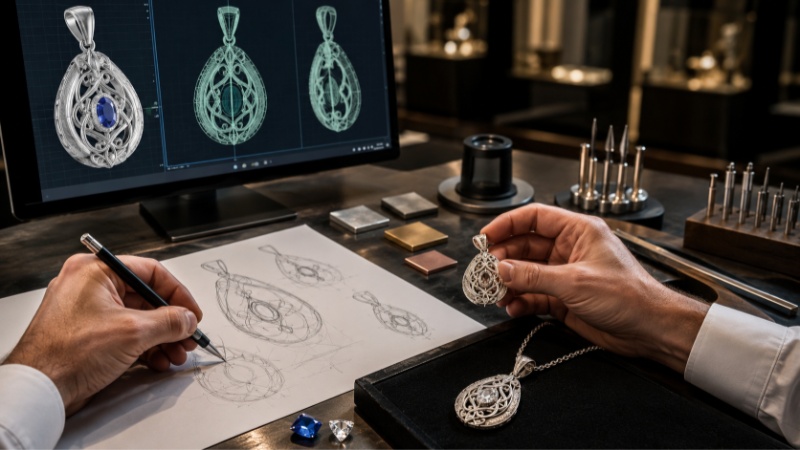
You can offer them design support, sketch-to-CAD service, and material suggestions. That’s how you can turn uncertain leads into actual orders. If you only have a rough idea or reference image, a professional customized jewelry manufacturer like MissJeweler can help you develop it into a production-ready pendant design. Once your process coincides with their inspiration, you can come up with something that really provides a lot of value to your customers.
What Can Buyers Provide Instead of a Finished Design?
Worried about the materials you need? You can start the process with any of these:
- Hand sketch
- Logo file (any format)
- Product reference image
- Existing pendant sample
- Brand name or letters
- Size preference
- Stone layout idea
- Chain style reference
- Budget range
- Material preference
How Manufacturers Turn Ideas Into Pendant Designs
If your customer wants to create a pendant necklace or something, make sure that this jewelry piece coincides with the customer’s lifestyle and tradition; you should follow the right process. This is what professional manufacturers do to guarantee quality & elegance. Turning ideas into pendant designs becomes simple enough once you follow this process:
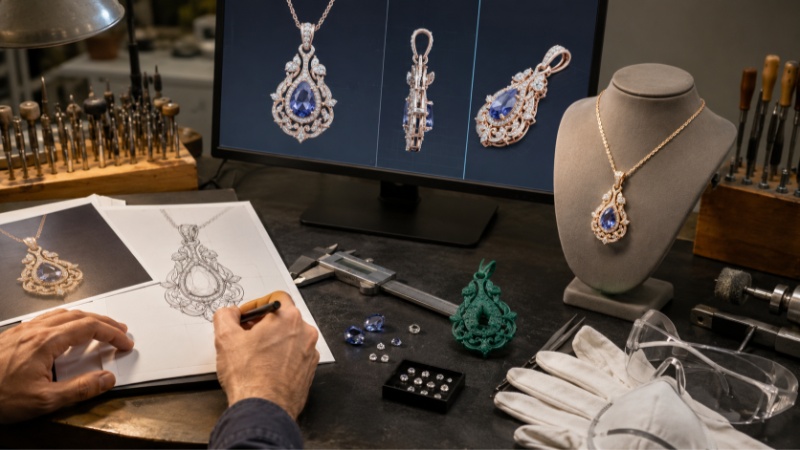
- Review your idea by confirming what you’re looking for in a finished piece (initial design consultations are free and do not require payment)
- Confirm the size & material by discussing the specifications of the engagement ring, necklace, or pendant
- Create a CAD design so your team can model the pendant digitally
- Adjust proportions to refine the design for balance
- Check the stone placement to ensure the optimal setting layout of your jewelry
- Confirm weight and verify the piece’s shape meets the needs of your customers (to create a customized jewelry pendant, measure the final height and width)
- Prepare for sampling to make the design production-ready (design time varies based on customer feedback and iterations)
- Wear the right safety gear (includes safety glasses, dust masks, and gloves.)
Choose the Right Pendant Material
Sterling Silver Custom Pendants
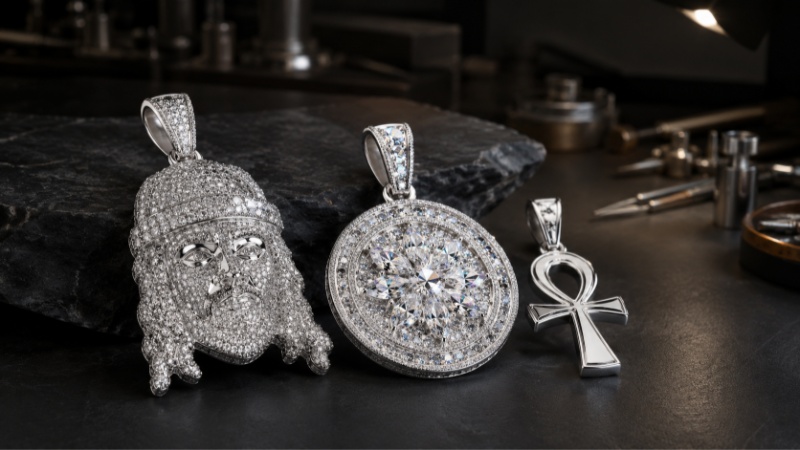
If you want a piece of jewelry that stands out, 925 sterling silver is popular for custom hip hop pendants and moissanite jewelry. It offers a good balance between quality and cost, making it ideal for growing brands. It’s perfect for mid-range pricing, iced-out designs, moissanite settings, and everyday wear pieces.
Brass Custom Pendants
Brass is often used for lower-cost fashion jewelry. However, it may not offer the same long-term value or premium feel as silver or gold. These pendants are perfect for budget fashion jewelry pieces and entry-level pricing. However, if your brand seems to be focused on long-term quality or premium positioning, brass custom pendants are not recommended.
Gold Custom Pendants
If you want something for luxury jewelry lines, high-margin wholesale items, premium customer segments, or investment pieces, 10K, 14K, and 18K gold are just perfect for higher-end custom pendants. Gold increases material cost but improves perceived value significantly.
Stainless Steel Custom Pendants
Stainless steel is durable & affordable, but it has limitations for detailed stone setting or complex custom pendant designs. If you have a complex project on hand or you need a budget-friendly option, choose stainless steel.
Gemstones and Setting Options
Moissanite Pendants
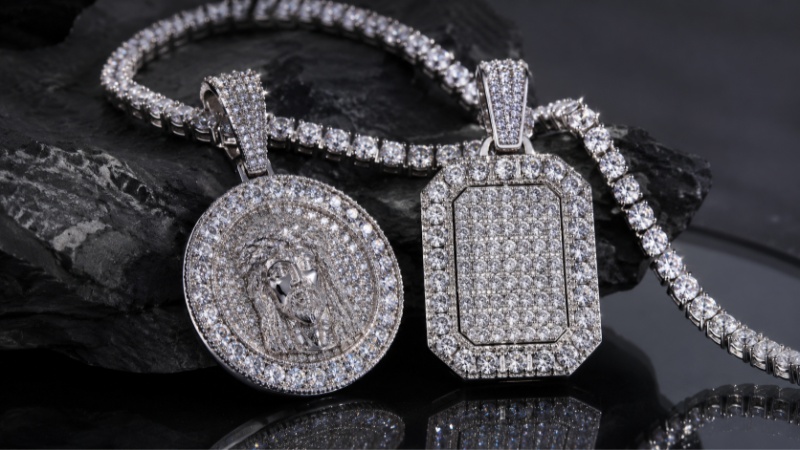
Moissanite is popular for hip hop jewelry because it offers strong brilliance at a more accessible price than natural diamonds. This shape is ideal for iced-out pendants, custom hip hop jewelry, tennis chain and pendant sets, and growing brands looking for premium shine. Prefer prong and bezel settings for better visible brilliance and extra security for active wearers.
Lab Diamond Pendants
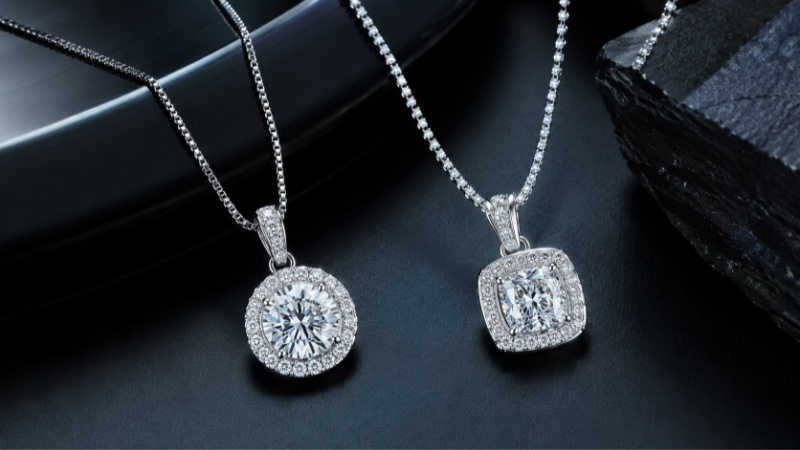
Lab diamonds suit customers who want real diamond material with more controlled pricing than natural diamonds. This sleek design is perfect for mid-to-high-end jewelry, customers wanting a genuine diamond, budget-conscious luxury buyers, etc. Use precise micro-prong or flush settings to showcase lab diamonds with a neat, high-end finish. Custom diamond pendants can be encrusted in VS diamonds.
CZ Pendants
CZ (cubic zirconia) can be used for budget fashion jewelry, but it may not offer the same kind of durability, brilliance, or premium value as moissanite or lab diamonds. This design is perfect for entry-level pricing, fashion jewelry, and temporary collections; less expensive CZ pieces should favor low-lift settings that hide minor chips and extend perceived life.
Natural Diamond Pendants
Natural diamonds are used for high-end custom pendant orders, but they require higher budgets and stronger certification support. For a jeweler, these pendants can be used to create quality & luxury jewelry lines, investment pieces, high-net-worth customers, etc. But you need to look into the right setting type. Specify the diamond clarity target and offer certification documentation.
Create the CAD Design and Wax Models
CAD is one of the most important steps in professional pendant manufacturing. It’s where your idea becomes a precise, production-ready design.
Why CAD Matters for Custom Pendant Jewelry
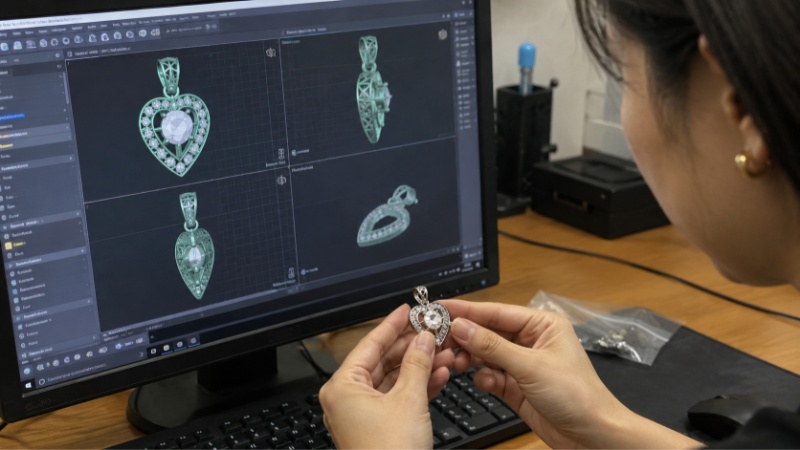
When you’re ready to create a finished piece, you can order a 3D print prototype to actually see the physical piece in real life. Test the fit of this pendant on a chain and verify how it will hang. Tweak details after doing a prototype review and make adjustments before casting (lost wax casting is the industry standard for high-end, durable jewelry designs; this process involves pouring a plaster-like investment around a wax model). CAD reduces mistakes before production. It also lets buyers review the design before mold making, casting, and stone setting. This saves money and prevents costly errors.
Production Steps After CAD Approval
Once you’re okay with the quality of the materials and the design, you should approve the final CAD for production. Cast the jewelry piece in the right metal and set all gemstones securely. It is necessary to perform final polishing & plating. You have multiple finishing options, including these:
- High polish
- Matte finish
- Rhodium plating
- White gold plating (white gold requires occasional rhodium plating for brightness)
- Yellow gold plating
- Rose gold plating (rose gold adds a romantic and distinct modern appeal)
- Black plating
- Two-tone finishing
Design Details for Custom Pendants
Define these details before CAD to avoid costly revisions and keep production smooth. Remember, a deposit is required before creating 3D models of designs.
- Bail or mounting style: Choose a standard loop, bar bail, or integrated bail. Match the bail to the chain width so the pendant hangs straight and doesn’t spin.
- Engraving or text placement: For name or logo pendants, provide vector files and specify exact text location (front face, inner edge, or back), stroke thickness, and depth. Clear tolerances keep lettering crisp at small sizes.
- Two-stone or single-finish metal: Decide if you want a mixed-metal look (e.g., gold plating with silver base, or two-tone accents) versus a single-finish metal (high polish or matte across the whole piece). Two-tone adds perceived value without a large cost jump, while single-finish keeps production simple and consistent.
Quality Control (QC) Inspection Process for Custom Pendants
- Material check: Verify metal type, purity, weight, and dimensions before casting; inspect for scratches or uneven surfaces.
- Stone setting inspection: Confirm every stone is secure with no gaps; test prong tightness, polish bezel seats, and run a loose-stone test.
- Plating thickness check: Measure plating (e.g., 1.5–2.5 microns for gold) for color consistency and edge coverage.
- Polishing inspection: Ensure finish (high polish, matte, two-tone) is uniform with no scratches or dull spots; edges are smooth.
- Logo/detail check: Verify stroke thickness, depth, and legibility against vector files and tolerances.
- Chain compatibility check: Test bail fit with intended chain width; confirm pendant hangs straight without spinning.
- Packing inspection before shipment: Confirm protective packaging, care cards, and insured/tracked delivery; match order and QC checklist.
Why Plating Quality Matters
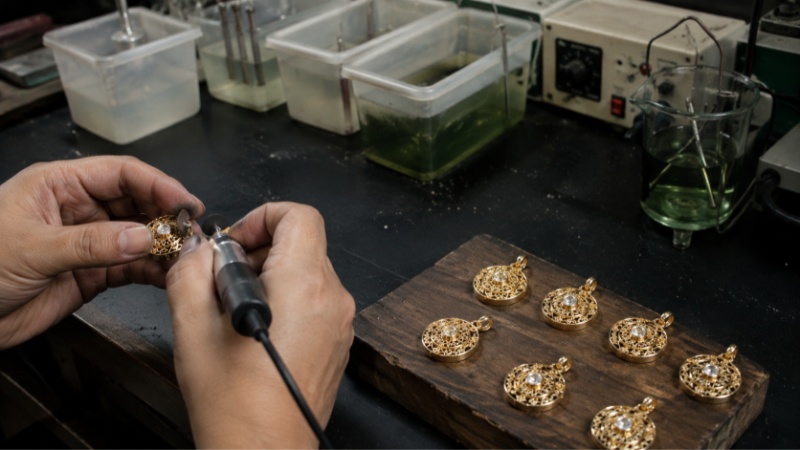
Plating thickness, surface preparation, and polishing affect how long the pendant keeps its color and shine. Poor plating leads to quick color fading, uneven appearance, customer returns, and a lot of other problems. If you wish to create something that bears history and tells a story, an item that your customer can carry and wear with pride, you have to be careful about the quality of modern plating. Make sure that proper maintenance is necessary to prolong the piece’s lifespan.
How Long Does It Take to Make a Custom Pendant?
Custom-made jewelry production usually takes 2-4 weeks. The timeline for creating a modern pendant depends on how complex the customer’s design is! Stone setting and order quality are also important. You need to choose the right metals.
| Order Type | Description | Typical Timeline |
|---|---|---|
| Simple design | Minimal detailing, standard CAD work, little to no stone setting | 7-14 days |
| Iced-out or complex pendant | Detailed custom design, full stone setting, multiple revisions | 15-30 days |
| Bulk order | Multiple pieces, batch production, quality checks, stone setting included | 20-45 days (depending on quantity and revision speed) |
How Much Does It Cost to Make a Custom Pendant?
Custom pendants get shipped within 3 weeks. The cost and price of custom pendants depend on these factors:
- Material (silver, gold, brass, steel)
- Size and weight
- Stone type (moissanite, lab diamond, CZ, natural diamond)
- Stone quantity
- CAD complexity
- Plating type and thickness
- Labor requirements
- Order quantity (bulk orders reduce per-unit cost)
| Material | Per-Unit Bulk Range* | MOQ (Minimum Order Quantity) |
|---|---|---|
| Stainless Steel | Low | 50 units |
| Brass | Low | 50 units |
| Sterling Silver | Low to Medium | 50 units |
| 10K Gold | Medium | 100 units |
| 14K Gold | Medium to High | 100 units |
| 18K Gold | High | 100 units |
*Ranges reflect current market conditions and may vary due to gold price fluctuations. Costs typically include material, stone setting (if applicable), labor, and basic packaging. Final pricing depends on design complexity, stone type/quantity, plating thickness, and order quantity. Minimum Order Quantity (MOQ): 50 units for mixed materials; 100 units for gold pieces. Contact us for a custom quote based on your specs.
Aftercare, Warranty, and Shipping for Customized Jewelry
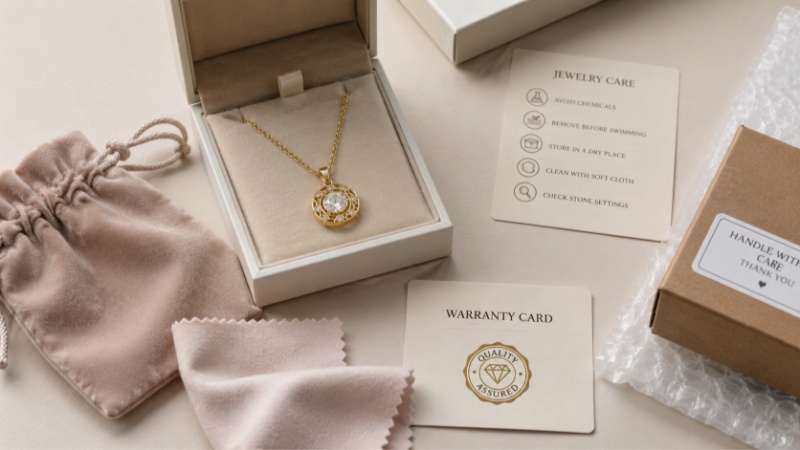
Customers need to be reminded that they should avoid chemicals by removing their custom pendants before they go swimming. These pendants should be stored in a soft pouch, jewelry box, or something for safekeeping. Use a soft cloth to maintain the shine of your watch or necklace. Don’t forget to check stone settings periodically for bulk orders.
Professional manufacturers who care about proper craftsmanship care about the quality warranty of their products. They offer repair options for stone-setting problems. They also provide you with replacement support for production defects. You’ll get the following perks:
- Insured shipping: All valuable custom-made jewelry is insured
- Tracked delivery: Real-time tracking for every order
- Secure packaging: Pendants shipped in protective packaging
- International shipping: We ship globally with reliable carriers
Conclusion
Whether you have a finished design or just a rough idea, professionals can help create premium custom pendants from concept to finished jewelry. You must get in touch with a trustworthy and reliable jewelry manufacturer that meets your expectations. They can convert your sketch into CAD, choose the right materials & stones, and produce consistent quality for bulk orders.
Create Your Custom Pendant with a Personalized Design
Contact MissJeweler now and send your design draft, logo file, or reference image. We’ll turn your idea into a production-ready pendant your customers will love, wear with pride, and review highly.
FAQs
Do I need a finished design to make a custom pendant?
No, you don’t need a professional design. A jewelry manufacturer can work from a hand sketch, logo file, reference image, or even just a rough idea to create a production-ready design.
How long does it take to make a custom pendant?
Custom pendant production typically takes 2–4 weeks. Simple designs take 7–14 days, while iced-out or complex pendants with full stone setting take 15–30 days.
What materials are best for custom pendants?
Sterling silver is ideal for mid-range pricing and hip hop pendants. Gold (10K/14K/18K) works for luxury lines, while brass and stainless steel are budget-friendly options for fashion jewelry.
What gemstones work best for custom pendants?
Moissanite offers strong brilliance at an accessible price for iced-out hip hop jewelry. Lab diamonds provide genuine diamond material with controlled pricing, while CZ is a budget option for fashion jewelry.
Should I choose rose gold or white gold for my custom pendant?
Rose gold offers a romantic and distinct appeal with its warm pink tone, making it perfect for unique, vintage-inspired pieces. White gold provides a sleek, modern look and requires occasional rhodium plating to maintain its brightness. Choose rose gold for a romantic style or white gold for a contemporary, diamond-friendly finish.