

Introduction
A low MOQ jewelry manufacturer helps small brands, wholesalers, and online sellers test new jewelry designs before committing to large bulk orders. For B2B buyers, low MOQ is not only about ordering fewer pieces; it is about checking product quality, sample accuracy, material choice, packaging, and reorder potential with lower inventory risk. The right supplier should support CAD design, sample approval, material confirmation, plating control, stone matching, packaging options, and final QC before shipment. This is especially important for custom rings, earrings, pendants, moissanite jewelry, 925 silver jewelry, hip hop jewelry, Cuban chains, tennis bracelets, and logo pieces. This guide explains how low MOQ jewelry manufacturing works and how buyers can choose a supplier that can support both small trial orders and future bulk production.
What Is a Low MOQ Jewelry Manufacturer?
A low MOQ jewelry manufacturer allows buyers to place smaller production orders before scaling into larger bulk orders. This helps startups, Shopify sellers, boutiques, wholesalers, and private label buyers test product demand, confirm quality, control cash flow, and reduce the risk of unsold inventory.
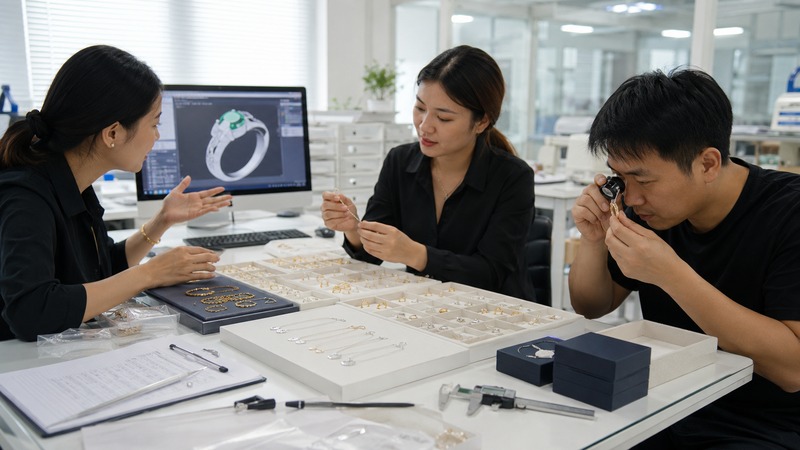
The best low MOQ supplier should offer more than a small starting quantity. Buyers should look for CAD support, clear material confirmation, sample approval, plating control, stone setting inspection, packaging support, production records, and final QC so that the first order can become a stable reorder item.
What Is a Low MOQ Jewelry Manufacturer?
A low MOQ jewelry manufacturer is a factory that accepts smaller production quantities instead of requiring buyers to order large volumes from the beginning. MOQ means minimum order quantity, and it can vary by product type, material, stone size, plating process, mold requirement, packaging design, and customization level.
For small jewelry brands, low MOQ creates a safer way to enter the market. Instead of ordering hundreds or thousands of pieces before knowing customer demand, buyers can test a sample, launch a small batch, collect feedback, and then decide whether to reorder or adjust the design.
Low MOQ does not mean every design can be produced in one or two pieces. Simple sterling silver rings, earrings, and pendants may be easier to start with small quantities, while custom logo jewelry, Cuban chains, tennis bracelets, and K gold styles may need more planning because of mold, stone setting, and material costs.
| Order Type | Meaning | Best For |
|---|---|---|
| Sample Order | 1¨C3 pieces for design confirmation | New custom design testing |
| Trial Order | Small batch before bulk production | Shopify sellers and startups |
| Bulk Order | Larger order after market validation | Wholesalers and growing brands |
| Reorder | Repeat order of confirmed styles | Stable best-selling SKUs |
Why Small Jewelry Brands Need Low MOQ
Small jewelry brands need low MOQ because new designs are never completely risk-free. A product may look strong in a CAD drawing, sample photo, or supplier catalog, but the real test comes when customers see the design, price, size, packaging, product page, and delivery experience together.
Low MOQ helps buyers protect cash flow while testing real market demand. This is useful for Shopify sellers, boutique owners, Etsy sellers, TikTok Shop sellers, Amazon sellers, and wholesalers who want to test new collections without filling their warehouse with slow-moving inventory.
Inventory control matters because unsold jewelry can lock money that should be used for ads, photography, packaging, product development, and reorder planning. Shopify also explains the importance of inventory management for businesses that need to balance stock levels, cash flow, and customer demand.
Low MOQ also gives buyers more freedom to test different product directions. A brand can compare yellow gold plating, white gold plating, rose gold plating, different stone sizes, different pendant shapes, and different packaging styles before selecting the strongest SKU for larger production.
Low MOQ Is Not Always the Cheapest Option
Low MOQ reduces inventory risk, but it usually does not create the lowest unit price. When a factory produces fewer pieces, CAD work, mold development, labor, stone matching, plating setup, packaging preparation, and quality inspection are spread across a smaller order quantity.
This is why low MOQ should be understood as a testing strategy, not only a price strategy. A buyer may pay more per piece on the first small order, but the real value is avoiding a large mistake before the design has proven sales potential.
Very low prices can create hidden risks for B2B buyers. If the supplier cuts costs by using unclear materials, thin plating, loose stone setting, poor polishing, weak clasps, or inconsistent packaging, the buyer may face customer complaints, refunds, bad reviews, and brand damage later.
| Factor | Low MOQ Order | Bulk Order |
|---|---|---|
| Inventory Risk | Lower | Higher |
| Unit Price | Higher | Lower |
| Cash Pressure | Lower | Higher |
| Design Flexibility | Higher | Lower |
| Best For | Testing new styles | Scaling proven products |
| Main Risk | Higher unit cost | Unsold inventory |
What Jewelry Products Work Best for Low MOQ?
Some jewelry categories are naturally better for low MOQ testing because they are easier to produce, photograph, package, and sell in small batches. Rings, earrings, pendants, and simple 925 silver jewelry are often practical starting points for new brands and online sellers.
Moissanite jewelry is also strong for low MOQ testing because it has high visual impact and strong perceived value. Buyers can test moissanite rings, stud earrings, pendants, tennis bracelets, and tennis chains before deciding which stone sizes, shapes, and settings perform best.
Custom logo jewelry can work well for low MOQ, but buyers should expect CAD or mold costs when the design requires a special shape. Name necklaces, photo pendants, logo pendants, and hip hop jewelry can create strong brand identity, but the design file and production standard must be clear before bulk orders.
| Product Type | Low MOQ Suitability | Buyer Notes |
|---|---|---|
| Moissanite Rings | High | Good for engagement and fashion testing |
| 925 Silver Jewelry | High | Suitable for small brand collections |
| Earrings | High | Easy to test multiple styles |
| Pendants | High | Good for logo, name, and custom designs |
| Tennis Bracelets | Medium | Stone matching and setting QC are important |
| Cuban Chains | Medium | Plating thickness and clasp quality matter |
| Custom Logo Jewelry | Medium | CAD or mold fee may apply |
| K Gold Jewelry | Lower | Higher material cost needs careful planning |
What Affects MOQ in Custom Jewelry Manufacturing?
MOQ is affected by more than the number of pieces a buyer wants to order. Material choice, design complexity, stone setting, mold development, plating color, packaging, inspection requirements, and reorder expectations all influence what a factory can reasonably produce.
Material is one of the biggest factors. 925 sterling silver, brass, stainless steel, 10K gold, 14K gold, and 18K gold have different raw material costs, production methods, polishing requirements, plating needs, and market expectations.
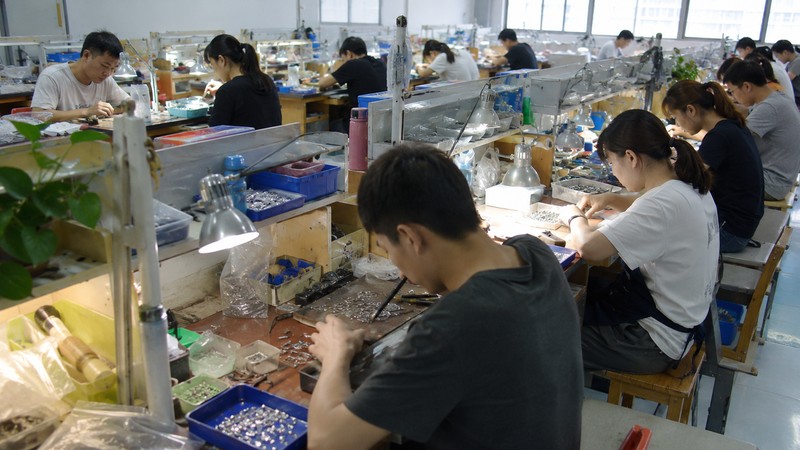
Stone selection also changes the production plan. Moissanite, CZ, zircon, lab diamond, and colored stones may require different matching standards, setting methods, inspection steps, and certificate support depending on the target price and sales channel.
Buyers should also consider compliance and product descriptions before selling jewelry under their own brand. The FTC provides useful Jewelry Guides for understanding responsible claims about materials, plating, gemstones, and precious metals in product listings.
Hidden Costs Buyers Should Confirm Before Ordering
A low MOQ quote should be clear before the buyer starts production. The unit price is only one part of the real cost, so buyers should confirm whether CAD, mold, sample, plating, packaging, certificate, and shipping costs are included or charged separately.
CAD fees are common when the buyer needs a new custom design. A clear CAD file helps confirm size, stone placement, logo position, thickness, and structure before sampling, which reduces misunderstanding during production.
Mold fees may apply when the design is not based on an existing model. This is common for custom logo jewelry, name pendants, special ring shapes, brand symbols, photo pendants, or unique hip hop jewelry pieces.
Packaging costs should also be confirmed early. Custom boxes, pouches, polishing cloths, thank-you cards, warranty cards, barcode labels, and branded inserts can improve customer experience, but they may change the final order cost.
| Cost Item | Why It Matters |
|---|---|
| CAD Fee | Needed for new custom designs |
| Mold Fee | Common for logo jewelry or special shapes |
| Sample Fee | Helps confirm design before bulk production |
| Plating Cost | Thicker plating may improve durability |
| Stone Cost | Moissanite size, color, and clarity affect price |
| Packaging Cost | Custom boxes, cards, and pouches add cost |
| Shipping Cost | Small orders may have higher cost per piece |
How to Check Quality Before a Low MOQ Order
Quality should be checked before the buyer moves from sample to bulk production. A beautiful product photo is not enough if the finished jewelry has weak prongs, uneven plating, rough polishing, loose stones, wrong logo placement, or inconsistent packaging.
The first step is confirming the material clearly. Buyers should know whether the product is 925 sterling silver, brass, stainless steel, 10K gold, 14K gold, or 18K gold because material affects price, durability, polishing, plating, and customer expectations.
Stone details should also be confirmed before production. For moissanite jewelry, buyers should check stone shape, millimeter size, color, clarity, matching, and setting security; the GIA Gem Encyclopedia is a useful educational resource for understanding gemstone information.
Plating control is especially important for fashion jewelry and hip hop jewelry. Thin plating may look acceptable in sample photos but wear faster during real customer use, especially on rings, bracelets, chains, clasps, and other high-friction areas.
| Quality Check | What Buyers Should Confirm |
|---|---|
| Material | 925 silver, brass, stainless steel, or K gold |
| Stone | Size, color, clarity, and matching |
| Setting | Secure prongs and clean layout |
| Plating | Color, thickness, and anti-tarnish finish |
| Polishing | Smooth surface and clean edges |
| Logo | Correct size, position, and depth |
| Packaging | Box, pouch, card, label, barcode |
| Final QC | Photos, video, and inspection before shipment |
Missjeweler Low MOQ Order Process
Missjeweler supports B2B buyers with a practical low MOQ process that helps reduce mistakes before bulk production. The goal is not only to make a small order, but to confirm whether the design, material, stone, plating, packaging, and quality standard are suitable for repeat sales.
The process usually starts with the buyer sending a product idea, reference photo, sketch, logo file, or target sample. Missjeweler can then help confirm material options, stone choices, plating color, size details, estimated MOQ, sample cost, and production direction.
After the details are clear, CAD design or sample development can begin. Buyers can check shape, thickness, stone position, logo layout, clasp structure, and packaging requirements before moving into trial production.
Before shipment, final QC helps confirm that the finished jewelry matches the approved standard. This is important for B2B buyers because a good sample is not enough; the reorder must also match the confirmed design and quality level.
| Step | What Happens |
|---|---|
| Design Discussion | Buyer sends idea, photo, sketch, or logo |
| Specification Check | Material, stone, plating, size, and MOQ are confirmed |
| CAD or Sample | Structure and appearance are checked before production |
| Trial Production | Small batch is made for market testing |
| Packaging Confirmation | Box, pouch, card, label, or barcode can be reviewed |
| Final QC | Setting, polishing, plating, logo, and packing are inspected |
| Reorder Planning | Approved files help future orders stay consistent |
How to Choose a Reliable Low MOQ Jewelry Manufacturer
A reliable low MOQ jewelry manufacturer should help buyers test small, improve fast, and scale safely when a design starts selling. The supplier should not only accept a small order but also explain the production process clearly before payment.
Buyers should look for real manufacturing support, not just a low starting quantity. A strong supplier can provide OEM/ODM service, CAD design, sample approval, material confirmation, stone matching, setting inspection, plating control, packaging support, and final QC before shipment.
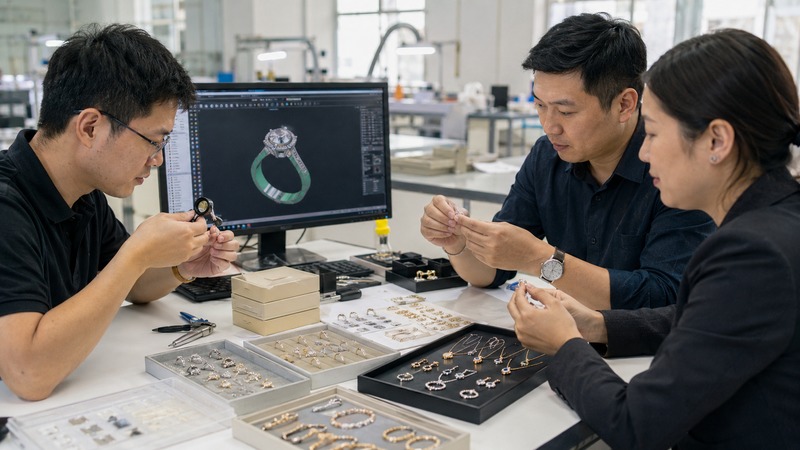
Communication speed also matters in B2B jewelry production. If the supplier cannot answer questions about material, MOQ, plating, sample time, bulk production time, or QC standards before the order starts, the risk may become larger after production begins.
Quality systems are also important for repeat orders. ISO explains ISO 9001 quality management principles that many professional manufacturers use to improve consistency, process control, and customer satisfaction.
What to Send When Requesting a Low MOQ Quote
A clear inquiry helps the supplier quote faster and more accurately. Buyers should not only ask, “What is your MOQ?” because the MOQ depends on the exact product, material, stone, plating, packaging, and customization level.
The best inquiry includes product photos, design ideas, target quantity, material choice, stone details, plating color, packaging needs, and target market. This helps the factory understand whether the buyer needs a simple trial order, private label product, custom logo piece, or a long-term reorder item.
Buyers should also share their target selling channel when possible. Jewelry for Shopify, boutiques, Amazon, TikTok Shop, wholesale catalogs, and influencer drops may need different packaging, durability, product descriptions, and quality expectations.
| Buyer Should Send | Why It Helps |
|---|---|
| Product photo or sketch | Helps confirm design direction |
| Material choice | Affects price, MOQ, and durability |
| Stone type and size | Affects setting, cost, and appearance |
| Plating color | Affects process and production control |
| Logo file | Helps confirm engraving or mold needs |
| Packaging request | Affects cost and brand presentation |
| Target quantity | Helps quote sample, trial, and bulk pricing |
| Target market | Helps recommend suitable quality level |
Questions to Ask Before Choosing a Supplier
Good questions help buyers avoid unclear expectations before production begins. Before placing a low MOQ order, buyers should ask the supplier to confirm MOQ, sample time, material options, customization limits, packaging choices, and QC process.
Start with production basics. Ask what the MOQ is for the exact style, whether the MOQ changes for samples and reorders, whether CAD is available before sampling, and how long production normally takes.
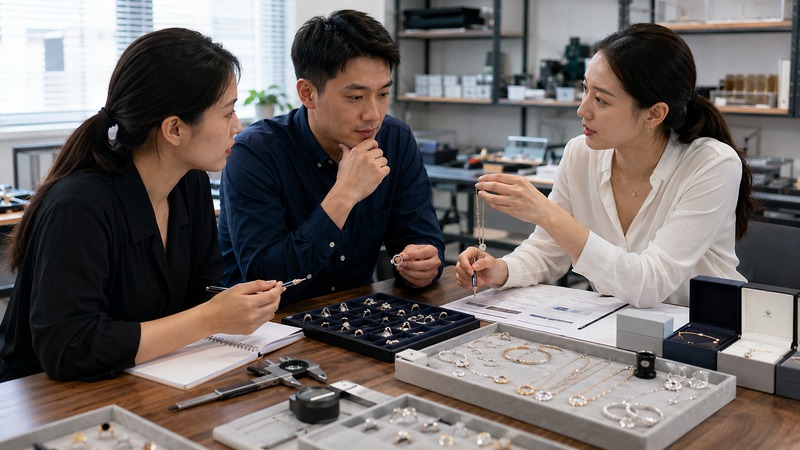
Then ask about quality control. Buyers should confirm how the factory checks stone setting, plating color, polishing, logo accuracy, packaging, and sample-to-bulk consistency before shipment.
Finally, ask about scaling. A low MOQ supplier should be able to support repeat production if the design sells well, because the real value of a trial order is creating a product that can become a stable selling SKU.
Common Mistakes When Choosing Low MOQ Suppliers
The most common mistake is choosing the supplier with the lowest MOQ without checking production ability. A low starting quantity is useful only if the factory can still deliver stable quality, clear communication, and repeatable production.
Another mistake is comparing only unit price. Two suppliers may quote very different prices because they are using different materials, different plating thickness, different stone grades, different packaging, or different QC standards.
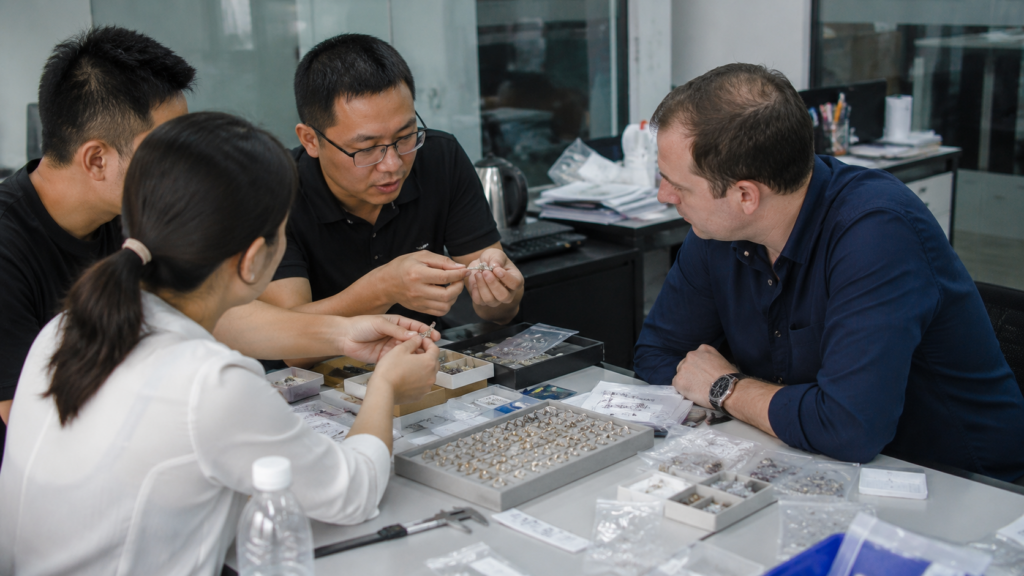
Some buyers skip samples to save time, but that can create bigger problems later. A sample helps confirm size, comfort, color, stone setting, logo position, clasp function, polishing, and packaging before the buyer commits to a larger order.
Ignoring reorder consistency is also risky. If the first batch looks different from the second batch, the buyer may face customer complaints, poor reviews, and unstable brand experience.
Best Buyer Types for Low MOQ Jewelry Manufacturing
Low MOQ manufacturing is especially useful for startup jewelry brands. These brands often need to test their first collection, build product photos, create social media content, and understand customer demand before buying large inventory.
Shopify sellers and boutique owners can also benefit from small-batch production. They can test different product pages, ad angles, price points, packaging styles, and seasonal designs before scaling the winning products.
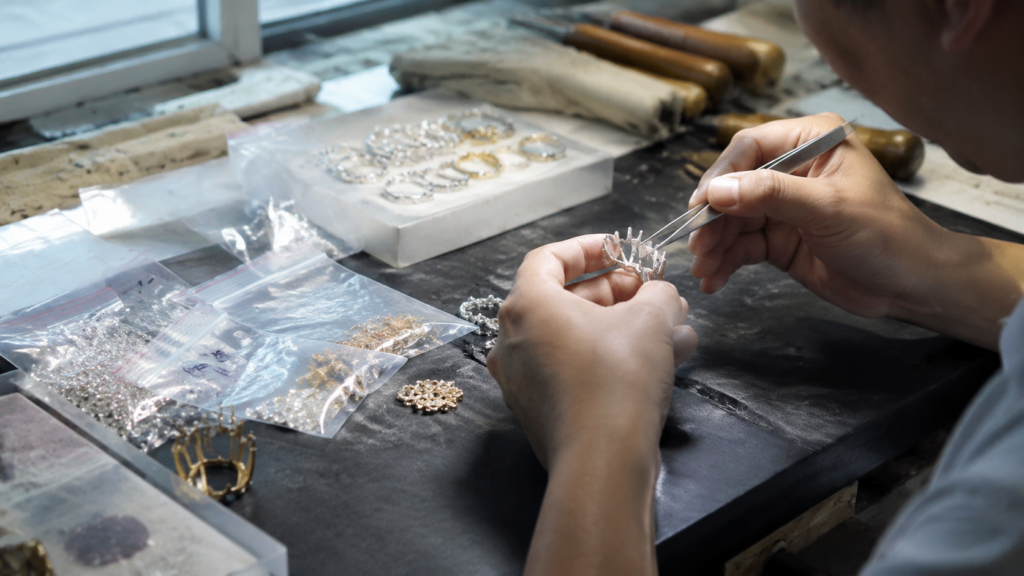
Wholesalers can use low MOQ to reduce risk when testing a new category. For example, a buyer who already sells silver rings may test moissanite pendants, tennis bracelets, or Cuban chains before adding them to a larger catalog.
Influencer brands and private label sellers often need low MOQ for limited drops. Custom logo pendants, name necklaces, photo pendants, and branded packaging can help create a stronger launch without requiring a huge first order.
When Should You Move from Low MOQ to Bulk Orders?
Low MOQ should be the starting point, not the final goal. Once a design has stable sales, positive customer feedback, low complaint rates, and clear reorder demand, the buyer can consider moving into larger production.
Bulk orders usually make more sense after the product details are already confirmed. The buyer should have approved the sample, confirmed packaging, checked customer feedback, tested pricing, and made sure the supplier can repeat the same quality.
Scaling too early can create inventory pressure. Scaling too late can also limit growth, so buyers should watch product views, add-to-cart rates, conversion rates, return reasons, and customer reviews before deciding the next order quantity.
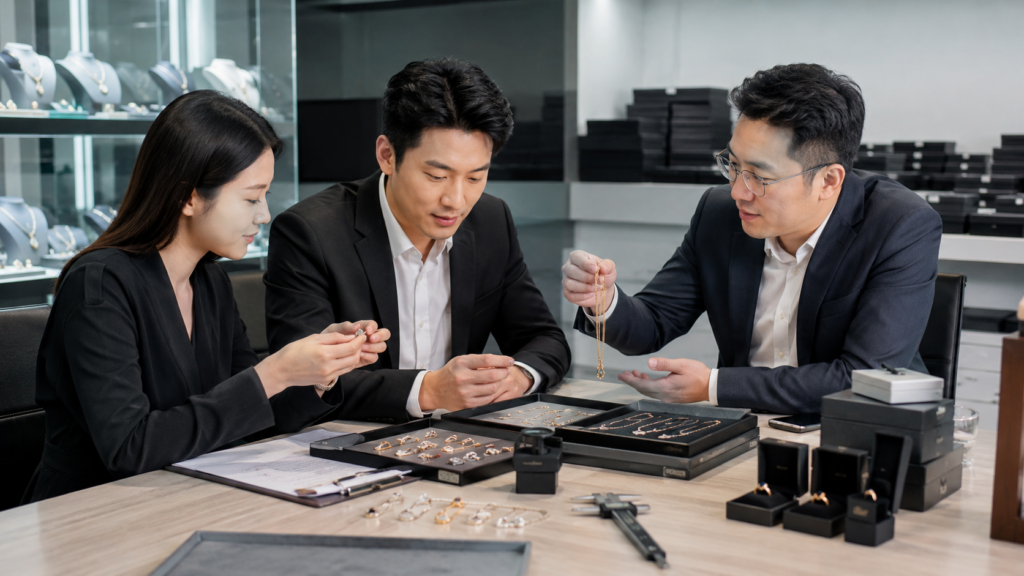
A good supplier can help buyers plan this transition. The factory should keep production records, sample standards, stone specifications, plating requirements, logo details, and packaging files so future reorders remain consistent.
Why Work with Missjeweler for Low MOQ Jewelry Orders?
Missjeweler supports B2B jewelry buyers who want to start with practical low MOQ trial orders before moving into repeat bulk production. With 12+ years of jewelry manufacturing experience, Missjeweler works with small brands, wholesalers, online sellers, and private label buyers who need flexible custom jewelry support.
Missjeweler can help buyers develop moissanite jewelry, 925 silver jewelry, hip hop jewelry, custom logo jewelry, rings, earrings, pendants, tennis bracelets, tennis chains, Cuban chains, and packaging solutions. This makes it easier for buyers to test different product categories without managing too many suppliers at the same time.
The process focuses on clarity before production. Buyers can confirm CAD design, sample details, material choice, stone selection, stone matching, plating color, packaging requirements, and final specifications before moving into trial production or bulk orders.

Missjeweler also pays attention to sample-to-bulk consistency. For B2B buyers, this is important because a good sample is not enough; the reorder must match the approved standard so the brand can build repeat sales with more confidence.
For growing brands, Missjeweler’s value is not only low MOQ but also reliable production support. Clear communication, sample approval, plating control, setting inspection, packaging confirmation, and final QC help buyers reduce avoidable mistakes before shipment.
Conclusion
Low MOQ jewelry manufacturing is a smart way for small brands, online sellers, wholesalers, and private label buyers to test new designs without taking heavy inventory risk. The best supplier should offer more than a small order quantity; it should provide clear materials, stable samples, controlled plating, secure setting, packaging support, and reliable QC.
Test Your Jewelry Designs Before You Scale
Send your design idea, product photo, logo file, or target material to Missjeweler, and our team will help you confirm low MOQ options, CAD details, sample cost, packaging choices, and a clear quote for your first trial order.
FAQ
What is a low MOQ jewelry manufacturer?
A low MOQ jewelry manufacturer allows buyers to order smaller quantities before committing to large bulk production. This is useful for startups, Shopify sellers, boutiques, and wholesalers testing new designs.
Is low MOQ jewelry more expensive per piece?
Yes, low MOQ orders usually have a higher unit cost because setup, labor, CAD, mold, plating, and QC costs are spread across fewer pieces. However, they reduce inventory risk for new products.
What jewelry products are best for low MOQ orders?
Rings, earrings, pendants, 925 silver jewelry, moissanite jewelry, and custom logo pieces are often suitable for low MOQ trial orders. Complex tennis chains, Cuban chains, and K gold jewelry may need more planning.
Can I customize jewelry with a low MOQ?
Yes, many factories support custom jewelry with low MOQ, including CAD design, logo engraving, stone selection, plating color, and private label packaging. New molds or complex designs may require extra fees.
Does Missjeweler support low MOQ custom jewelry?
Yes, Missjeweler supports low MOQ trial orders for B2B buyers. The service includes custom moissanite jewelry, 925 silver jewelry, hip hop jewelry, logo jewelry, packaging customization, sample confirmation, and final QC.