
Introduction
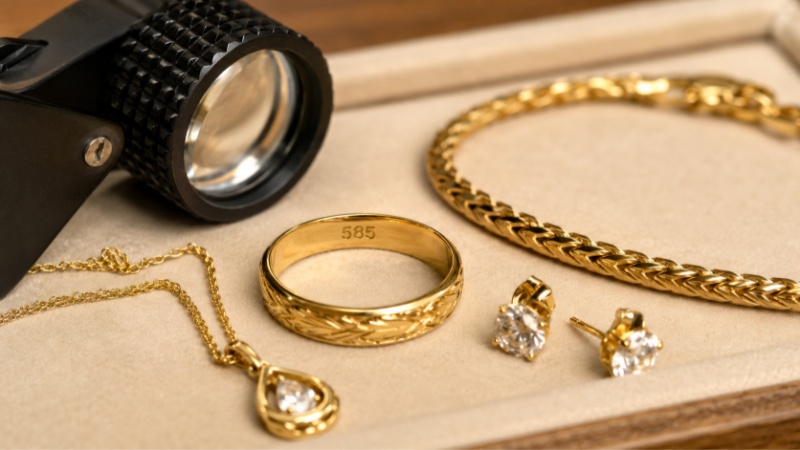
Many buyers see a 585 stamp on rings, necklaces, bracelets, earrings, or pendants and want to know whether it means real gold. In most cases, 585 means the jewelry contains 58.5% pure gold, which is commonly known as 14K gold. For jewelry brands, wholesalers, and retailers, this mark affects product value, pricing, material claims, and customer trust. This guide explains what 585 means on jewelry, how to verify it, and what B2B buyers should confirm before placing a wholesale or custom order.
What Does 585 Mean on Jewelry?
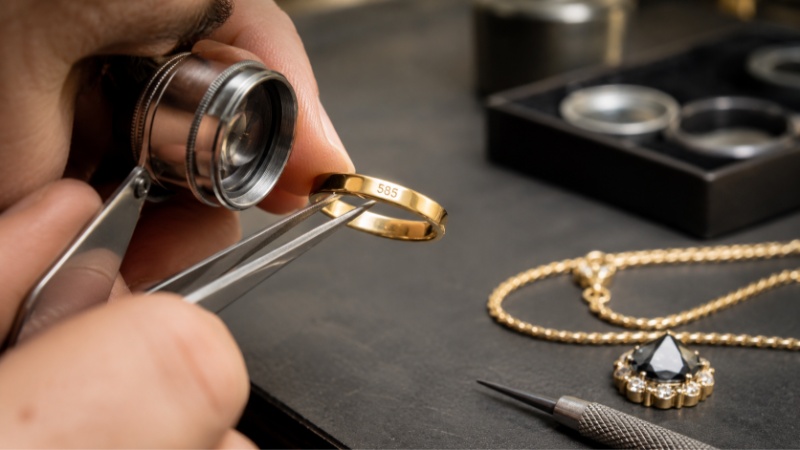
585 means the jewelry contains 58.5% pure gold. The remaining 41.5% is usually made of other metals such as silver, copper, zinc, palladium, or nickel, depending on the color and production requirements.
These additional metals are not automatically a bad thing. Pure 24K gold is soft, so alloy metals are added to improve hardness, durability, color stability, and workability for daily jewelry.
| Mark | Gold Purity | Common Name |
|---|---|---|
| 375 | 37.5% gold | 9K gold |
| 585 | 58.5% gold | 14K gold |
| 750 | 75% gold | 18K gold |
| 916 | 91.6% gold | 22K gold |
For B2B buyers, the 585 mark should connect with a clear material specification. A product page or quotation should not only say “gold jewelry”; it should explain whether the item is 585 gold, 14K gold, gold plated, or another gold-finished product.
Is 585 Gold Real Gold?
Yes, 585 gold is real gold, but it is not pure gold. It is a gold alloy made with 58.5% gold and 41.5% other metals, which makes it different from both pure gold and gold-plated jewelry.
This alloy structure makes 585 gold practical for many jewelry categories. Rings, chains, pendants, bracelets, earrings, wedding bands, and bridal jewelry often need better hardness than pure 24K gold can provide.
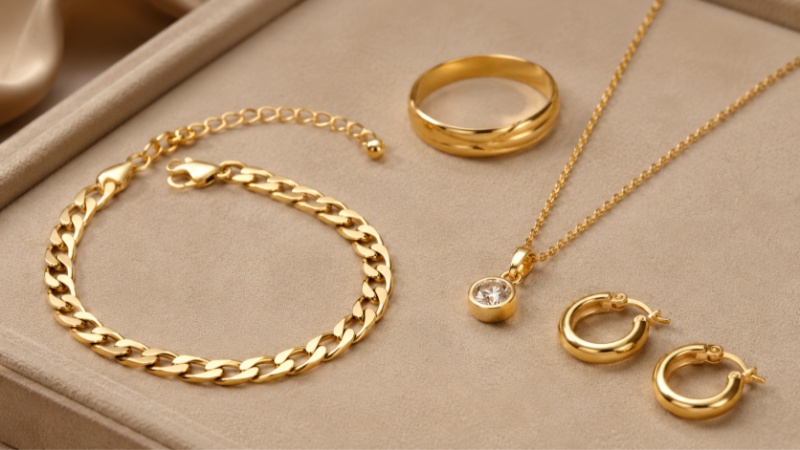
For brands, 585 gold can support a strong middle-to-premium price position. It contains real gold value while usually being more affordable than 18K gold, which helps brands serve customers who want quality without the highest gold price.
Is 585 the Same as 14K Gold?
585 and 14K usually refer to the same gold purity level. 14K gold means 14 parts gold out of 24 parts total metal content, which equals about 58.3% gold.
Because 58.3% is very close to 58.5%, 14K gold is commonly marked as 585. Some markets prefer karat marks such as 14K, while others use numeric fineness marks such as 585, 750, or 916.
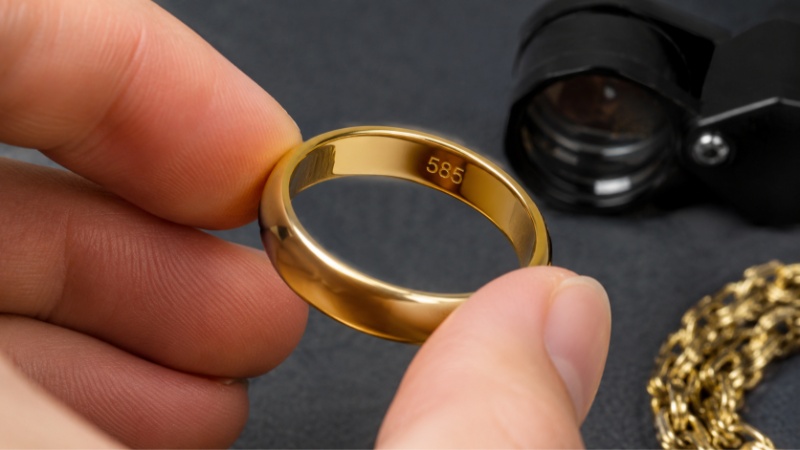
For wholesale communication, buyers should confirm both terms clearly. A supplier may use “14K,” “585 gold,” or “14K solid gold,” but the buyer should still request written confirmation of material, color, weight, and finish.
Why Do Jewelry Makers Use 585 Gold?
Jewelry makers use 585 gold because it balances gold value, durability, and price. It costs less than 18K gold but contains more gold than 9K or 10K gold, making it suitable for many commercial jewelry collections.
This balance is especially useful for growing jewelry brands. A brand can offer real gold jewelry with a more accessible retail price, while still maintaining stronger material value than ordinary plated products.
585 gold is also flexible for different designs. It can be used for classic chains, engagement rings, wedding bands, earrings, pendants, gemstone jewelry, personalized name jewelry, and custom logo pieces.
For production, 585 gold also has practical advantages. Compared with higher-purity gold, it can be easier to shape, polish, set with stones, and produce consistently in repeat orders.
What Colors Can 585 Gold Have?
585 gold can come in different colors depending on the alloy mixture. The gold content remains the same, but the added metals influence whether the final appearance is yellow gold, white gold, or rose gold.
| 585 Gold Color | Common Alloy Direction | Common Use |
|---|---|---|
| Yellow gold | Gold, silver, copper | Classic rings, chains, pendants |
| White gold | Gold, white metals, rhodium plating | Bridal jewelry, modern designs |
| Rose gold | Gold, copper | Fashion jewelry, romantic collections |
Different colors do not mean different authenticity. A yellow 585 gold ring and a rose 585 gold ring can both contain 58.5% gold if the alloy composition is correct.
White gold requires extra attention in B2B orders. Many white gold products use rhodium plating for a brighter white finish, so buyers should confirm whether rhodium plating is included and whether future re-plating may be needed.
Is 585 Gold Valuable?
Yes, 585 gold has value because it contains real gold throughout the alloy. However, the final value depends on gold weight, gold market price, craftsmanship, design, gemstones, brand positioning, and product condition.
Gold price changes can directly affect quotation. B2B buyers who purchase real gold jewelry should understand that pricing may change with the live gold market, so quotation validity and production timing should be confirmed clearly.
For market reference, buyers can follow official gold price data from sources such as the LBMA precious metal prices. This does not replace supplier quotation, but it helps buyers understand why real gold jewelry pricing may move over time.
For jewelry brands, value is not only about purity. Clean polishing, accurate stone setting, stable color, proper weight control, reliable finishing, and consistent bulk quality all affect customer reviews and repeat sales.
How to Tell If 585 Gold Is Real
Buyers can use several methods to check 585 gold, but professional testing is the most reliable. A clear stamp is helpful, but it should not be the only proof when the order involves wholesale value or brand reputation.
Common checking methods include looking for marks such as 585, 14K, or 585 Italy. Buyers can also check whether the stamp is clear, consistent, and placed in a logical area of the jewelry.
A magnet test can be used as a basic screening method, but it cannot prove gold purity. Some non-gold metals are not magnetic, and some jewelry components may behave differently from the main body of the piece.
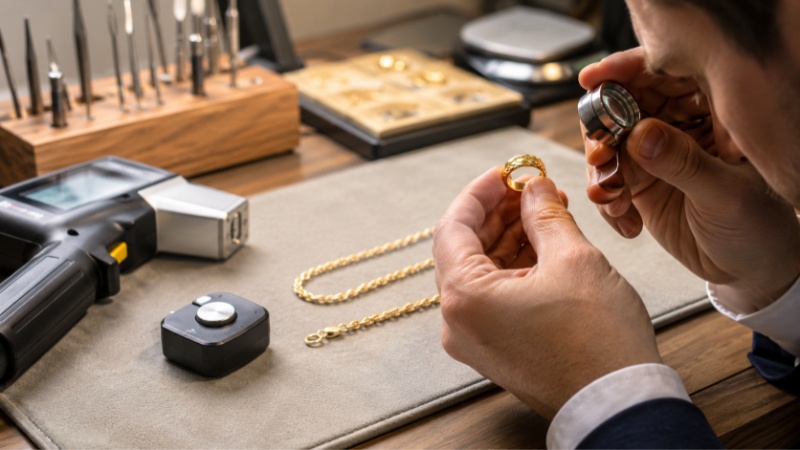
Professional methods are more useful for serious orders. Acid testing, electronic testing, and XRF testing can help verify material content more accurately than visual inspection alone.
Factory Insight: A 585 Stamp Is Not Enough
In real 585 / 14K gold jewelry production, we do not judge authenticity only by looking at the 585 stamp. A reliable production process should connect the finished product with raw material purchase records, production batch traceability, and finished product inspection.
When customers require additional verification, XRF testing can be used to check whether the metal composition matches the 585 gold standard. This helps confirm whether the product contains about 58.5% gold and whether the material claim is consistent with the order specification.
We have also seen buyers confuse 585 gold with 14K gold-plated jewelry. This is a serious sourcing mistake because 585 gold is a solid gold alloy, while 14K gold-plated jewelry only has a thin gold layer on the surface.
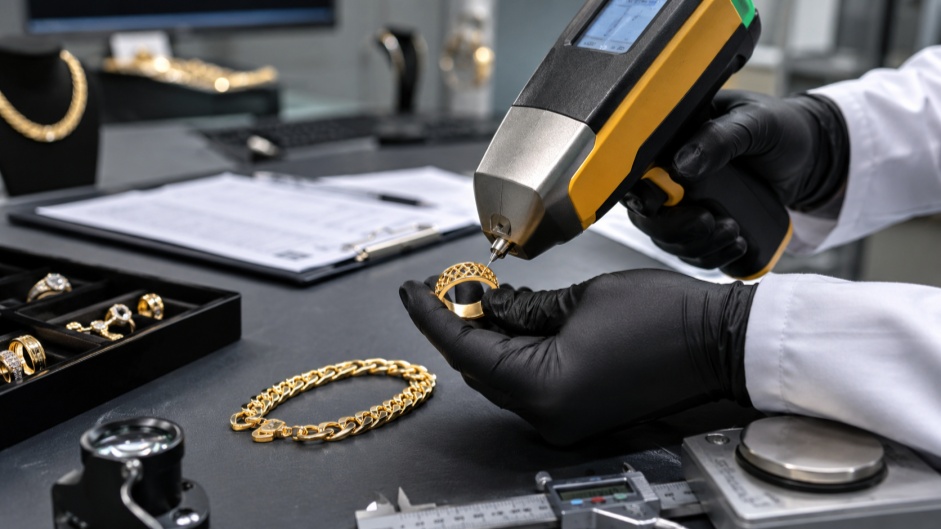
For B2B buyers, the safest approach is to combine stamp checking with documentation and testing when needed. This is especially important for custom designs, bulk orders, private-label collections, and products sold with real gold claims.
585 Gold vs Gold-Plated Jewelry
585 gold and gold-plated jewelry are very different products. 585 gold contains gold throughout the metal alloy, while gold-plated jewelry only has a thin layer of gold on the surface of another base metal.
| Type | Meaning | Main Difference |
|---|---|---|
| 585 gold | 58.5% gold alloy | Gold exists throughout the metal |
| Gold-plated jewelry | Thin gold layer over base metal | Gold only exists on the surface |
| Gold vermeil | Gold layer over sterling silver | Not solid 585 gold |
A 585 stamp should not be used for ordinary gold-plated jewelry. Incorrect marking can mislead customers, damage brand trust, and create compliance risks in some markets.
Buyers should also understand the difference between material and finish. A product may look gold on the outside, but its real value depends on whether the gold exists throughout the metal or only on the surface.
For product descriptions, accuracy matters. Official guidance such as the FTC Jewelry Guides can help brands understand why jewelry material claims should be clear and not misleading.
What B2B Buyers Should Confirm
Before placing a wholesale or custom order, buyers should confirm clear product specifications. This is more important for real gold jewelry than for ordinary fashion jewelry because material weight and gold price directly affect cost.
Important details include whether the product is real 585 / 14K gold. Buyers should also confirm gold weight, gold color, alloy direction, gemstone type, stone size, stone setting method, polishing standard, stamp requirements, and testing documents.
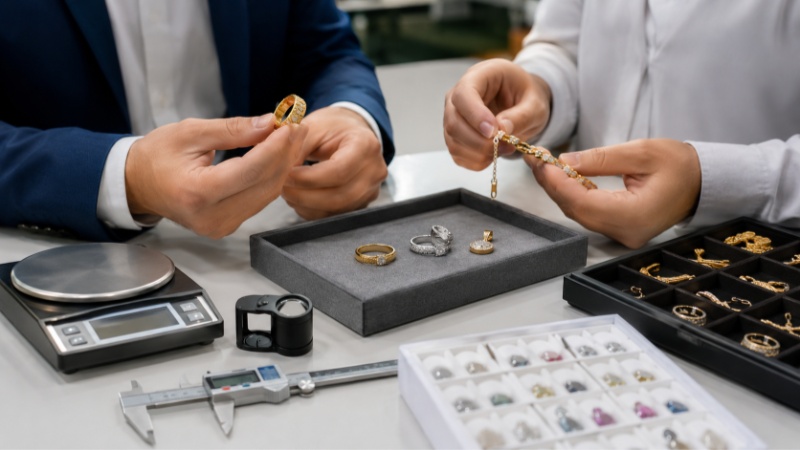
White gold requires extra confirmation. If the product needs rhodium plating, the buyer should confirm plating color, surface finish, expected appearance, and whether the plating process is included in the quotation.
A reliable supplier should confirm material, weight, stone details, finishing, stamping, MOQ, sample process, production timeline, and bulk quality control standard before production. Clear written specifications help both sides avoid misunderstanding.
Buyer Insight: Gold Weight Can Change Real Cost
One detail many buyers overlook is gold weight. For the same jewelry style, different factories may use different internal structures, and the final gold weight can vary by 10% to 30%.
This difference directly affects quotation, production cost, and retail pricing. Two 585 gold rings may look similar in photos, but their actual weight can be very different because of thickness, hollow structure, ring width, stone setting, or CAD design.
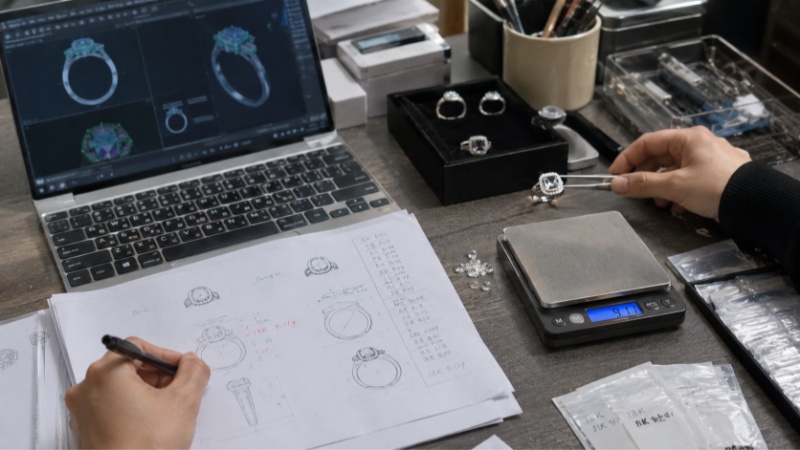
If the buyer only confirms the style but not the estimated gram weight, the final price may become higher than expected. This can also create problems when the brand sets retail prices before the sample and weight are confirmed.
To reduce this risk, Missjeweler usually recommends confirming the CAD drawing, estimated gold weight, gemstone specifications, gold color, and stamp requirements during the sample stage. Once the sample is approved, these details should become the reference standard for bulk production.
Common Mistakes When Buying 585 Jewelry
Many sourcing problems happen because buyers only focus on the 585 mark. The mark is important, but it does not replace material confirmation, weight control, sample approval, or quality inspection.
One common mistake is assuming every 585 stamp is automatically genuine. A stamp can be copied or misused, so buyers should work with suppliers who can provide traceability, documentation, and testing support when needed.
Another mistake is confusing 585 gold with gold-plated jewelry. These products may look similar in photos, but they are very different in material value, durability, pricing, and customer expectation.
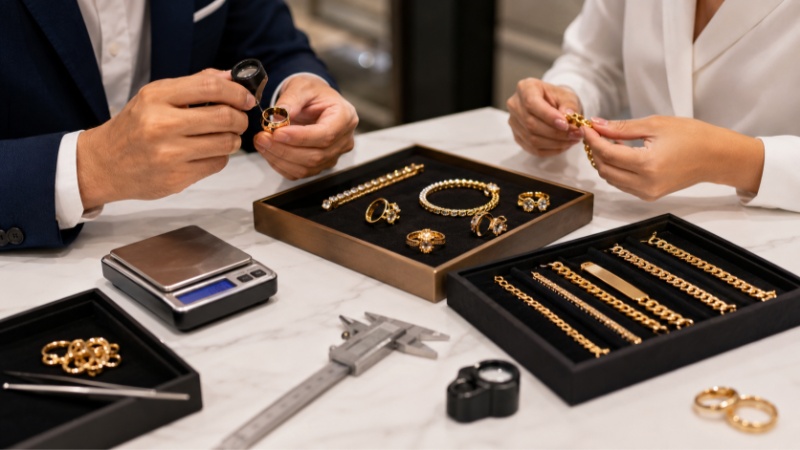
Ignoring product weight is also risky. Since gold is priced by material value, even small gram differences can affect total cost when the order quantity is high.
Buyers should also avoid approving bulk production without checking samples. A sample should confirm design proportion, estimated weight, stone setting, surface finish, stamp position, and overall quality before mass production starts.
Quality Control for 585 Gold Orders
Quality control for 585 gold jewelry should begin before production, not only before shipment. Buyers and suppliers should confirm the CAD file, material specification, stone details, finishing requirement, and stamp placement before the sample is made.
During production, the supplier should control both material and workmanship. Important areas include casting quality, soldering, polishing, stone setting security, surface finish, color consistency, and final appearance.
Finished product inspection should check more than whether the item looks beautiful. It should include quantity, weight, dimensions, stone setting, surface defects, stamp accuracy, packaging, and order consistency.
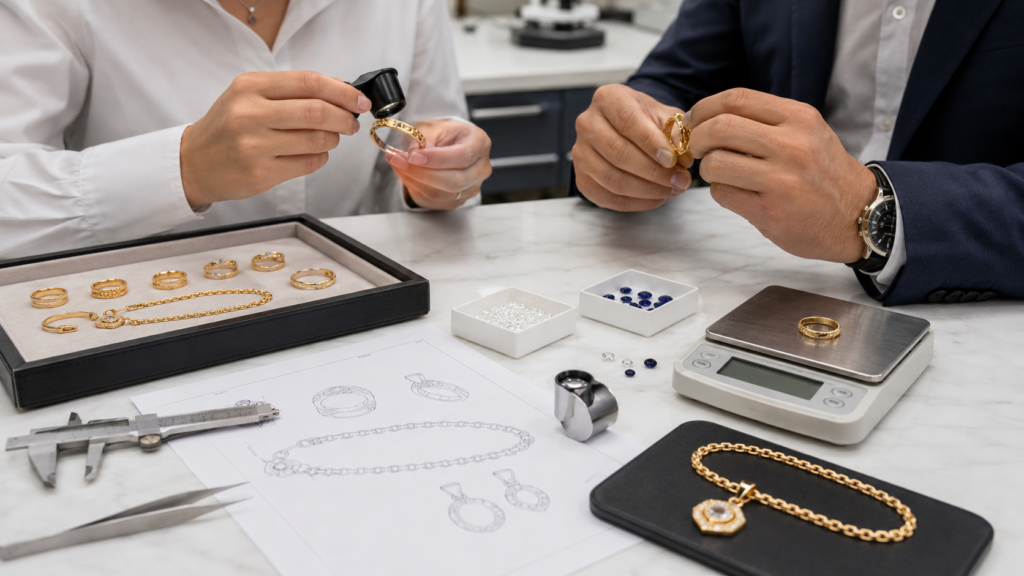
For brands building long-term collections, repeatability matters. If the approved sample is not recorded clearly, the second or third order may become inconsistent in weight, color, thickness, or finishing.
Why Documentation Matters for Brands
Documentation protects both the buyer and the supplier. A written specification makes it easier to confirm what was ordered, what was approved, and what should be repeated in bulk production.
For 585 gold jewelry, useful documents may include quotation details, CAD files, material records, sample approval notes, testing documents, production photos, and final inspection records. These records help reduce disputes and improve restocking efficiency.
Brands that sell into regulated markets should also pay attention to material claims and restricted substances. For example, the ECHA REACH framework is relevant for understanding chemical safety responsibilities in the European market.
A strong quality system can also support better order control. Standards such as ISO 9001 quality management are useful references for process control, documentation, consistency, and continuous improvement.
How Missjeweler Supports Jewelry Brands
Missjeweler supports growing jewelry brands with OEM/ODM jewelry manufacturing and clear production communication. For 585 gold or gold-finished jewelry, the goal is not only to make the product look good, but also to make the material, weight, and quality standard clear before production.
Our process can include CAD confirmation, sample development, material selection, stone setting, polishing, plating, quality control, and bulk production support. This helps brands reduce uncertainty when developing new jewelry collections.
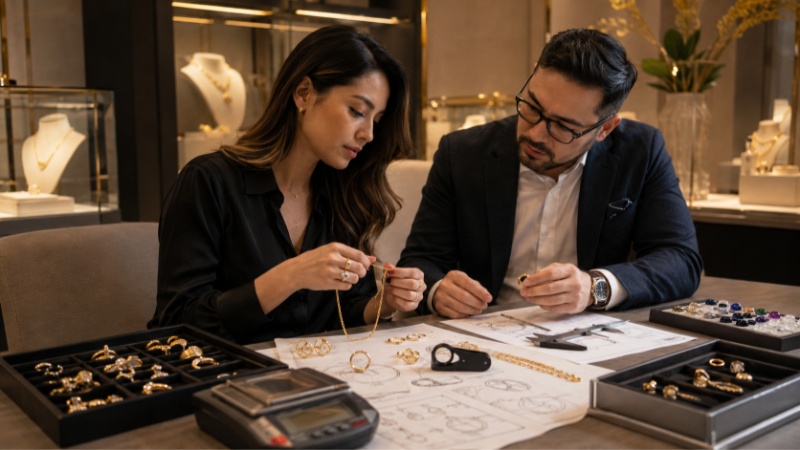
For real gold orders, we pay special attention to material confirmation and gold weight communication. These two details directly affect quotation accuracy, product value, and customer trust.
For repeat orders, we also recommend keeping approved samples and written specifications as production references. This helps improve consistency when a brand restocks popular rings, pendants, chains, earrings, or custom jewelry designs.
FAQ
What does 585 mean on jewelry?
585 means the jewelry contains 58.5% pure gold. It is commonly known as 14K gold and is used for rings, chains, pendants, earrings, bracelets, and many other jewelry products.
Is 585 gold real gold?
Yes, 585 gold is real gold, but it is not pure gold. It is a gold alloy made with 58.5% gold and 41.5% other metals to improve hardness, color, durability, and workability.
Is 585 the same as 14K gold?
Yes, 585 and 14K usually refer to the same gold purity level. 14K means 14 parts gold out of 24 parts total metal content, which is commonly represented by the 585 mark.
Is 585 gold better than 750 gold?
Not always, because the better choice depends on product positioning and customer needs. 750 gold contains more gold, while 585 gold is usually harder, more affordable
What should B2B buyers confirm before ordering 585 jewelry?
B2B buyers should confirm material, gold weight, gold color, CAD design, gemstone specifications, stamp requirements, sample approval, testing needs, and bulk QC standards.
Conclusion
585 means 14K gold with 58.5% pure gold content. For B2B jewelry buyers, understanding this mark helps confirm product value, material claims, and supplier reliability before placing a wholesale or custom order.
Start Your 585 Gold Jewelry Order with Confidence
Looking for reliable 585 gold or custom jewelry production? Missjeweler helps growing brands confirm materials, CAD samples, gold weight, quality standards, and bulk production details before manufacturing starts.