
Introduction
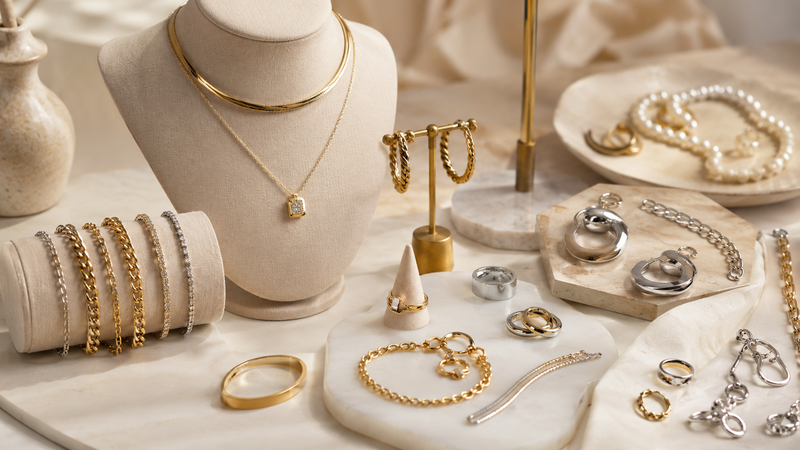
The strongest jewelry trends for 2026 include personalized designs, sculptural silver, mixed metals, colored stones, moissanite, layered necklaces, ear stacks, stackable rings, and men’s jewelry. For brands and retailers, however, a popular style is not always suitable for bulk buying.
The best products should match a clear target customer, remain manageable at the required MOQ, and support reliable repeat orders. This guide explains which trends deserve testing, what production risks to consider, and how to scale successful designs with less inventory pressure.
What Jewelry Trends Will Define 2026?
Jewelry in 2026 is moving toward stronger personal expression without abandoning practical everyday wear. Consumers can combine initials, birthstones, symbolic pendants, mixed-metal pieces, layered chains, small earrings, stackable rings, and statement bracelets in ways that feel individual rather than fixed.
At the same time, visual impact remains important. Sculptural silver, expressive gemstone colors, tennis jewelry, low-profile bridal settings, and heavier men’s chains provide products that photograph clearly and work well in short-form video, product pages, and retail displays.
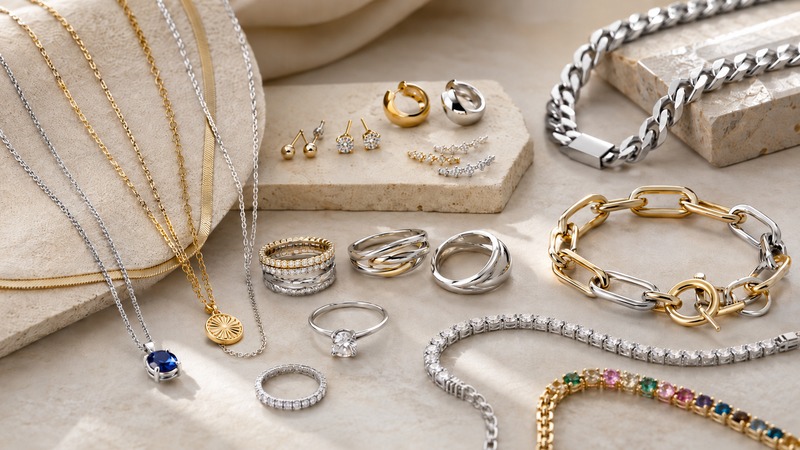
For B2B buyers, the strongest opportunities are not necessarily the most unusual designs. Products with flexible styling, controlled specifications, clear price positioning, and reliable reorder potential are generally safer than styles that depend on excessive sizes, colors, stones, or custom components.
How This Guide Evaluates Trend Potential
A useful trend review should combine customer interest with manufacturing reality. This article evaluates each category using five commercial factors:
- Target-customer clarity
- Product and price flexibility
- Production complexity
- Inventory and SKU exposure
- Repeat-order potential
Signals may include search behavior, retailer launches, social-platform styling, trade media, customer inquiries, sample requests, and recurring production questions. These signals should not be treated as guaranteed sales forecasts. They become useful only when matched with a brand’s customer profile, price range, product category, and sales data.
The risk ratings below are qualitative. They reflect factors such as material variation, stone matching, plating steps, size combinations, custom tooling, sample-to-bulk consistency, and the difficulty of reproducing an approved design.
For material disclosure and quality decisions, buyers can review the FTC Jewelry Guides, GIA gem education resources, ISO 9001 quality-management guidance, and relevant ECHA chemicals guidance.
Compare the Top Jewelry Trends for 2026
| Trend | Best Products | Recommended Buying Approach | Production Risk | Inventory Risk |
|---|---|---|---|---|
| Personalized Jewelry | Necklaces, rings, bracelets | Made to order or limited options | Medium | Low¨CMedium |
| Sculptural Silver | Rings, earrings, cuffs | Small coordinated collection | Medium | Medium |
| Mixed Metals | Rings, hoops, chains | Extend proven bestsellers | Medium | Low |
| Colored Gemstones | Rings, studs, pendants | Test limited color families | Medium | Medium¨CHigh |
| Moissanite Jewelry | Rings, studs, tennis jewelry | Core styles plus sampled trends | Medium¨CHigh | Low¨CMedium |
| Layered Necklaces | Chains, pendants, sets | Modular product system | Medium | Medium |
| Ear Stacks | Studs, huggies, cuffs | Controlled bundles and sizes | Low¨CMedium | Medium |
| Bold Bracelets | Tennis, Cuban, cuffs | Limited lengths and finishes | Medium¨CHigh | Medium |
| Stackable Rings | Bands, bridal sets | CAD-led matched development | High | Medium |
| Men¡¯s Jewelry | Chains, rings, pendants | Limited width and length ladder | Medium | Medium |
Best Jewelry Trends for Brands and Retailers
Personalized and Symbolic Jewelry
Personalized jewelry remains commercially valuable because it connects a product to a person, date, place, relationship, or occasion. Initial pendants, name necklaces, birthstone rings, zodiac symbols, coordinates, family charms, photo pendants, and logo pieces can support birthdays, anniversaries, weddings, graduation, and seasonal gifting.
This category works especially well for DTC brands, gift retailers, influencer collections, and stores that can collect customer information through an organized ordering system. It also creates opportunities for product extensions because one base design can be adapted through different names, stones, symbols, or engraving placements.
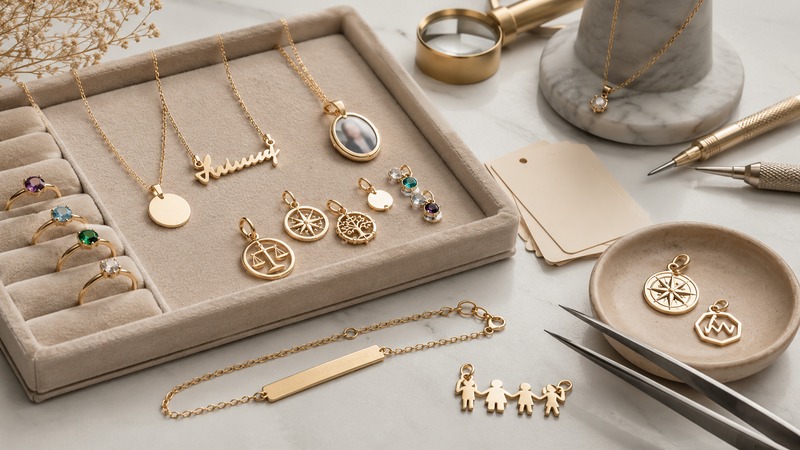
The main risks are operational rather than visual. Incorrect spelling, inconsistent fonts, wrong dimensions, unclear engraving depth, missing order information, and incorrect file preparation can lead to products that cannot be resold.
Brands should avoid stocking a large number of names, letters, or birthstone combinations in advance. A safer model uses standard fonts, approved size ranges, limited metal choices, clear order records, and made-to-order or low-MOQ production.
Sculptural Silver and Organic Forms
Sculptural silver can give design-led brands a recognizable identity without depending on high gemstone quantities. Molten surfaces, irregular rings, dome earrings, fluid pendants, wide cuffs, asymmetrical forms, and rounded organic shapes create strong visual impact from the metal itself.
925 sterling silver also supports several finishes. Mirror polishing can create a clean contemporary look, while matte, brushed, oxidized, hammered, or partially gold-plated surfaces can change the character of the same form.
Production decisions remain important. Fully solid pieces may become too heavy and expensive, while thin hollow pieces can dent or feel weak. Highly polished surfaces show scratches easily, wide cuffs need controlled flexibility, and irregular rings may produce inconsistent sizing or pressure points.
Instead of developing many unrelated statement products, brands can begin with one design language across two or three items. For example, the same rounded form could appear in a ring, pendant, and pair of earrings. A controlled family is easier to photograph, merchandise, sample, inspect, and reorder than a collection of disconnected shapes.
Mixed-Metal and Two-Tone Jewelry
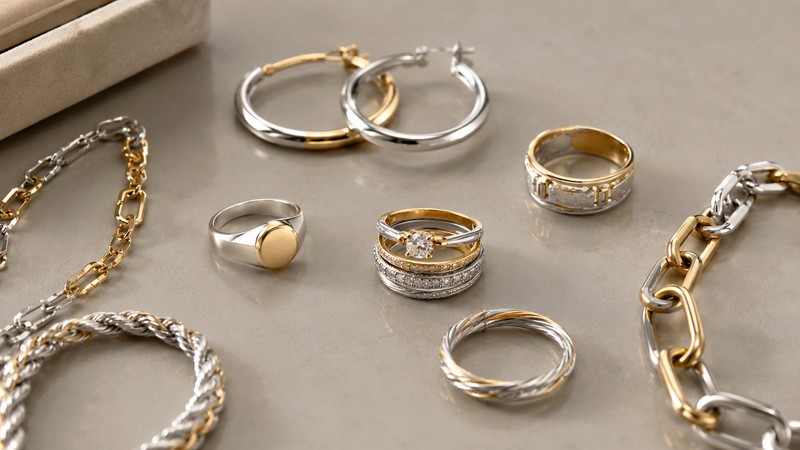
Mixed-metal jewelry allows customers to combine silver- and gold-tone wardrobes without choosing only one finish. Two-tone rings, mixed hoops, silver chains with gold accents, alternating chain links, white-and-yellow gold bridal settings, and partial-plated silver pieces can refresh familiar categories.
This trend can carry lower inventory risk when it is applied to an existing bestseller. A proven hoop, signet ring, chain, or band may only need a controlled two-tone update rather than a completely new structure.
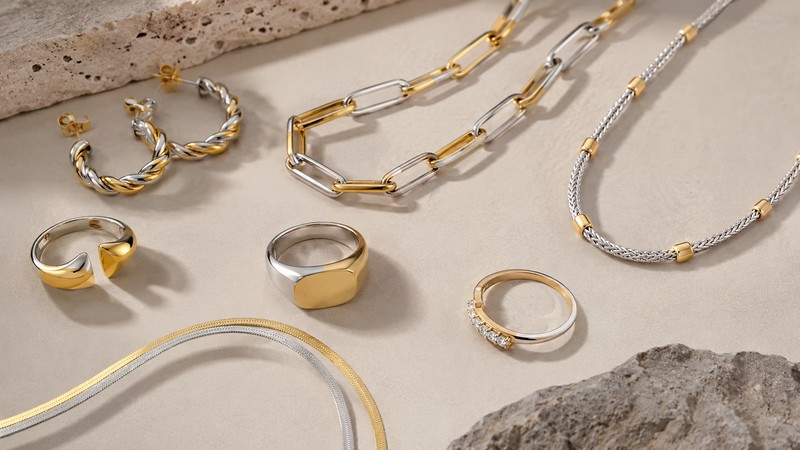
The main manufacturing risks include unclear plating boundaries, inconsistent gold tones, exposed welding points, uneven masking, color migration, and different wear rates between surfaces. Repairs and replating may also be more difficult when the separation line is complex.
Before approving production, buyers should define the base metal, plating method, plating thickness, masking area, color reference, polishing sequence, and acceptable boundary line. Mixed metals are strongest as a structured product extension, not simply as an extra finish added without technical planning.
Colored Gemstones and Expressive Color
Colored gemstones help brands create visual differentiation through relatively familiar product structures. Blue, green, pink, champagne, pastel, birthstone, rainbow, and contrasting-halo combinations can refresh studs, pendants, rings, tennis bracelets, and stacking bands.
This category is useful for boutique retailers, gift brands, seasonal collections, and stores that rely on strong product photography. Color can create a recognizable story without requiring a completely new silhouette.
Buyers still need to control natural variation, lab-created stone specifications, treatment disclosure, stone matching, replacement availability, and sample-to-bulk color differences. A single color name such as “green” or “pink” is rarely precise enough for production.
A safer first order uses two or three carefully selected colors rather than a complete twelve-color range. Buyers should approve physical stones or a controlled color range under consistent lighting and confirm how mixed-color products will be sorted.
Color should expand a proven product system, not create an unmanageable number of slow-moving SKUs.
Moissanite and Lab-Grown Diamond Jewelry
Moissanite and lab-grown diamond jewelry can serve bridal, gifting, accessible luxury, tennis jewelry, and men’s statement markets. Solitaires, hidden halo s, bezel pendants, studs, bridal sets, tennis bracelets, tennis chains, Cuban styles, and bold rings support several product and price levels.
These stones should not be treated as interchangeable. Moissanite and lab-grown diamonds have different identities, optical characteristics, pricing structures, grading practices, and disclosure requirements. Product pages, packaging, certificates, and sales communication should identify the stone accurately.
For sourcing, buyers should compare millimeter dimensions, cut consistency, color, clarity, matching, metal weight, stone count, setting construction, clasp structure, and finished-product performance. Comparing only carat weight or stone price can hide important differences in the final product.
Common failures include loose stones, thin prongs, uneven stone diameter, poorly aligned settings, flipping bracelets, weak safety locks, and inconsistent bulk quality. Review the Moissanite vs Lab-Grown Diamond guide before defining the product category.
A physical sample should be evaluated as a complete piece of jewelry, not only as a collection of loose stones and metal specifications.
Layered and Convertible Necklaces
Layered necklaces remain useful because they support multiple styling combinations and higher basket values. Adjustable chains, detachable pendants, mixed chain textures, charm connectors, removable drops, and necklace-to-bracelet formats can encourage customers to build a collection over time.
For brands, a modular system may be safer than stocking many fixed multi-layer sets. One base chain combined with several compatible pendants or connectors can provide visual variety while reducing duplicate inventory.
Production problems may include tangling, uneven chain weight, inconsistent extenders, weak clasps, pendant flipping, incorrect jump-ring sizes, and components that do not connect smoothly. Packaging must also prevent the layers from rubbing, twisting, or arriving tangled.
A product should be tested at its shortest and longest wearable lengths. Buyers should check the pendant balance, chain movement, connector strength, clasp accessibility, and how the piece sits during normal movement.
Related collection planning can be supported through a dedicated Necklace Trends 2026 guide.
Ear Stacks and Statement Earrings
Ear stacks create repeat-purchase potential because customers can combine small pieces rather than buying only one complete earring set. Huggies, studs, cuffs, climbers, mini hoops, mismatched pairs, and multi-piercing packs can cover entry-price products, bundles, and gifting.
The commercial advantage comes from compatibility. A collection with clear size progression, coordinated finishes, and related stone shapes can be mixed without requiring every customer to buy the same arrangement.
Quality control should focus on post strength, welding, hinge movement, clasp tension, stone security, surface smoothness, comfort, and the spacing between pieces. Heavy designs may pull forward, while weak hoops can open during wear.
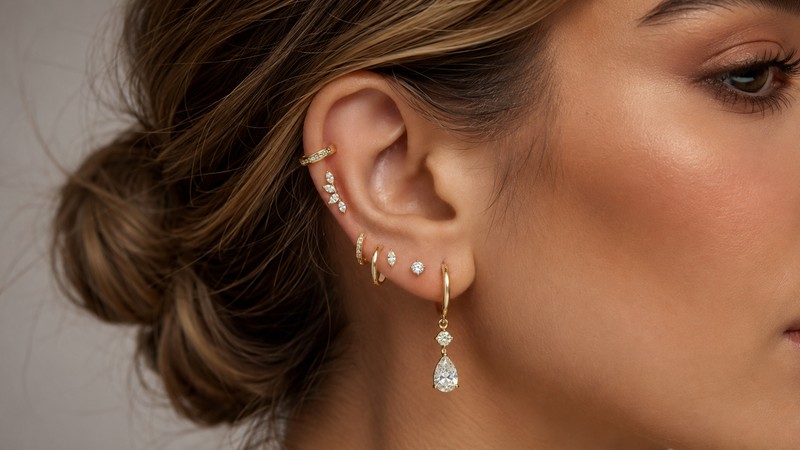
Brands should begin with one core metal color and a limited number of sizes. Additional stones, finishes, or shapes can be added after the first combinations demonstrate sales.
A successful ear-stack collection should feel flexible to the customer but controlled from an inventory perspective.
Bold Bracelets and Tennis Jewelry
Bold bracelets create clear visual impact in photography, product videos, unboxing content, and matching sets. Tennis bracelets, Cuban bracelets, wide cuffs, sculptural bangles, chunky chains, and mixed stacks can also support higher average order values.
Tennis jewelry may be suitable for core or repeat-order programs when the stone setting, clasp, movement, sizing, and finished weight remain consistent. Oversized cuffs and unusual chain structures are generally safer as controlled trend tests.
Buyers should verify length tolerances, clasp strength, safety locks, link movement, stone alignment, surface rubbing, plating wear, flipping, and comfort. Heavier pieces also require stronger packaging inserts and more attention to shipping movement.
The first order should avoid unnecessary length and finish combinations. A clear size ladder is easier to manage than many nearly identical options.
Bracelet performance depends on structure and movement, not only on how the product appears in a still image.
Stackable and Low-Profile Rings
Stackable and low-profile rings are valuable for bridal brands because they support repeat purchases across engagement, wedding, anniversary, and upgrade occasions. Curved bands, open rings, enhancers, east-west settings, bezels, and low-profile center settings can all become part of a coordinated ring system.
These designs require more technical planning than separate rings. Poor curvature can create large gaps, high settings may prevent natural stacking, and narrow contact points can increase abrasion between rings. Open rings also require careful control of sizing, thickness, and deformation.
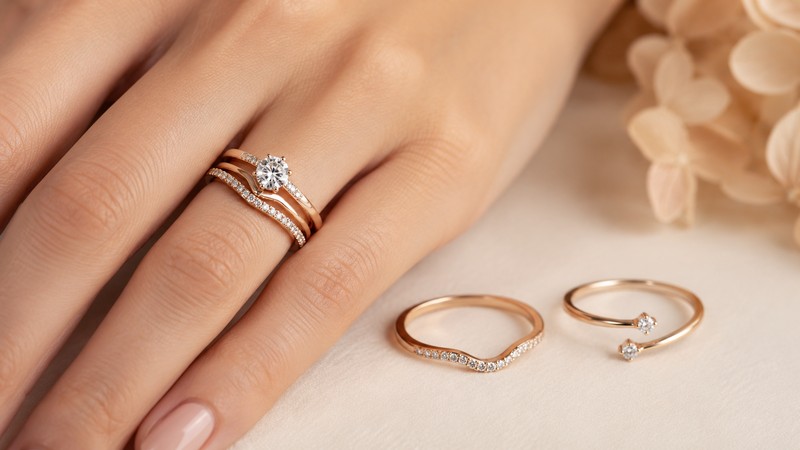
A reliable development process begins with one center ring and two companion bands. CAD should confirm the top view, side profile, stone clearance, shared contact areas, and finger comfort before a physical sample is produced.
The sample should then be tested as a complete stack. Buyers need to review movement, spacing, pressure, friction, visual alignment, and whether each ring can still be worn independently.
More design directions are covered in the 2026 Engagement Ring Trends guide.
Men’s and Gender-Neutral Jewelry
Men’s and gender-neutral jewelry gives brands room to develop clear product and price ladders. Cuban chains, tennis chains, signet rings, name pendants, photo pendants, studs, heavy bracelets, dog tags, and mixed-metal chains can be varied by width, length, material, stone size, and finish.
A limited width-and-length system is usually safer than a large size matrix. One chain design may be offered in two widths and two lengths before additional combinations are introduced.
Production risk increases with metal weight, clasp load, pendant-bail strength, stone support, link movement, and high-friction plating wear. Products that are made too light may reduce durability and perceived value, while unnecessarily heavy pieces can increase cost and shipping weight.
Buyers should confirm actual finished weight, chain dimensions, clasp construction, bail clearance, surface finish, and how the product moves during wear.
The strongest collections use clear proportions and dependable construction rather than relying only on oversized appearance.
Which Trends Should Brands Actually Stock?
A 60–25–15 assortment model can help brands balance stable sales with trend exposure:
- 60% proven core products: studs, simple pendants, basic chains, solitaires, tennis bracelets, and stackable bands
- 25% adaptable trend products: mixed metals, sculptural silver, layered necklaces, colored stones, and coordinated ear stacks
- 15% experimental products: oversized cuffs, unusual color combinations, complex convertible pieces, or highly customized designs
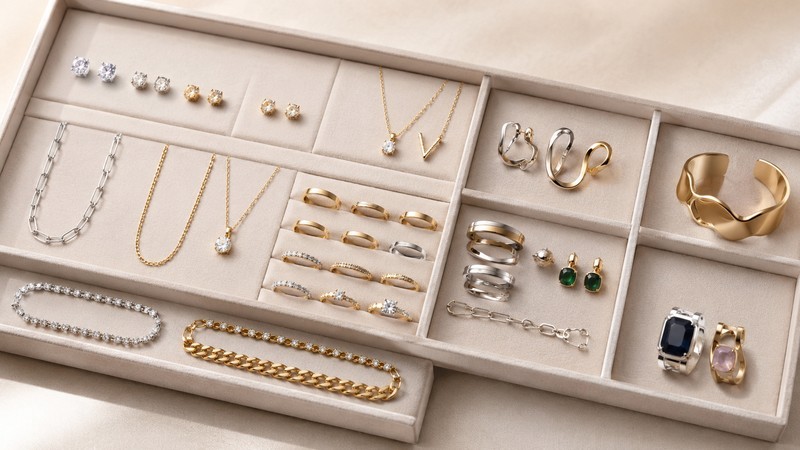
This is not a fixed rule for every business. A bridal brand may hold more ring inventory, while a personalized gift business may rely heavily on made-to-order production. The value of the framework is that it prevents every visible trend from being treated as a core-stock requirement.
Each new product should have a defined buyer, target retail price, expected landed cost, SKU limit, MOQ plan, and reorder trigger. A design should not move into the core assortment only because it performed well in social content.
Core stock should be supported by repeat sales, acceptable returns, stable quality, and reliable replenishment.
Match Each Trend to Your Buyer
| Buyer Type | Recommended Trends | Commercial Reason |
|---|---|---|
| New Jewelry Brand | Personalized pieces, studs, simple moissanite | Easier low-SKU testing |
| Shopify Store | Layered necklaces, ear stacks, stackable rings | Strong visual content and bundles |
| Boutique Retailer | Colored stones, sculptural silver | Clear in-store differentiation |
| Bridal Brand | Moissanite, lab-grown diamonds, bridal stacks | Higher value and repeat purchases |
| Men¡¯s Brand | Cuban chains, signet rings, tennis jewelry | Clear width and price ladders |
| Gift Brand | Birthstones, initials, engraving | Occasion-based demand |
| Wholesale Buyer | Chains, studs, tennis bracelets | Easier repeat ordering |
Brands should also consider how customers discover and compare products. A style that works well in a boutique display may require different packaging, imagery, and price communication when sold through an online marketplace.
The best trend is therefore not universal. It is the trend that fits the buyer, selling channel, price band, and product-development capability of the brand.
What Makes Trend Jewelry Cost More?
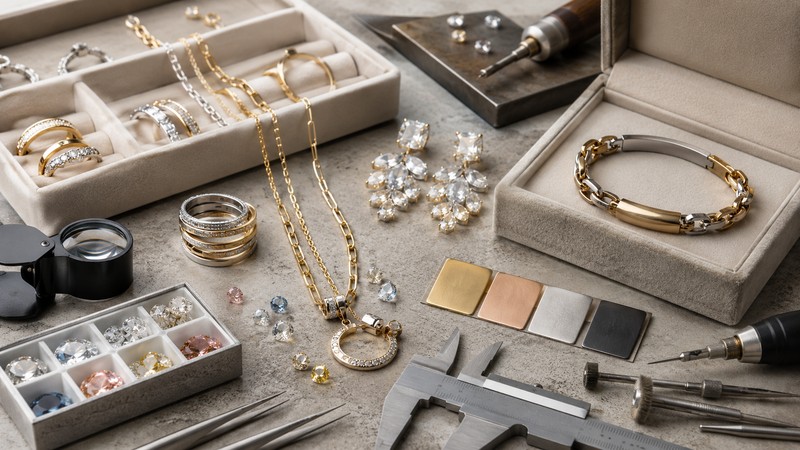
Trend jewelry costs more when the design adds material, labor, setup, inspection, or production uncertainty. Important cost drivers include:
- Metal weight and wall thickness
- Stone quantity and matching requirements
- CAD revisions and new molds
- Hand setting and polishing complexity
- Multiple plating colors
- Custom-cut stones
- Engraving and personalization
- Movable or detachable components
- Special clasps or safety locks
- Custom packaging and inserts
- Additional inspection points
Hidden costs can also appear after quotation. Repeated sample revisions, rejected color matching, packaging changes, repair rates, excess SKU inventory, and inconsistent reorders may cost more than a slightly higher initial unit price.
A low quotation may reflect lighter construction, thinner plating, fewer quality checks, weaker components, or different stone specifications. Buyers should compare quotations only after the suppliers are pricing the same product requirements.
The lowest unit price is not automatically the lowest-risk buying decision.
Test Trends Before Bulk Orders
A controlled product-development process turns trend inspiration into a measurable purchase decision.
Define the Commercial Target
Identify the buyer, selling channel, expected retail price, launch date, product role, and acceptable first-order exposure. A product intended as a low-price add-on should not carry the same development cost as a premium bridal piece.
Limit the First Test
Select one or two representative designs rather than developing a complete collection at once. Limit the metal, stone, finish, size, and packaging combinations so the result remains easy to evaluate.
Review CAD and Specifications
Confirm dimensions, metal thickness, stone sizes, setting structure, clasp type, engraving position, plating color, and expected finished weight. CAD should be supported by a written specification instead of serving as the only approval record.
Approve Physical Samples
A physical sample should be checked for comfort, weight, finish, stone security, clasp strength, movement, color, packaging fit, and overall perceived value. It should also be photographed and documented as the production reference.
Place a Controlled Trial Order
The first order should be large enough to test demand but small enough to limit slow-inventory risk. Review the Low MOQ Jewelry Manufacturer guide when planning trial quantities and supplier requirements.
Measure the Result

Track product-page clicks, saves, add-to-cart activity, conversion, return reasons, customer feedback, content performance, and reorder requests. Expand only after the product proves both demand and production consistency.
A trend is ready to scale when it passes six questions:
- Does it fit a clearly defined buyer?
- Can the retail price support the landed cost?
- Can the first MOQ remain manageable?
- Has the physical sample passed inspection?
- Can the supplier reproduce the approved specification?
- Is the SKU structure simple enough to reorder?
Avoid These Bulk Buying Mistakes
Copying Viral Designs Too Closely
A viral product may create attention but also introduce design-right, differentiation, and short-lifecycle risks. Brands should extract useful elements such as proportion, texture, color, or styling direction rather than reproduce a recognizable design too literally.
Ordering Too Many SKUs
Launching one product in several sizes, metals, stones, finishes, and lengths can create more inventory than the sales data can support. A limited first assortment produces clearer results and simpler replenishment.
Approving Only CAD Renderings
CAD can confirm structure and dimensions, but it cannot fully show weight, polish, plating color, clasp feel, comfort, flexibility, or real stone appearance. Physical samples remain necessary for final approval.
Comparing Only Unit Prices
Suppliers may be quoting different metal weights, stone grades, plating specifications, components, inspection levels, or packaging methods. Quotations should be compared line by line against a common specification.
Ignoring Packaging Performance
A product can pass visual inspection and still arrive tangled, scratched, bent, or displaced. Packaging should match the jewelry’s weight, shape, finish, clasp position, stone height, and shipping method.
Scaling Before Reorder Demand Appears
Early clicks or social engagement do not always translate into repeat sales. Brands should review conversion, returns, customer feedback, and replenishment performance before treating a trend product as permanent core inventory.
How Missjeweler Develops Trend-Led Jewelry
Missjeweler supports jewelry brands, retailers, wholesalers, Shopify sellers, and cross-border businesses with B2B product development. Depending on the project, support can include OEM and ODM development, CAD, physical samples, low-MOQ trials, moissanite selection, 925 sterling silver, stainless steel, K-gold jewelry, custom settings, personalized products, packaging, process inspection, final QC, and repeat-order records.
The development process begins by clarifying the target product rather than quoting from an image alone. Material, stone type, dimensions, weight expectations, finish, plating color, size range, quantity, packaging, and destination market can all affect feasibility and cost.
For personalized jewelry, the team can confirm fonts, dimensions, engraving depth, file formats, and order information. Mixed-metal projects require clear plating references and separation lines, while tennis jewelry needs careful review of stone diameter, setting security, clasp strength, and link movement.
Stacking rings can be reviewed through CAD and physical samples to check curvature, spacing, height, and friction points. Packaging can also be coordinated with product dimensions so that rings, earrings, chains, pendants, and bracelets remain protected during storage and shipping.
The purpose is not simply to reproduce a visible trend. It is to turn the design direction into a product that can be sampled, measured, inspected, reordered, and scaled with manageable risk.
Develop Your 2026 Jewelry Collection
Send Missjeweler your design references, target material, stone type, dimensions, quantity, SKU plan, destination market, and sample requirements to review CAD feasibility, MOQ options, production risks, and next steps.
Choose Trends That Support Repeat Sales
The strongest 2026 jewelry opportunities combine personalization, mixed metals, sculptural silver, color, moissanite, stacking, and flexible styling with a clearly defined target buyer. Send us your design ideas to explore CAD, samples, low MOQ, and production options before bulk ordering.
FAQ
What jewelry will be trending in 2026?
Personalized jewelry, mixed metals, sculptural silver, colored stones, moissanite, layered necklaces, ear stacks, tennis jewelry, low-profile rings, and men’s jewelry are important categories to evaluate. Buying decisions should still reflect customer fit, production requirements, and reorder potential.
Is silver jewelry still popular in 2026?
925 sterling silver remains useful for sculptural rings, cuffs, earrings, pendants, and organic forms. Mirror, matte, brushed, oxidized, and partial-gold finishes allow brands to create several design directions from the same material.
Which jewelry trends are best for small brands?
Personalized pendants, ear-stack sets, mixed-metal basics, simple moissanite pieces, and modular necklaces can be easier to test with limited SKUs. Small brands should avoid launching too many metals, sizes, stones, and finishes in the first order.
Is moissanite jewelry a good category for 2026?
Moissanite can work across bridal rings, earrings, pendants, tennis bracelets, tennis chains, and men’s jewelry. Buyers should compare stone dimensions, cut, color, matching, metal weight, setting construction, clasp quality, and complete finished-product performance.
How should retailers test jewelry trends?
Retailers should select a limited number of designs, confirm written specifications, approve CAD and physical samples, place a controlled trial order, and track sales, returns, feedback, and reorder requests. Products should be expanded only after both demand and production consistency are proven.